Why Tulsi leaves are banned in some pujas — the untold belief
Ever wondered why Tulsi leaves are banned in some Hindu pujas? Ancient scriptures explain that the sacred plant, seen as Goddess Vrinda, rests on specific days like Ekadashi and Sankranti. Here’s the spiritual and ecological meaning behind this timeless belief.
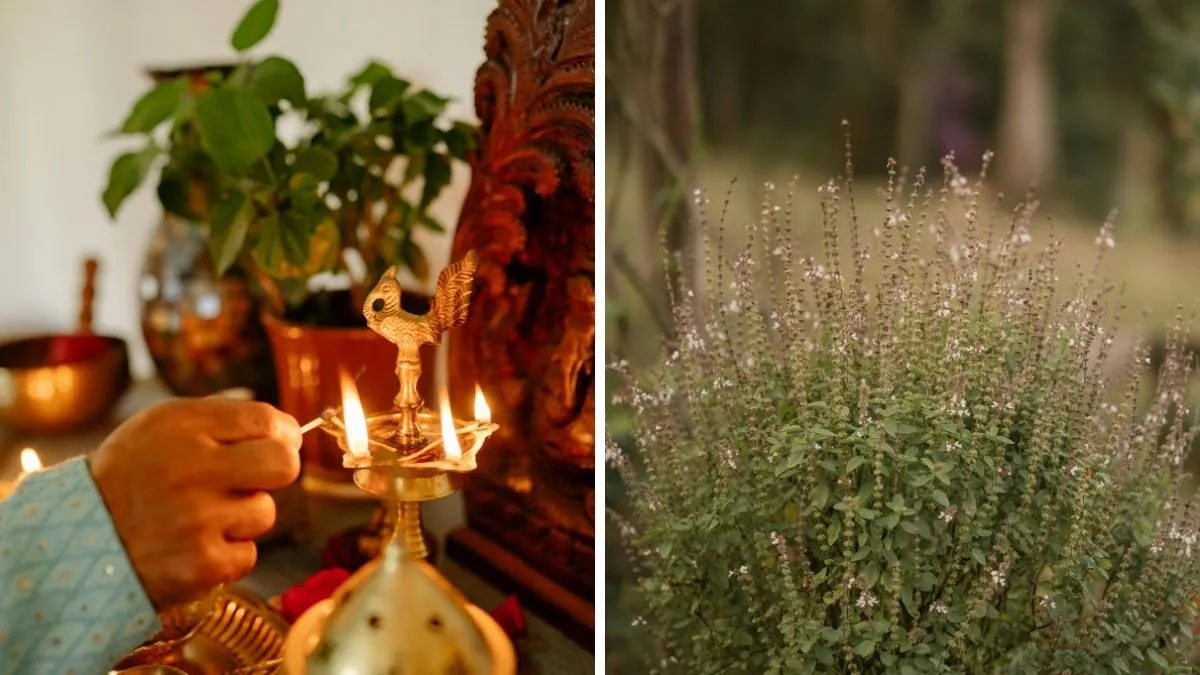
In almost every Hindu household, Tulsi, or holy basil, is a sure feature. The plan is worshipped as a goddess, Vrinda, considered a symbol of purity, and the devotees offer daily prayers to Lord Vishnu and Krishna. Curiously enough, there are times when devotees are asked not to pluck or offer Tulsi leaves during certain rituals or at certain lunar phases.
This is a belief that is passed down through generations. However, this isn't based on superstition but symbolism. It is a way to respect the divine feminine energy that Tulsi represents. Let's find out why the sacred leaf sometimes takes a sacred pause.
When Tulsi leaves are not used in puja
As indicated by the traditional scriptures like Padma Purana and Skanda Purana, a person should not offer Tulsi leaves to the deities on the following days:
- Ekadashi and Dwadashi (the 11th and 12th lunar days)
- Sankranti (solar transition days)
- Sundays and lunar eclipses
- During the fifteen-day mourning period, Shraddha or Pitra Paksha
These days are considered times of spiritual transition; on such days, it's said that Tulsi rests or renews her divine energy.
The legend behind the pause
In the Padma Purana, Tulsi is described as the incarnation of Goddess Vrinda, wife of the demon king Jalandhar. When Lord Vishnu intervened in Jalandhar’s death, Vrinda cursed him to turn into a stone later known as Shaligram and transformed herself into the sacred Tulsi plant.
Thus, the relationship of Tulsi with Vishnu represents divinity on one side and personal aspects on the other, reflecting love, loss, and reunion. On Ekadashi, when Vishnu is believed to be in deep rest, Yoga Nidra, Tulsi too is not disturbed. Devotees refrain from plucking her leaves until Tulsi
Vivah, the symbolic wedding of Tulsi and Vishnu.
The symbolic meaning of temporarily banning Tulsi leaves is more than ritual; it is to remind us of respect and balance. The plant is treated as a living deity, and just like humans, deities too are given rest days. It reinforces the philosophy that even devotion must carry mindfulness and compassion.
Scientific and ecological context
On a practical level, this practice gives the plant time to regenerate. Continuous plucking can stress its growth, especially during the monsoon and pre-winter months when the plant’s sap is delicate.
In that sense, ancient faith encoded sustainability long before it became a buzzword.
Also read: Tulsi Vivah 2025: Shubh muhurat and simple steps for the sacred Lord Shaligram–Tulsi wedding