- Home
- Lifestyle
- Spirituality
- Surya Grahan 2026: Don’t miss this crucial 2 minute 20 second solar eclipse moment
Surya Grahan 2026: Don’t miss this crucial 2 minute 20 second solar eclipse moment
The first solar eclipse of 2026, an annular ‘Ring of Fire’, occurs on February 17 but won’t be visible in India. Here’s a complete guide to eclipse timings, peak phase, global visibility zones and how to watch it safely online.
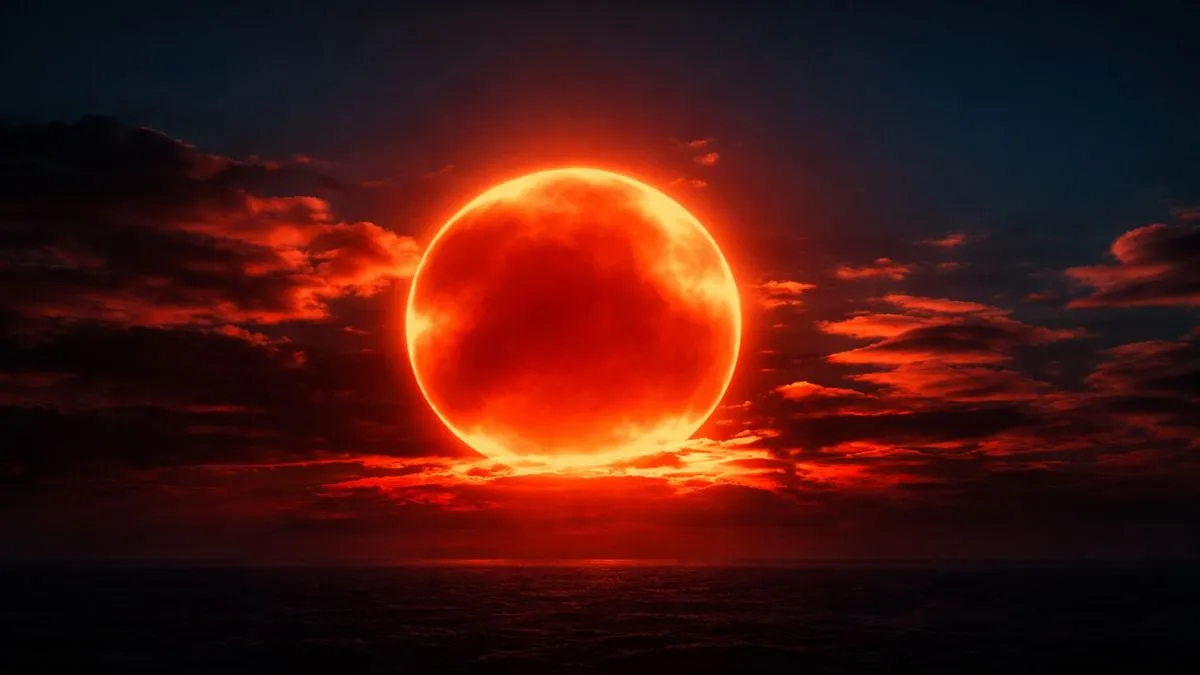
The first solar eclipse of 2026 is unfolding today, February 17, and it comes in one of the more visually dramatic forms, an annular eclipse. Often nicknamed the ‘Ring of Fire’, this version of a solar eclipse tends to draw curiosity even among people who do not usually track celestial events. Not just for the science. The symbolism too.
According to Indian Standard Time, the eclipse begins at 3:26 pm and continues until 7:57 pm, stretching across roughly four and a half hours. That said, viewers in India will not be able to witness it directly. The eclipse path lies elsewhere, meaning the visual spectacle will remain out of local sight despite the timing overlap.
Solar Eclipse 2026 timings and peak phase details
While the entire eclipse spans several hours, the most visually striking phase lasts only a few minutes.
- Eclipse begins — 3:26 pm IST
- Peak eclipse — Around 5:42 pm IST
- Eclipse ends — 7:57 pm IST
- Total duration — Approximately 4 hours 30 minutes
At peak alignment, the Moon will cover nearly 96% of the Sun, leaving only the outer rim visible, the defining ‘ring’ effect associated with annular eclipses.
Why this solar eclipse is called the ‘Ring of Fire’
A solar eclipse occurs when the Moon passes between the Earth and the Sun, blocking sunlight from reaching the planet. But in an annular eclipse, the Moon is positioned slightly farther away in its orbit.
Because of this distance:
- The Moon cannot completely cover the Sun
- A bright solar halo remains visible
- The Sun appears as a glowing ring around the Moon
This circular rim of fire-like light is what gives the eclipse its popular name.
Where the Solar Eclipse 2026 will be visible
This annular eclipse will not be visible from India. As a result, belief-based observances like Sutak are generally not considered applicable locally.
The ‘Ring of Fire’ will instead be visible across select global regions, including:
- Southern Africa — Zimbabwe, South Africa, Zambia
- Parts of South America — Chile and Argentina
- Island regions — Mauritius, Tanzania and nearby islands
- Sections of the South Atlantic and Pacific Oceans
For the most complete annular view:
- Limited zones in Antarctica fall within the central eclipse path
- Certain research bases, including Concordia Station, will experience full visibility
How to watch the Solar Eclipse 2026 safely
Directly viewing a solar eclipse without protection can cause serious eye damage. Safety remains non-negotiable.
- Always use ISO-certified solar viewing glasses
- Special solar filters are required for telescopes or cameras
- Regular sunglasses are not safe
If you are in India or outside the visibility path:
- Live streams from NASA and global space agencies provide real-time viewing
- Online observatory feeds offer close-up eclipse visuals
So while the sky may not darken locally, the eclipse can still be followed virtually, safely and in full detail, ring and all.
ALSO READ: Solar eclipse timings and remedies to reduce its negative effects