- News
- Explainers
- Operation Mahadev: How ballistic matching helped India trace Pahalgam attack terrorists | Explained
Operation Mahadev: How ballistic matching helped India trace Pahalgam attack terrorists | Explained
Shah revealed that India used advanced ballistic matching techniques to identify the terrorists behind the Pahalgam terror attack. He said that the identities of the attackers were established through forensic and ballistic testing.
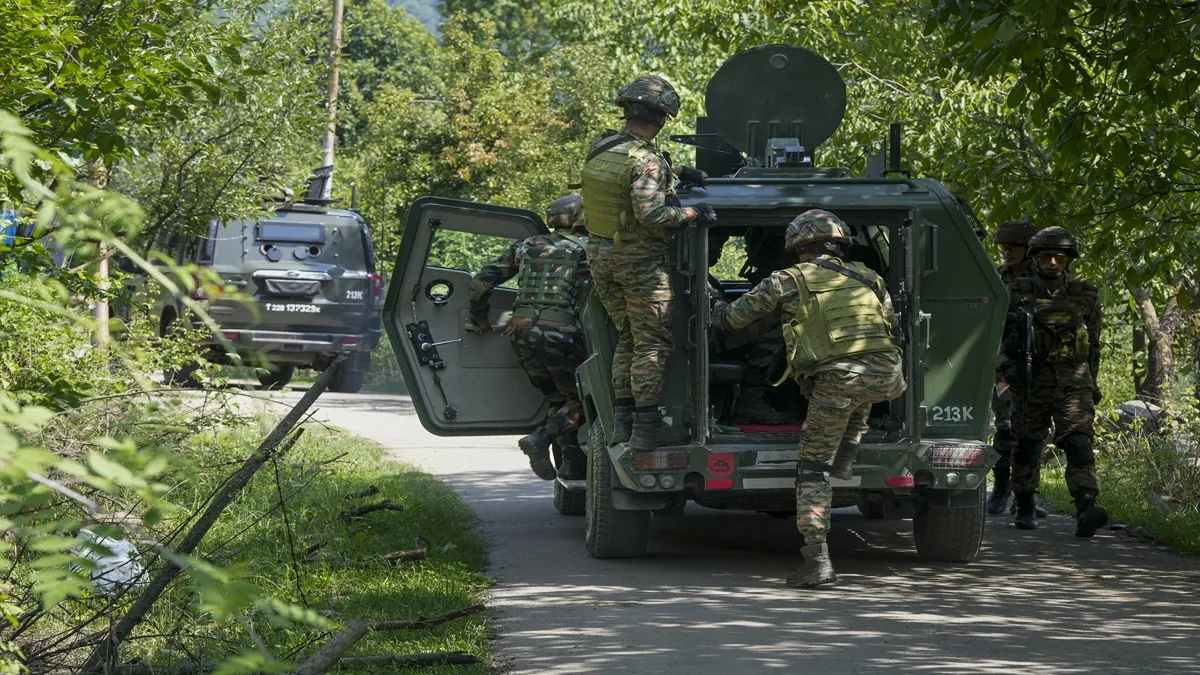
Union Home Minister Amit Shah confirmed in the Lok Sabha that three of the terrorists who carried out the Pahalgam attack were killed in a high-intensity operation by Indian armed forces in Jammu and Kashmir's Srinagar. One of the three was Pahalgam attack mastermind Hashim Musha alias Suleman Shah. The joint action, carried out by the Indian Army, CRPF and Jammu and Kashmir Police under the banner of Operation Mahadev, was launched near Srinagar on Monday. Speaking in the Lok Sabha a day later, he also attacked the opposition party for giving a "clean chit" to Pakistan for the April 22 Pahalgam attack. Had the Congress opposed Partition, the problem of terrorism in Jammu and Kashmir would never have occurred, he said.
Speaking further, Shah revealed that India used advanced ballistic matching techniques to identify the terrorists behind the Pahalgam terror attack. He said that the identities of the attackers were established through forensic and ballistic testing, confirming that all three neutralised terrorists were Pakistani nationals. According to him, security forces went to great lengths to prove that the same individuals were responsible for the Pahalgam assault.
What is ballistic matching?
Ballistics, the scientific study of projectiles and firearms, has been a critical part of criminal investigations since the early 20th century. As per reports, the field evolved significantly during the two World Wars and has since played a vital role in crime scene analysis. Ballistic matching is a forensic process used to determine if a specific gun was used to fire a particular bullet or cartridge. Experts compare bullet fragments and cartridge cases recovered from crime scenes with weapons or ammunition found later. These comparisons are made using specialised equipment and extensive training, allowing forensic analysts to match guns with remarkable precision.
How India connected the dots
Following the Pahalgam terror attack in April, Indian authorities sent recovered cartridges for detailed forensic analysis. After Operation Mahadev, in which the three terrorists were neutralised, security forces recovered several weapons from their hideout, including M-9 and AK-47 rifles, as per the Union Home Minister.
These weapons were flown to the Central Forensic Science Laboratory in Chandigarh via a special aircraft. There, experts test-fired the weapons and collected their cartridge casings. The new samples were then compared with the forensic evidence gathered from the Pahalgam attack site. The results were a definitive match, Shah added.
Confirmed link to April 22 attack
According to Shah, the forensic laboratory had already prepared reports on the cartridges from the earlier terror incident. The match between those findings and the newly obtained casings confirmed that the same weapons -- and by extension, the same terrorists -- were involved in both events.
ALSO READ