JEE Main (day four) shift one analysis 2026: 'Maths was lengthy, Chemistry relatively scoring'
JEE Main (day four) shift one analysis 2026: As per the initial reactions from the candidates, the Mathematics paper was reviewed as difficult, Physics and Chemistry were analysed as relatively moderate.
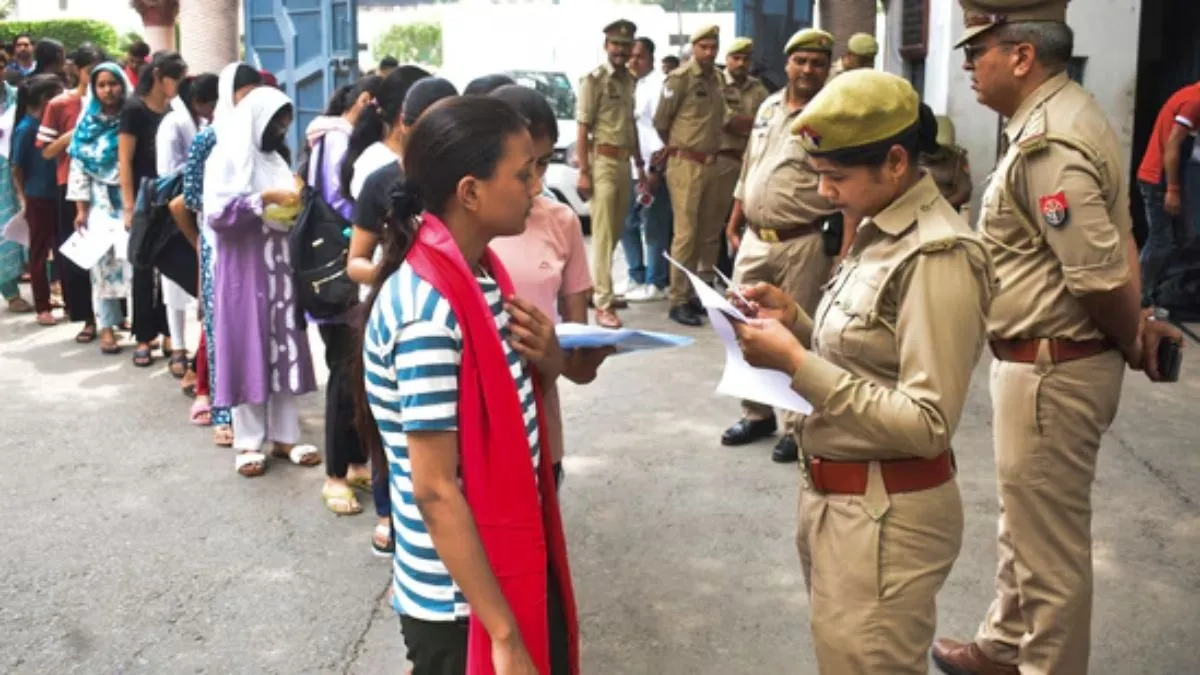
The Joint Entrance Examination (JEE) Main 2026 day four shift one was concluded, the candidates who had appeared in shift one analysed the paper as moderately difficult. As per the initial reactions from the candidates, the Mathematics paper was reviewed as difficult, Physics and Chemistry were analysed as relatively moderate. The JEE Main shift two will be held from 3 pm to 6 pm. JEE Main 2026 (day four) analysis Live Updates
As per Ajay Sharma, National Academic Director, Engineering. Aakash Educational Services Limited, JEE Main (shift one) was of moderate difficulty overall. All three subjects—Physics, Chemistry, and Mathematics—were nearly of equal level, though Mathematics was slightly more challenging due to lengthy calculations, while Physics and Chemistry were relatively moderate. The paper was well-balanced in terms of question distribution and chapter coverage.
Here's section-wise analysis of JEE Main (shift one)
Physics
The Physics section was easy to moderate in difficulty. Questions were asked from almost all major chapters, with a greater focus on Mechanics, Electrostatics, and Magnetism, while Optics, Waves, and EMI had comparatively fewer questions. A fair number of questions were also seen from Gravitation. Some statement-based theoretical questions appeared ambiguous, making them slightly tricky to answer, though several were straightforward and direct. A few questions were time-consuming. Topics like Fluids, Oscillations, Electromagnetic Waves, Thermodynamics, Thermal Properties, and Modern Physics were adequately represented. Overall, the section comprised roughly 50% basic and 50% calculation-based questions.
Chemistry
The Chemistry section was easy to moderate. Questions were distributed across Organic, Inorganic, and Physical Chemistry. Among these, Inorganic Chemistry had relatively fewer questions, while Organic and Physical Chemistry were almost equally represented, with Physical Chemistry having slightly more numerical questions. Some of these were calculation-intensive, making the section somewhat time-consuming. Several statement-based questions were directly inspired by NCERT.
Mathematics
The Mathematics section was moderate to difficult. Questions were well-distributed across the syllabus, with greater emphasis on Algebra, Calculus, and Conic Sections. Topics like 2D Geometry, Sets, Determinants, Matrices, 3D Geometry, Vectors, and Complex Numbers had an average presence, while Probability and Permutation & Combination had relatively fewer questions. The lengthy calculations made this section the most challenging and time-consuming.
Meanwhile, the candidates who had appeared for JEE Main January 23 exam in both the shifts was reviewed as moderately difficult. Analysing the shift two of JEE Main January 23 exam, Ajay Sharma, National Academic Director, Engineering, Aakash Educational Services Limited said, "All three subjects—Physics, Chemistry, and Mathematics—were nearly of equal difficulty, though Mathematics was slightly more challenging, while Physics and Chemistry were relatively easier to moderate. The paper was well-balanced in terms of question distribution and coverage across chapters."
JEE Main January 23 (Shift Two) section-wise question paper review
Physics
The Physics section was of moderate difficulty. Questions covered almost all major chapters, with a higher number from Electrostatics and Magnetism, while Optics had comparatively fewer. Mechanics had a good representation. Some questions were experiment-based, while others, though conceptually straightforward, required careful analysis and time to solve. A few were time-consuming, making the section somewhat challenging. Topics such as Electromagnetic Waves, Thermodynamics, Thermal Properties, Gravitation, and Modern Physics were also adequately represented.
Chemistry
The Chemistry section was easy in comparison to the other two subjects. Questions were asked from all three branches—Organic, Inorganic, and Physical Chemistry. Among these, Inorganic Chemistry had relatively fewer questions, while Organic and Physical Chemistry carried nearly equal weightage. Many questions were statement-based and directly inspired by NCERT. Though generally easy, some required careful reading and application of basic concepts.
Mathematics
The Mathematics section was moderate to difficult. Questions were well distributed across the syllabus, with higher representation from Algebra, Calculus, and Conic Sections. Topics such as Determinants, Matrices, 3D Geometry, Vectors, and Complex Numbers had an average presence. Algebra appeared slightly dominant, while Coordinate Geometry maintained moderate weightage. The Probability portion had relatively fewer questions.
For details on JEE Main 2026, please visit the official website- jeemain.nta.nic.in.
Also Read: