
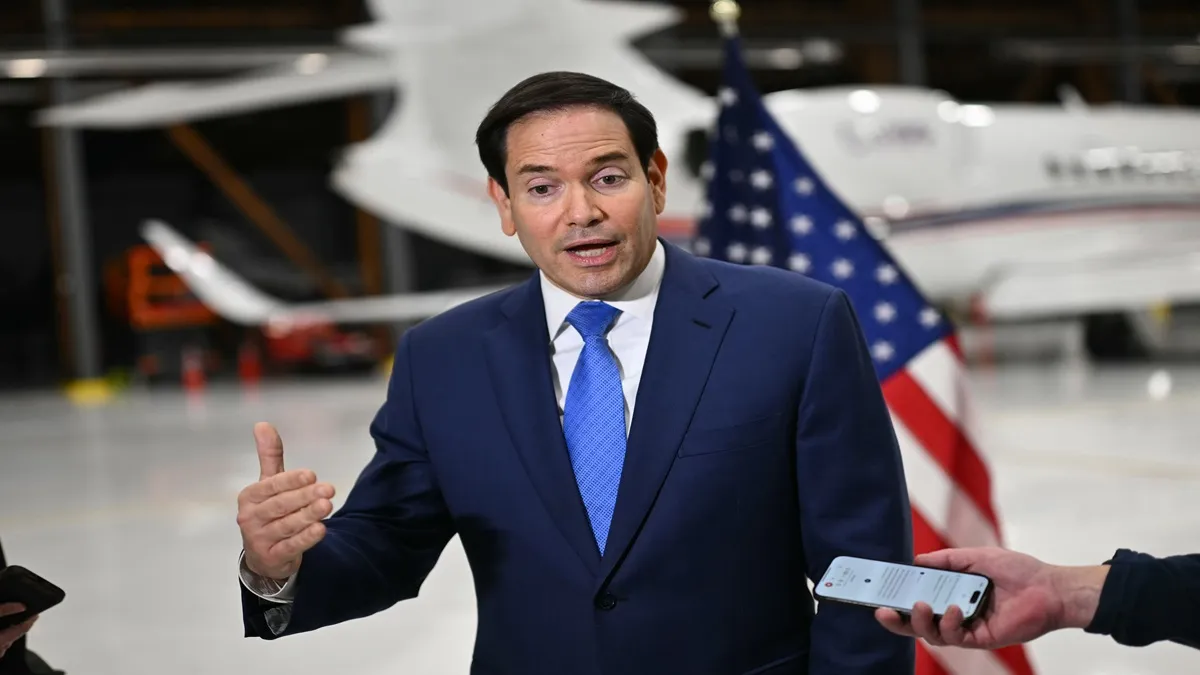
Around 42 members of the US Congress, led by Democratic Congresswoman Pramila Jayapal and Congressman Greg Casar, have formally called on Secretary of State Marco Rubio to impose targeted sanctions on Pakistani officials. Their letter highlights a growing 'human rights crisis' and an 'escalating campaign of transnational repression' under Pakistan’s military-backed government, headed by Prime Minister Shehbaz Sharif and Chief of Army Staff General Asim Munir.
Concerns about repression of US citizens and residents
The lawmakers emphasised that US citizens and residents who have spoken out against authoritarian abuses in Pakistan face threats, intimidation, and harassment- tactics extending to their family members residing in Pakistan. These include arbitrary detentions, coercion, and retaliatory violence designed to silence critics and suppress freedom of expression. Such transnational repression poses a threat not only to human rights abroad but also sets a dangerous precedent for foreign interference on US soil.
Call for sanctions and visa bans
The letter demands swift measures including visa bans and asset freezes against officials deemed responsible for these abuses. The lawmakers stressed the necessity to hold Pakistan’s military leadership accountable, particularly highlighting General Asim Munir’s role in this crackdown. They also urged the release of political prisoners, including former Prime Minister Imran Khan, whose incarceration has drawn international criticism amid allegations of political motivation.
Examples of targeted individuals
Several cases involving Pakistani Americans were cited to illustrate the transnational repression. Investigative journalist Ahmed Noorani faced severe retaliation after exposing military corruption, with his brothers reportedly abducted and beaten in Pakistan. Similarly, musician Salman Ahmad was subjected to direct intimidation, and his family members were threatened and detained until diplomatic intervention ensured their release.
Deteriorating human rights and democratic institutions
The Congress members described Pakistan as undergoing an “escalating crisis of authoritarianism,” pointing to the erosion of democratic institutions and judicial independence. They criticised recent elections as flawed and orchestrated to establish a compliant civilian government under military influence. The Supreme Court’s authorization of military trials for civilians further undermines the rule of law and judicial autonomy.
Focus on minority and civil society persecution
The letter draws attention to intensified repression within Pakistan, including the detention of opposition leaders without charge, forced exile of journalists, and arrests of ordinary citizens for social media activity. It highlights disproportionate targeting of women, minority groups, and ethnic communities, especially in Balochistan, as part of a calculated effort to suppress civil society and opposition to military rule.
Questions for US policy direction
The lawmakers question what steps the US administration has taken to address these issues, particularly during high-level meetings with Pakistan’s leadership, including those involving former President Donald Trump, Prime Minister Shehbaz Sharif, and General Asim Munir. They seek clarity on the conditions that would trigger sanctions and how US engagement with Pakistan’s military will avoid inadvertently supporting authoritarianism.
Broader implications and commitment
This bipartisan appeal reinforces the US commitment to human rights, regional stability, and protection of its citizens from foreign repression. The lawmakers affirm their dedication to applying consistent pressure and principled stances against transnational repression, urging concrete actions to address and curb Pakistan’s human rights violations.
