
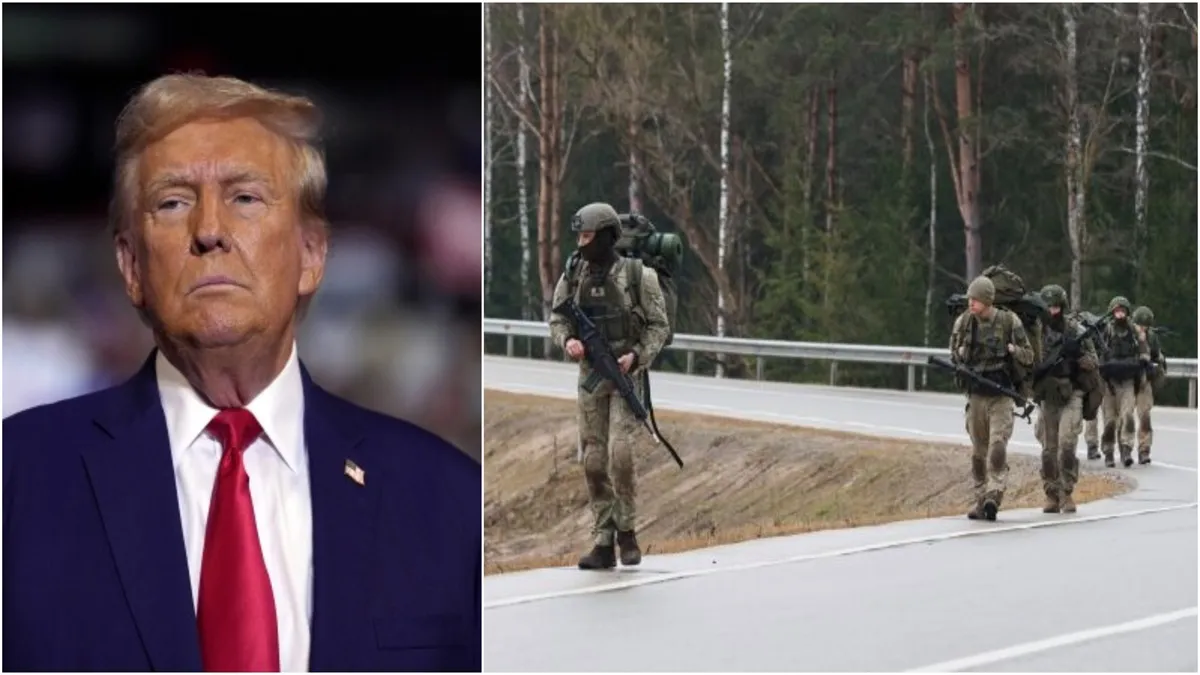
The United States military is gearing up to send nearly 1,000 soldiers from the 82nd Airborne Division to the Middle East in the coming days, according to a source who shared details with The Associated Press (AP). The personnel will include a battalion from the 1st Brigade Combat Team, along with division commander Maj Gen Brandon Tegtmeier and key staff members. The 82nd Airborne is known as the Army's rapid response force and can be deployed swiftly for critical missions.
This move comes shortly after US officials confirmed that thousands of Marines aboard Navy vessels will also head towards the region. While Marine units largely engage in embassy support, civilian evacuation and humanitarian tasks, the airborne soldiers specialise in parachuting into conflict zones to secure airfields and strategic areas. The New York Times earlier reported that such a deployment was being weighed.
Confusion over Trump's claims on Iran talks
US President Donald Trump stirred debate this week by saying that discussions with Iran were showing promising results, a statement that has only prompted more questions at a time when the war's goals remain unclear. Iran rejected the idea of any negotiations, asserting it would fight "until complete victory". Countries such as Pakistan, Egypt and regional Gulf governments are reportedly attempting to initiate dialogue, but their efforts are still at an early stage. Meanwhile, Israel has maintained a firm stance on continuing its attacks. As tensions escalated, rockets were fired into Iran, Israel and several other locations across the region on Tuesday accompanied by fresh deployments of US Marines to the Gulf.
War aims remain vague as fighting intensifies
Since launching the conflict with Israel on February 28, Trump has offered shifting explanations about Washington's objectives. He has spoken of weakening Iran's missile capabilities and reducing the threat posed to neighbouring nations, goals that leave him significant room to declare progress. A more complex demand is preventing Iran from ever developing a nuclear weapon, a condition Trump insists must be part of any settlement.
Another key priority for Washington is reopening the Strait of Hormuz -- a crucial route for global oil supplies that Iran effectively blocked at the beginning of the war. Trump has recently reduced his rhetoric about regime change in Iran, even as Benjamin Netanyahu continues to frame the conflict as an opportunity for Iranians to overthrow the ruling establishment.
ALSO READ: Trump claims US has won the war and Iran's navy, air force have been completely decimated
