
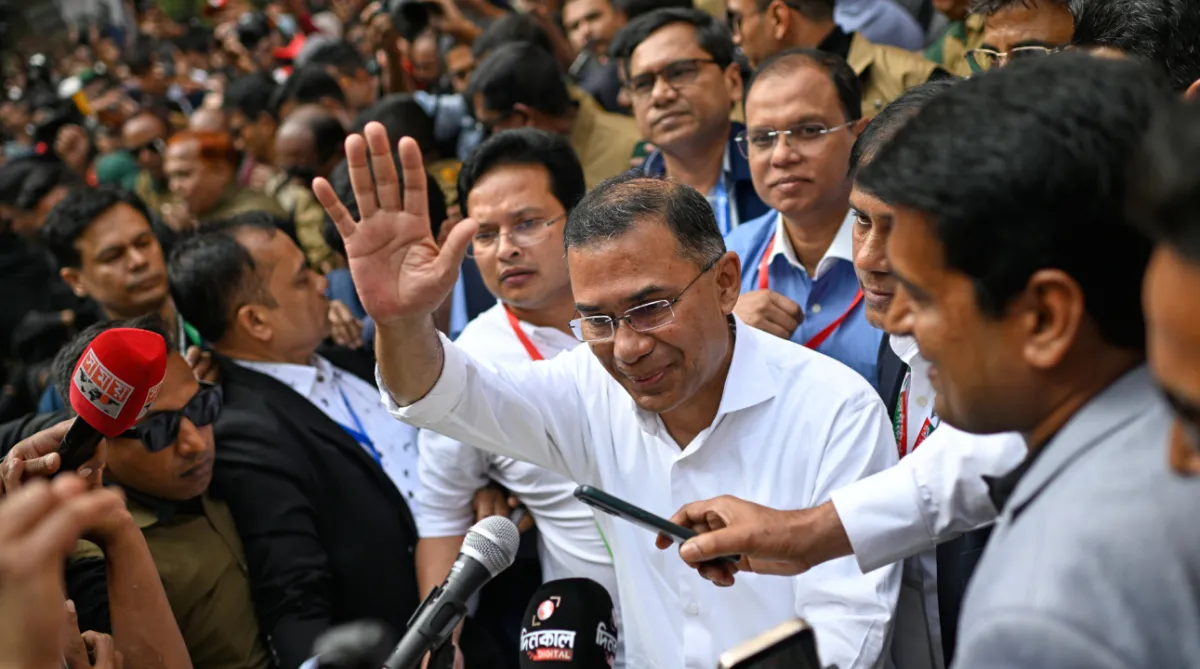
Tarique Rahman's Bangladesh Nationalist Party (BNP) has declared victory after scoring a two-thirds majority, official results are still awaited. BNP and allies has won 155 seats, while Jamaat & allies bagged 41 seats. Islami Andolan Bangladesh has secured one seat, while others in five seats. Vote counting is over in Bangladesh’s first general election since the fall of the Sheikh Hasina government. The process started amid reports of sporadic violence and allegations of irregularities. Voters also cast their ballots on the July Charter, which, if approved, would empower the next government to introduce major changes to the country’s Constitution and democratic framework. The main contest is between alliances led by the Bangladesh Nationalist Party and the Jamaat-e-Islami.
Bangladesh polls featured 127 million eligible voters, nearly half aged 18-37, with 4.57 million first-timers, across 299 constituencies. Some 1,755-1,981 candidates from 50-59 parties competed, BNP fielding 291 as frontrunner; banned Awami League was excluded. BNP-Jamaat rivalry centered on corruption, inflation, jobs and economic growth. A parallel vote tested Muhammad Yunus's interim government's 84-point National Charter 2025 for governance reforms.
Pre-poll violence included Joypurhat ballot tampering arrests, Sylhet clashes and Gopalganj bombs, though officials maintained calm. Yunus celebrated as the "new Bangladesh's birthday," rejecting Hasina's era and Khaleda Zia's death shadow. BNP's Tarique Rahman urged festive voting under the paddy sheaf symbol. Observers from 45 nations watched, led by Chief Election Commissioner AMM Nasir Uddin.
Stay tuned with IndiaTVNews.com for latest updates on the Bangladesh election results.
