
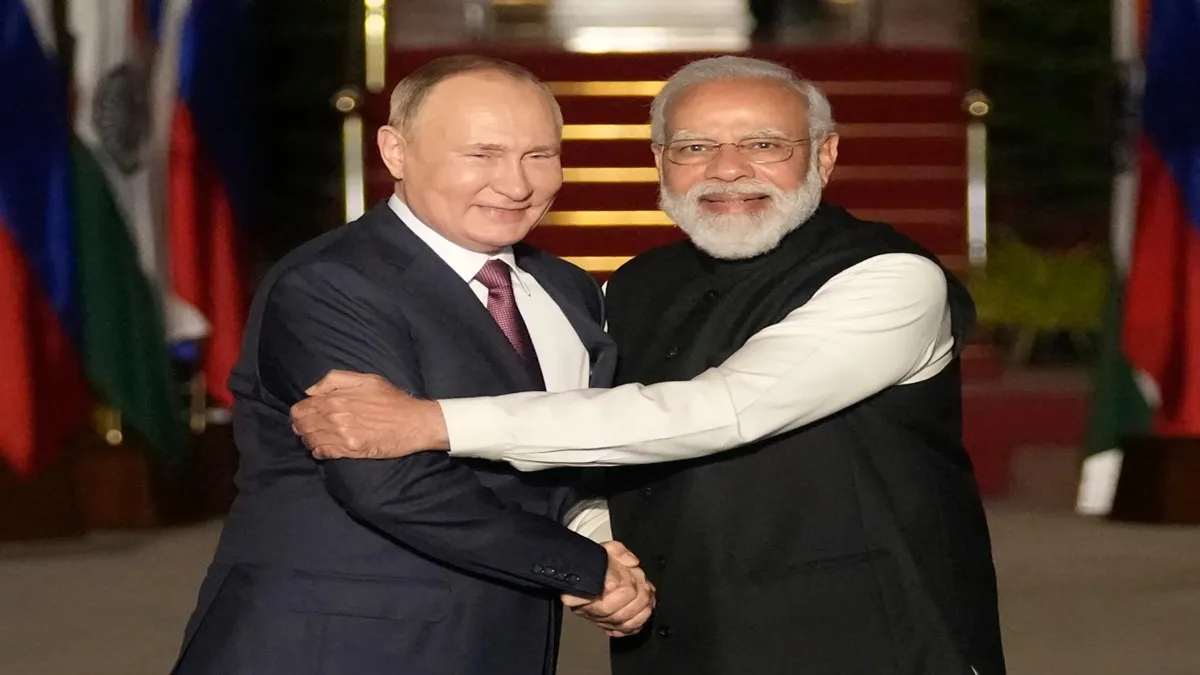
The 23rd India-Russia Annual Summit, originating from President Vladimir Putin's 2000 visit that elevated ties to Strategic Partnership status (further upgraded to Special and Privileged in 2010), underscores a relationship built on mutual trust, respect for core interests, and strategic alignment amid global uncertainties. Held alternately in both nations, this institutionalised leader-level mechanism has ensured steady progress, with recent high-level interactions including six Foreign Minister meetings, SCO sidelines talks in Tianjin, and regular calls reviewing bilateral sectors.
Economic focus: Trade expansion and connectivity boost
Leaders will prioritise economic cooperation, targeting balanced trade growth to $100 billion by 2030 through boosted Indian exports in pharmaceuticals, agriculture, and textiles, alongside stable Russian fertiliser supplies. Key agendas include resolving non-tariff barriers, advancing India-EaEU FTA negotiations, and enhancing connectivity via Chennai-Vladivostok Corridor optimisation and Northern Sea Route exploration to cut freight costs and time. Summit deliverables span trade facilitation, industrial ties, high-tech investments, maritime, healthcare, media, culture, academic, and scientific exchanges.
Evolving defence ties: From buyer-seller to co-production
Defence remains the cornerstone, evolving into joint R&D and "Make in India" co-production of advanced systems. The 22nd Inter-Governmental Commission on Military Technical Cooperation, co-chaired by Defence Ministers ahead of the Summit, will review progress, with ties extended to 2031 including major deals like S-400 systems.
Civil nuclear advances and workforce collaboration
Kudankulam Nuclear Power Plant exemplifies success, with ongoing Units 3-6 construction, new site discussions, equipment localization, and third-country ventures. Additional talks cover fuel cycle, lifecycle support, and regulated migration of Indian skilled workers to address Russia's labor shortages.
Multilateral synergy in BRICS, SCO and beyond
Beyond bilaterals, cooperation thrives in UN, G20, BRICS (India's 2026 Chairship focusing on reformed multilateralism and Africa ties), and SCO (pushing English as official language, RATS anti-terror role). These platforms amplify consensus, fairness, and security collaboration.
India-Russia relations: A time-tested and expanding strategic partnership
India and Russia share a longstanding, time-tested partnership built on mutual trust, respect for core national interests, and strategic alignment. The foundation was solidified with the “Declaration on the India-Russia Strategic Partnership” signed in October 2000 during President Putin’s first visit as Russian Federation President, elevating bilateral ties to a new level. This partnership was further enhanced in 2010 to a “Special and Privileged Strategic Partnership,” which has endured through geopolitical challenges and global uncertainties.
Institutionalised dialogue mechanisms strengthen cooperation
Supporting this strategic partnership is a robust framework of institutionalized dialogue mechanisms, ensuring regular engagement and cooperation follow-up at political and official levels. The India-Russia Intergovernmental Commission (IRIGC) plays a key role, split into divisions for Trade, Economic, Scientific, Technological and Cultural Cooperation (co-chaired by the Indian External Affairs Minister and Russian First Deputy Prime Minister) and Military and Military-Technical Cooperation (headed by the Defence Ministers). A new dimension was added in December 2021 with the inaugural 2+2 Dialogue involving both countries’ foreign and defense ministers.

Highest-level institution: Annual summits between leaders
The Annual Summit between the Indian Prime Minister and the Russian President is the highest instrument of dialogue, having convened 22 times alternately in both nations. The 23rd Summit is slated for December 2025 in India. Recent summits yielded joint statements underscoring an “Enduring and Expanding Partnership” and strategic economic cooperation goals extending to 2030, with nine MoUs signed. High honors, like the Order of Saint Andrew awarded to the Indian Prime Minister, highlight the deep respect in bilateral ties.
Continuous, high-level political engagement
Political communication between leaders remains steady and dynamic. Several telephone conversations in 2025 have covered key issues like national sovereignty, economic progress, global security challenges including terrorism, and ongoing geopolitical developments such as the Ukraine conflict. These sustained engagements emphasize the mutual commitment to strengthen the Special and Privileged Strategic Partnership amid global uncertainties.