
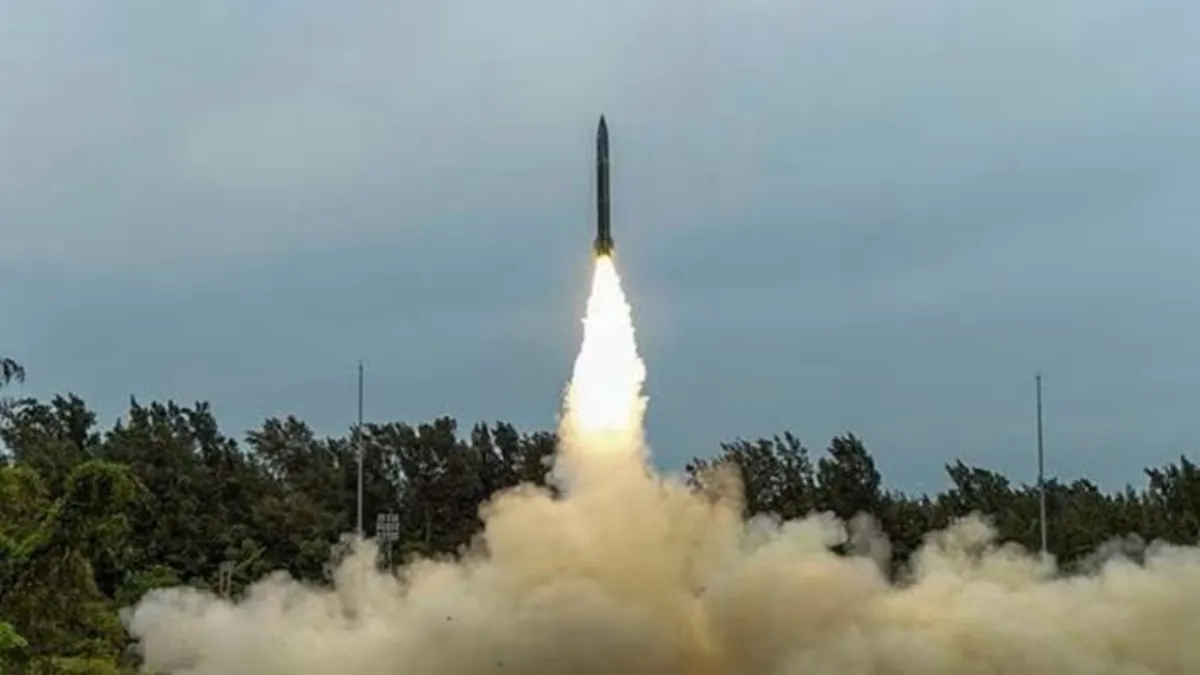
India has issued a temporary no-fly zone (NOATAM) notice for a stretch of 3,550 kilometres over Bay of Bengal between December 17 to December 20. The notification has triggered strong speculation about the possible test of a major long-range missile of more than 3,000 km off the Odisha coast in Chandipur. Notably, this is not the first time such a NOTAM has been issued. A similar notification was released earlier but the scheduled activity was later postponed.
Compared to previous notifications, this one marks a significant expansion. In October-November 2025, the designated zones ranged from 1,480 kilometres to 3,545 kilometres, although several planned tests were cancelled. Earlier this month, a zone of 3,485 kilometres was notified for December 1 to 4, but that too was called off. The latest NOTAM for December 17 to 20 now extends up to 3,550 kilometres, which suggests the possibility of a long-range missile test. There has been no official confirmation from the government, but experts believe the test could involve a Submarine Launched Ballistic Missile (SLBM).
What is NOTAM?
A NOTAM is issued when a specific airspace needs to be cleared of civilian air traffic. Similar notices were issued during previous tensions with Pakistan to ensure that no passenger aircraft would be caught in the middle of potential aerial operations. It helps prevent civilian casualties by keeping commercial aircraft away from zones of military activity.
Why is a NOTAM issued?
Once a NOTAM is issued, no civilian aircraft is permitted to fly within the designated airspace. This allows Air Force jets, missiles, and drones to operate freely without the risk of mid-air collisions. The absence of civilian flights also ensures the safety of non-combatants.
DRDO's saves massive Rs 2.64 lakh crore due to indigenous research in 5 years
A parliamentary panel has revealed that the Defence Research and Development Organisation has saved a staggering Rs 2,64,156 crore in the last five years through its indigenous research efforts. This observation was made in a report of the Parliamentary Standing Committee on Defence, presented in Parliament on Tuesday. The committee said that both in the past and the current year, "crucial milestones in developing next-generation hypersonic technologies and missiles have been achieved" by the DRDO.
The panel congratulated the agency for its "various feats" and expressed confidence that it will "continue its successful stride" as it enhances India's capabilities in complex and critical defence technologies. The report added, "The Committee has also been apprised that DRDO has been able to save an amount of Rs 2,64,156 crore because of its own indigenous research during the last five years."
ALSO READ: DRDO successfully conducts maiden flight tests of Integrated Air Defence Weapon System | Watch
