
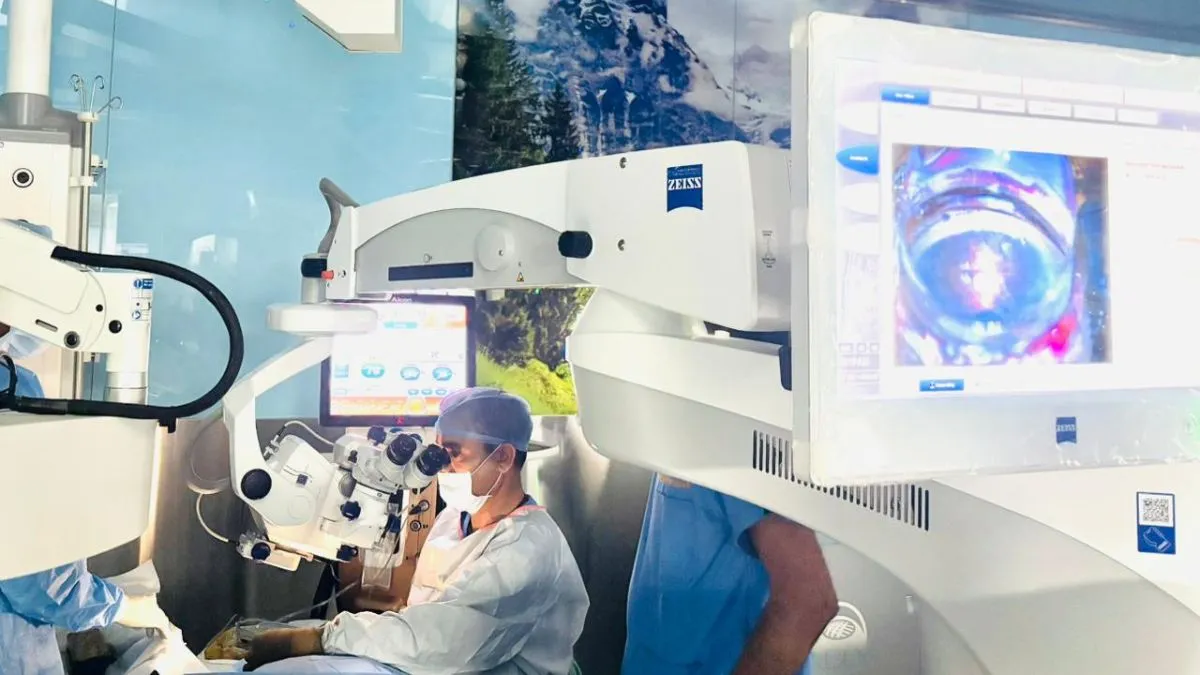
The Indian Army has added another achievement to the nation’s pride this time not on the battlefield but in the field of advanced medicine. Doctors at the Army Hospital (Research and Referral) have successfully carried out a world-first glaucoma surgery using a special implant and advanced imaging technology. The operation was performed on March 10, 2026, marking a major step forward in modern eye treatment.
A tiny device with a big impact
During the surgery, doctors implanted a device called the Hydrus Microstent, a very small tube-like implant about 8 millimetres long. It is made from a special metal called nitinol, a nickel-titanium alloy known for being very flexible and able to return to its original shape.
This tiny device helps treat glaucoma, a serious eye disease that increases pressure inside the eye and can damage the optic nerve, sometimes leading to permanent vision loss. By placing the implant in a specific part of the eye, doctors can improve the flow of fluid inside the eye and reduce pressure.
The procedure was performed along with cataract surgery, making it even more beneficial for patients suffering from both conditions.
Advanced imaging makes surgery more precise
What makes this surgery truly groundbreaking is the use of intraoperative aqueous angiography. In simple terms, this is a special imaging method that allows doctors to see how fluid moves inside the eye in real time during the operation. Using an advanced imaging device called the Heidelberg Retina Angiograph, surgeons were able to clearly see the eye’s drainage channels and place the implant exactly where it would work best.
The device was inserted into a tiny circular channel in the eye known as Schlemm’s canal, which naturally drains fluid from the eye. Correct placement improves fluid flow and helps control eye pressure more effectively. This procedure is part of a modern treatment approach called Minimally Invasive Glaucoma Surgery (MIGS).
“Minimally invasive” means the surgery is done with very small instruments and causes less damage to surrounding tissue, helping patients recover faster.
A proud moment for India’s defence medical services
The achievement highlights the growing strength of India’s military healthcare system. Under the leadership of Arti Sarin, the defence medical services have been focusing on modern technology, research and high-quality patient care.
This achievement reminds us that the Indian Army’s contribution goes far beyond defending borders. From disaster relief to medical breakthroughs, the armed forces continue to serve the country in many ways.
