
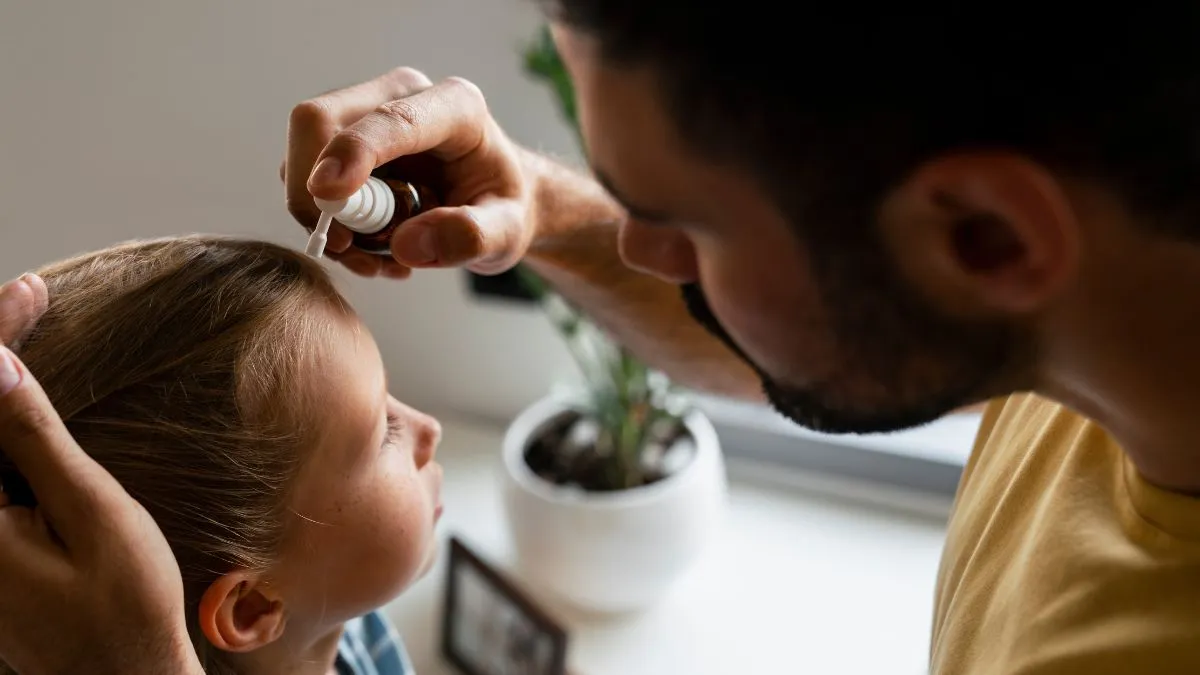
Eye drops are often seen as one of the safest and most routine medications. Parents use them without much hesitation for infections, dryness or even long-term vision care. But eye specialists are now raising concerns about a commonly used ingredient that may not be as harmless as it seems.
At the centre of this discussion is Polyhexamethylene biguanide or PHMB, a preservative widely used in multidose eye drops. It helps keep the solution sterile, but emerging evidence suggests it could have unintended effects, especially on children’s developing eyes.
What is PHMB, and why is it used in eye drops?
PHMB is a strong antimicrobial agent added to eye drops to prevent bacterial contamination. This is particularly important in bottles that are used multiple times. It works by breaking down microbial cell membranes and genetic material. This helps eliminate harmful organisms such as Pseudomonas and Staphylococcus, which can cause serious eye infections.
So while it plays an important role in keeping the medicine safe, experts say it is also important to look at its long-term impact on the eye.
‘It protects the bottle, but may affect the eye,’ says expert
According to Dr Mihir Kothari, paediatric ophthalmologist and cataract surgeon, the concern lies in how this preservative interacts with delicate eye tissues over time. “PHMB is effective at preventing contamination in multidose bottles. However, while it protects the bottle, emerging scientific evidence suggests it may also affect the delicate tissues of the eye, particularly when used repeatedly over long periods,” he explains.
Laboratory studies have shown that PHMB can trigger cellular stress and even cell death in corneal and conjunctival cells at concentrations similar to those used in eye drops.
Why long-term use raises bigger concerns
For short-term treatments, the risk may be limited. The concern grows when these eye drops are used regularly over months or years. “Clinically, chronic exposure to preserved eye drops has been associated with ocular surface irritation, tear film instability, corneal staining, dryness, and delayed epithelial healing,” says Dr Kothari.
This means that while the drops may help treat one condition, they may also affect the eye’s natural surface over time.
Why children are more vulnerable
The concern becomes more serious in children, especially those undergoing long-term treatments such as for progressive myopia or other chronic conditions. A child’s ocular surface is still developing, which makes it more sensitive to repeated exposure.
“Because the paediatric ocular surface is still developing, prolonged exposure to certain preservatives may increase the risk of ocular surface inflammation and potential limbal stem cell stress over time,” Dr Kothari notes. In simple terms, what seems like routine treatment could quietly affect how the eye heals and maintains itself.
Are there safer alternatives?
There is some good news. Eye care technology has improved significantly in recent years. Many experts now recommend reducing preservative exposure, especially for long-term use, and switching to safer options where possible.
“In situations where patients require prolonged treatment, especially paediatric patients, preservative exposure should be minimised wherever possible,” Dr Kothari advises. Newer preservative-free systems are now available. These use advanced designs to maintain sterility without relying on potentially harmful chemicals.
With rising cases of childhood myopia and increased use of long-term treatments, this issue is becoming more important. Experts believe it may be time for both manufacturers and consumers to rethink what goes into everyday medications. “Protecting vision is not only about treating disease, but also about preserving the delicate surface of the eye itself,” Dr Kothari emphasises.
