
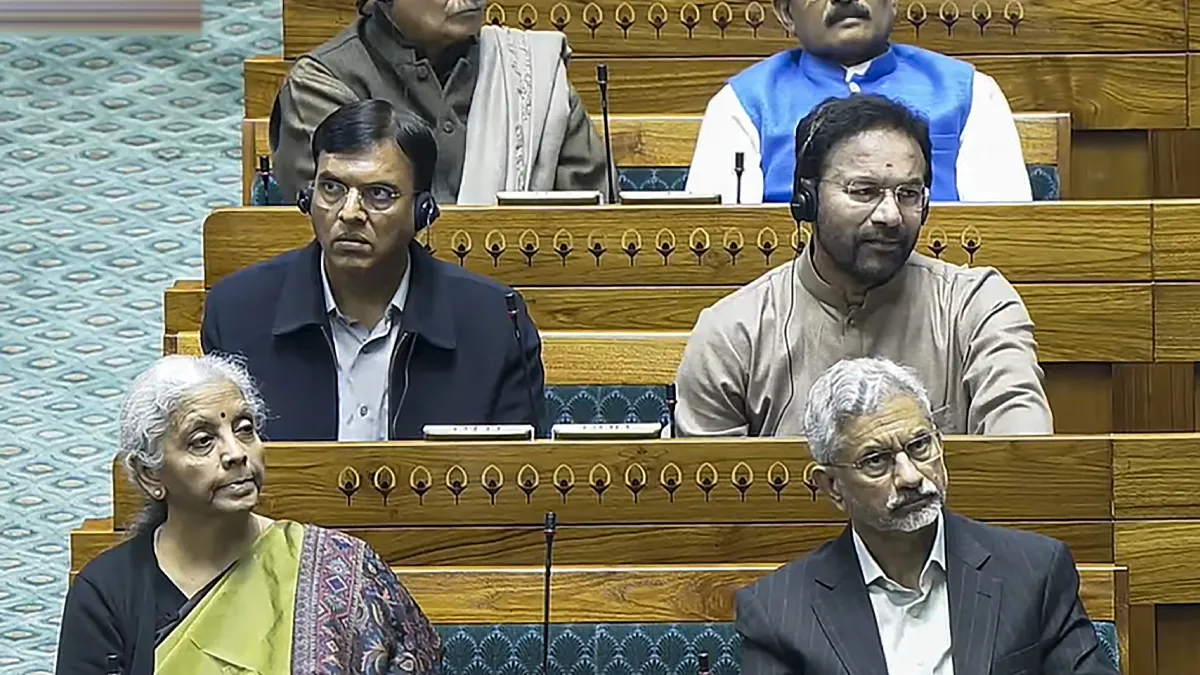
Finance Minister Nirmala Sitharaman has tabled the Economic Survey 2025-26 in the Lok Sabha, an annual report on the country's economic performance for the financial year. The survey called for key reforms, including overhauling the fertiliser sector, boosting research and development, strengthening irrigation systems and promoting crop diversification. It also focuses on aligning AI adoption with India’s structural realities, such as capital availability, energy constraints, institutional capacity, and market depth, so that technology choices reinforce long-term growth instead of creating fragile dependencies.
Here are 10 major highlights from the Economic Survey:
- Robust GDP Growth: India's real GDP growth for FY26 is estimated at 7.4 per cent, surpassing earlier projections and marking the fourth consecutive year as the world's fastest-growing major economy.
- Upgraded Potential Growth: The Survey has revised India’s potential growth rate upward to 7.0 per cent (from 6.5 per cent three years ago), citing sustained domestic reforms and massive public investment in infrastructure.
- Credit Rating Upgrade: In 2025, India received its first major credit rating upgrade in nearly two decades from S&P (from BBB- to BBB), reflecting strong economic performance and fiscal discipline.
- Inflation Tamed: Headline inflation (CPI) followed a clear downward trajectory, reaching 1.7 per cent in 2025-26, primarily driven by a steep decline in food prices and effective monetary policy.
- Fiscal Consolidation: The government achieved a fiscal deficit of 4.8 per cent of GDP in FY25 (against a budgeted 4.9 per cent) and set a target of 4.4 per cent for FY26, fulfilling its commitment to reduce the deficit by more than half since FY21.
- Consumption as a Growth Anchor: Private Final Consumption Expenditure (PFCE) rose to 61.5 per cent of GDP in FY26, its highest level since FY12, supported by rising real purchasing power and stable employment.
- Strategic Indigenisation: The Survey introduces a framework to move from "Import Substitution" to "Strategic Resilience" and "Strategic Indispensability," focusing on making India a critical, non-substitutable part of global value chains.
- Agricultural Resilience: Agriculture and allied sectors showed improved performance with record cereal production of 3,320 lakh tonnes in 2024–25, contributing to a benign inflation environment.
- Entrepreneurial State: The Survey calls for a shift toward an "entrepreneurial state" that can act under uncertainty, structure risks, and move from mere compliance to building deep institutional capability.
- AI and Digital Transformation: With 88 per cent of surveyed firms utilising AI in 2025, the Survey emphasizes a phased roadmap for India’s AI future, focusing on human capital, safety, and a development-oriented approach.
