Hyderabad mountaineer's family decides to leave body on Everest after tragic death: 'He belonged to mountains'
Arun Kumar Tiwari, a Hyderabad-based tech professional, died near the Hillary Step while descending from Everest. His family chose to leave his body on the mountain as recovery from the death zone is nearly impossible and extremely dangerous.
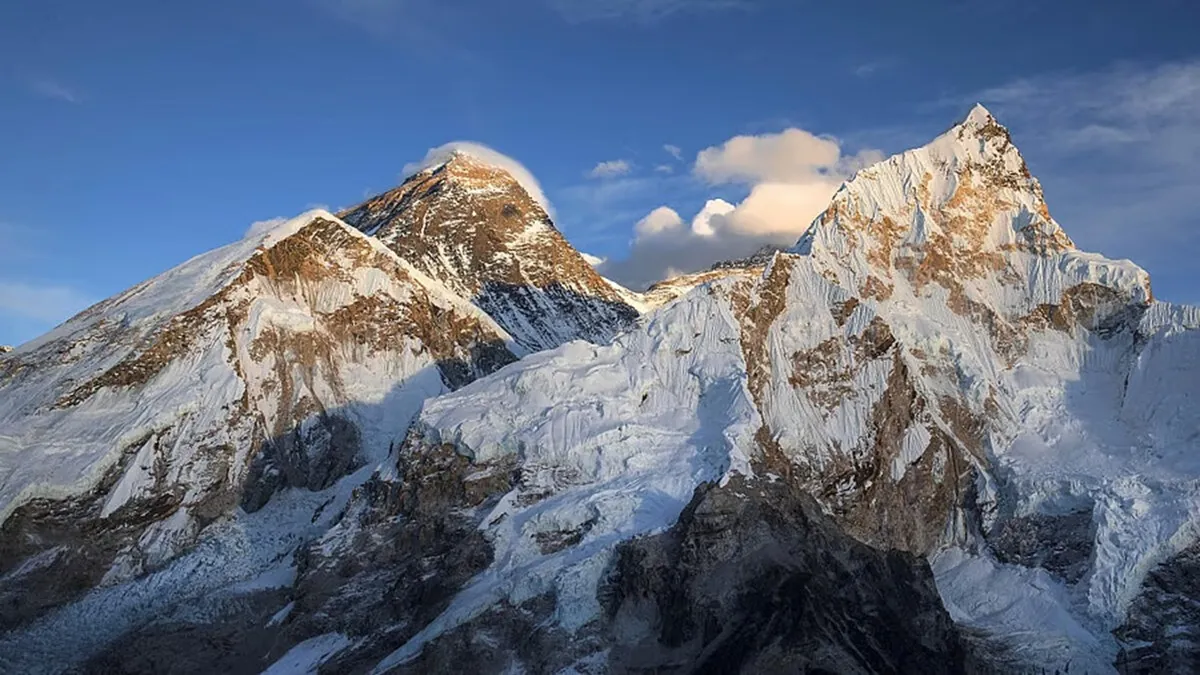
The family of Arun Kumar Tiwari, a 53-year-old tech professional from Telangana's Hyderabad who died near the Hillary Step while descending Mount Everest last week, has chosen to let his body remain on the mountain. As per the information, their decision is rooted in faith, his deep love for the Himalayas, and the extreme difficulty of retrieving a body from the death zone.
Pioneer Adventure, the agency managing the Indian expedition, initially quoted 114,000 dollars (Rs 1.1 crore) for a manual retrieval from above 8,000 metres. However, the amount was later reduced to 94,000 dollars (Rs 89.7 crore) as a gesture of solidarity. Speaking to The Times of India (TOI), Expedition organiser Nivesh Karki explained that this cost is nearly twice the fee for reaching the summit, which his company charges at 45,000 dollars for a full 55-day package between Kathmandu and Everest.
Karki said that Tiwari showed signs of extreme fatigue soon after beginning his final climb from Camp 4. Despite repeated requests from his personal Sherpa guide to turn back, Tiwari insisted on pushing forward, saying he could not give up when the summit was so close. He successfully reached the peak but collapsed while descending near the Hillary Step after vomiting blood. Sherpas tried to revive him with oxygen but he died on the spot.
Death Zone conditions make rescue attempts extremely dangerous
Tiwari died in one of the most treacherous sections of the mountain. The Hillary Step sits around 8,790 metres, just short of the summit. Helicopters can only operate up to Camp II at 6,400 metres. This means rescuers would have to bring the body down through nearly 2,400 vertical metres of the most exposed terrain on the mountain.
According to Karki, retrieval five days after the incident is almost impossible due to heavy snow. He said any attempt would put multiple Sherpas at serious risk. Recovering bodies from the death zone often requires a team of 8 to 10 Sherpas who spend days cutting bodies out of ice, securing them safely and guiding them through avalanche-prone ridges. These missions demand large quantities of bottled oxygen and expose rescuers to severe weather, frostbite and fatal falls. Karki clarified that insurance policies cover helicopter evacuations but not manual body retrievals.
Another Indian climber's body retrieved from lower altitude
Tiwari was part of an Indian expedition that also included 46-year-old Sandeep Are, who died after summiting Everest. Are's body could be brought down because he died near Camp III, where descending Sherpas managed to move him to Camp II, enabling helicopter evacuation.
Tiwari had attempted Everest in 2025 but had to abandon his climb at around 7,200 metres due to health concerns. He returned this season to fulfil his dream. Survived by his wife and two daughters, his family said the decision to leave him on Everest was not based solely on financial considerations but on what they believed he would have wanted.