Budget 2026: Rare Earth corridors, zero duty on Monazite to boost critical minerals push
The government proposes rare earth corridors in mineral-rich states and customs duty exemptions on critical minerals, including zero duty on monazite, in Union Budget 2026–27.
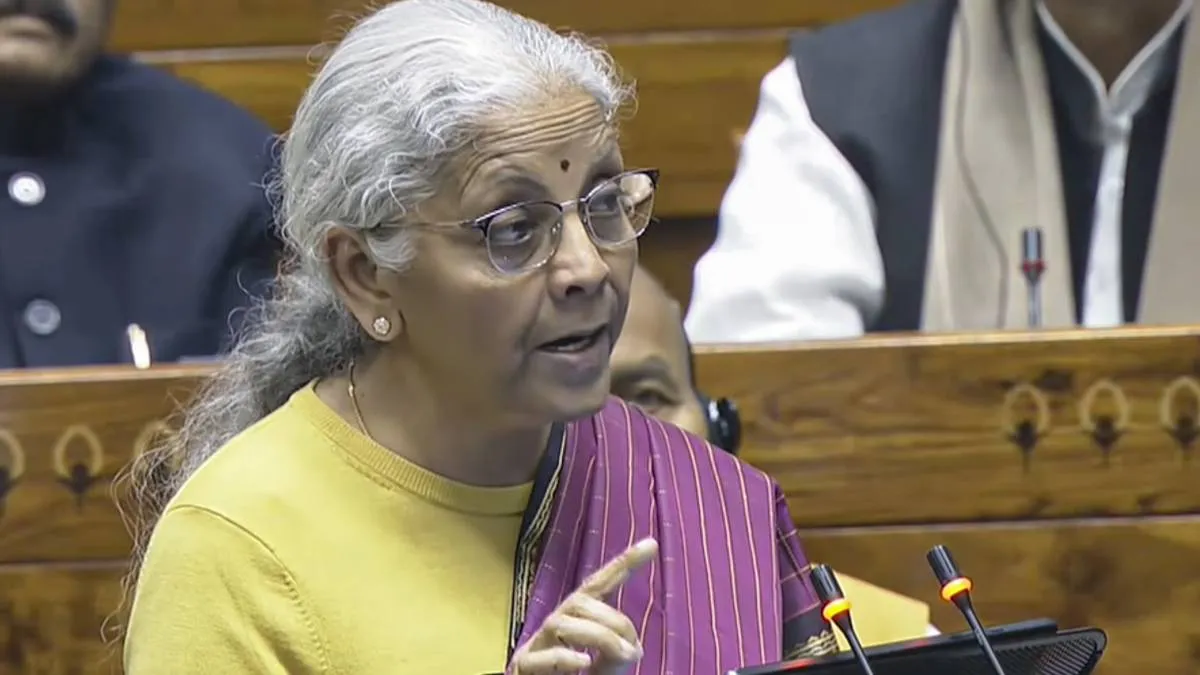
The government on Sunday proposed the creation of dedicated corridors in mineral-rich states such as Odisha and Tamil Nadu, along with import duty exemptions on capital goods required for processing critical minerals, to boost mining and processing activities.
Push to reduce import dependence on critical minerals
The proposal assumes significance amid the government’s focus on promoting rare earth and critical minerals to reduce import dependence. These minerals are crucial for applications in electric vehicles, renewable energy, electronics, aerospace, and defence.
Customs duty exemption on capital goods
While presenting the Union Budget 2026–27 in the Lok Sabha, Finance Minister Nirmala Sitharaman said:
“It is proposed to provide basic customs duty exemption to the import of capital goods required for processing of critical minerals in India”.
Rare earth corridors in mineral-rich states
The Finance Minister noted that a Scheme for Rare Earth Permanent Magnets was launched in November 2025. She added:
“We now propose to support the mineral-rich states of Odisha, Kerala, Andhra Pradesh, and Tamil Nadu to establish dedicated Rare Earth Corridors to promote mining, processing, research, and manufacturing”.
Customs duty on monazite reduced to zero
The Finance Minister also proposed to reduce customs duty on Monazite, listed under the critical minerals category, to zero from the existing 2.5 per cent.
Monazite is a reddish-brown phosphate mineral found in igneous and metamorphic rocks or as heavy grains in placer deposits. It is a primary ore for rare-earth elements such as cerium, lanthanum, and neodymium, and also contains radioactive thorium.
Scheme to promote rare earth permanent magnet manufacturing
Earlier, in November 2025, the Union Cabinet approved the Scheme to Promote Manufacturing of Sintered Rare Earth Permanent Magnets (REPMs) with a financial outlay of ₹7,280 crore.
The initiative aims to establish 6,000 metric tonnes per annum (MTPA) of integrated REPM manufacturing capacity in India, strengthening self-reliance and positioning the country as a key player in the global REPM market.
Importance of REPMs across key sectors
REPMs are among the strongest permanent magnets and are essential for electric vehicles, renewable energy, electronics, aerospace, and defence applications.
The scheme will support the creation of integrated REPM manufacturing facilities, involving the conversion of rare earth oxides to metals, metals to alloys, and alloys to finished REPMs.
Rising demand and self-reliance push
Driven by rising demand from electric vehicles, renewable energy, industrial applications, and consumer electronics, India’s consumption of REPMs is expected to double by 2030 from 2025, as stated by the government.
At present, India’s REPM demand is primarily met through imports. With this initiative, India aims to establish its first-ever integrated REPM manufacturing facilities, generate employment, strengthen self-reliance, and support the country’s commitment to achieving Net Zero by 2070.