NASA rolls Artemis Moon rocket back to hangar after fresh technical issues
NASA has rolled back its 322-foot Artemis Space Launch System rocket to the Vehicle Assembly Building following helium system issues and persistent hydrogen leaks, delaying the Artemis II crewed lunar flyby to at least April.
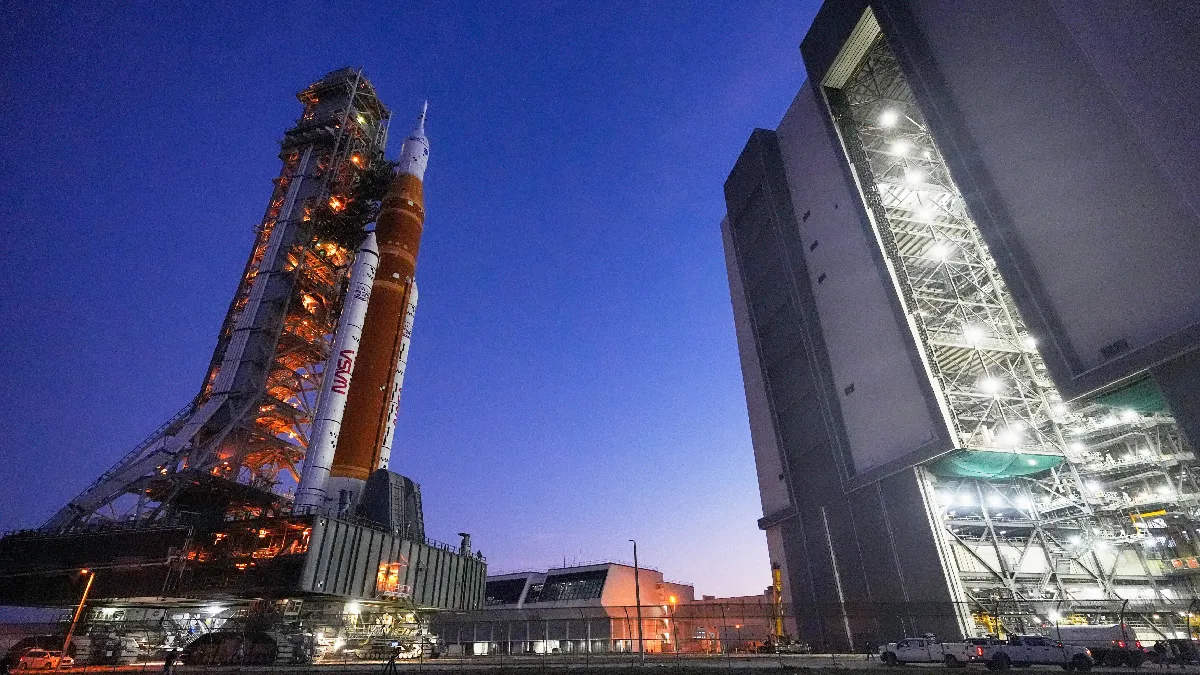
NASA on Wednesday moved its grounded Artemis moon rocket from the launch pad back to its hangar for further repairs. The slow journey at Kennedy Space Centre took the entire day. The 322-foot (98-metre) Space Launch System had spent a month at the pad preparing for a potential liftoff but encountered a series of issues serious enough to require a return to the Vehicle Assembly Building, located about 4 miles (6.4 kilometres) away.
Helium system malfunction forces rollback
Mission managers ordered the rollback over the weekend after the rocket’s helium pressurisation system malfunctioned. The mission had already been delayed by a month due to hydrogen fuel leaks.
The launch team had been targeting March for astronauts’ first trip to the moon in decades. However, the Artemis II lunar fly-around by a US-Canadian crew has now been postponed until at least April.
Artemis II crew and ongoing fuel leak challenges
All four astronauts were present at the US Capitol on Tuesday night for President Donald Trump’s State of the Union address as invited guests, as the delay removed the need for quarantine.
NASA has been battling hydrogen fuel leaks since the space shuttle era, which provided many of the engines used in the SLS. The first Artemis test flight without a crew was grounded for months due to leaking hydrogen before finally launching in November 2022.
Safety emphasised ahead of Artemis III
Going years between flights can worsen such issues, according to NASA’s new administrator, Jared Isaacman, a tech entrepreneur who financed his own orbital trips through SpaceX.
Just two months into the role, Isaacman has pledged to redesign the fuel connections between the rocket and the launch pad before the next Artemis III mission. Scheduled for a few years from now, Artemis III aims to land two astronauts near the moon’s south pole.
“We will not launch unless we are ready, and the safety of our astronauts will remain the highest priority,” he said last week on X.
Isaacman reiterated the importance of safety during the February 20 fueling test while releasing a critical report on Boeing’s Starliner capsule programme, which left two astronauts stranded for months aboard the International Space Station. He said the crisis could have resulted in a loss of crew and attributed responsibility to both Boeing and NASA leadership.
ALSO READ: ISRO details NVS-02 orbit-raising anomaly, apex committee recommends corrective measures