James Webb Space Telescope: New study disclosed harsh condition of distant planets for first time
Astronomers have used the James Webb Space Telescope to directly study the surface of an exoplanet for the first time. The findings on LHS 3844 b reveal a harsh, Mercury-like world with no atmosphere, offering new insights into distant rocky planets.
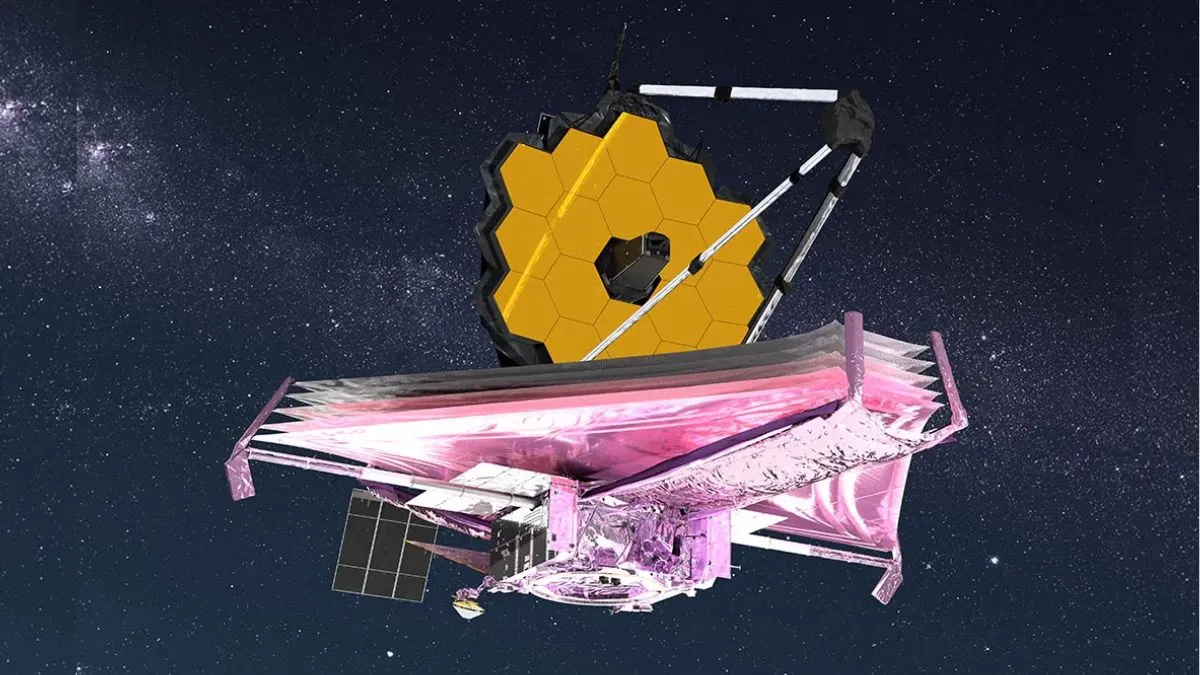
Scientists have finally managed to look past the clouds and study the actual surface of an alien planet, which is the first in exoplanet research. They used the James Webb Space Telescope to zero in on LHS 3844 b. It is a rocky world orbiting a star about 48.5 light-years from us. The findings, which were published in Nature Astronomy on May 4 (2026), are a big deal for anyone curious about what planets look like beyond our solar system.
A planet closer to Mercury than Earth
Unlike Earth, LHS 3844 b is more of a hot cousin to Mercury or the Moon. The planet is reportedly bigger than Earth, about 30 per cent larger, but honestly, that is where the similarities end. It whips around its star in just eleven hours and always shows the same face to that star, kind of like the Moon does with Earth. Daytime temperatures spike to a blistering 725°C. Researchers used JWST’s Mid-Infrared Instrument (MIRI) to catch heat coming right off the surface, which revealed a dark landscape rich in basalt and minerals like olivine. So, forget Earth’s watery crust and shifting plates; this place is all about dry, ancient rocks.
No atmosphere, extreme conditions
And it gets rougher as LHS 3844 b is pretty much naked, without any atmosphere at all. So, its surface takes a constant beating from radiation and micrometeorites. This bombardment breaks rocks down into fine dust called regolith, slowly changing the planet’s chemical makeup. The scientists scanned for volcanic gases like carbon dioxide or sulfur dioxide, but they did not find any. That means there is not much in the way of active volcanoes or fresh geological activity.
What does this discovery mean for science?
All in all, this study is a game-changer. For the first time, scientists can actually peek at the makeup of an exoplanet’s surface, not just its atmosphere. The hope is that with more observations using Webb, we’ll get better at this and learn even more about other rocky worlds out there. Who knows? Maybe we’ll figure out how these planets form and evolve—or even which ones could support life.