ISS with Indian astronaut Shubhanshu Shukla spotted over Kodaikanal skies: Video
Shubhanshu Shukla is the first Indian astronaut to step on the ISS. He has currently spent 12 days in the ISS and is conducting various experiments for ISRO.
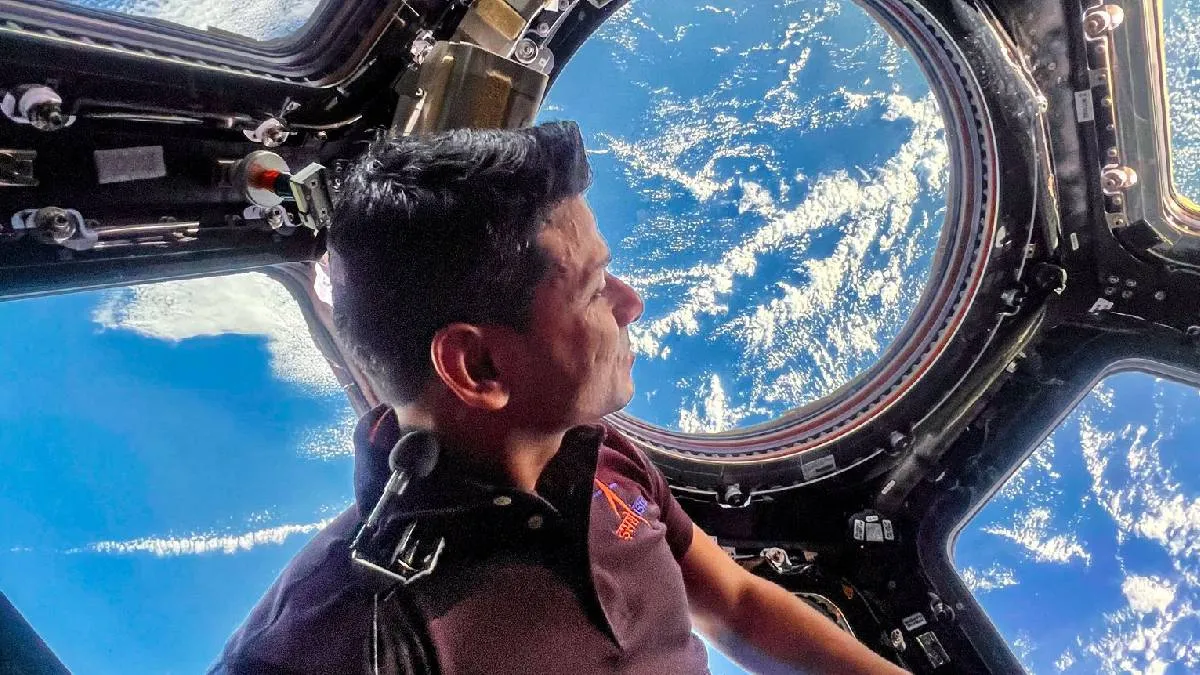
Indian astronaut Shubhanshu Shukla is currently aboard the International Space Station (ISS). Recently, a rare event occurred when the space station was captured as it flew over Indian skies. Scientists at the Kodaikanal Solar Observatory, which is located in the Palani Hills of Tamil Nadu, recorded this remarkable sight. Shubhanshu Shukla is the first Indian to travel to the ISS and is currently conducting various experiments as part of the Axiom-4 mission. He serves as a Group Captain in the Indian Air Force, he has already spent 212 days on the ISS.
Watch video here:
The Kodaikanal Solar Observatory, run by the Indian Institute of Astrophysics since 1899, is famous for its important work in studying the Sun and has a long history of looking at the stars. Recently, the team at the observatory switched their focus from the Sun and looked up at the night sky to observe the International Space Station (ISS) as it zipped across India.
International Space Station
The ISS orbits the Earth at a distance of about 400 kilometers above us, and travels incredibly fast at 28,000 kilometers per hour. To the naked eye, it appears as a bright dot moving quickly across the sky.
Axiom-4 mission:
The crew of Axiom Mission 4 (Ax-4) are currently in the last week of their stay on the International Space Station. They are working to complete a variety of important scientific projects, technology tests, and outreach efforts to connect with people back on Earth. Axiom-4 mission commander Peggy Whitson, Pilot Shubhanshu ‘Shux’ Shukla, and Mission Specialists Sławosz ‘Suave’ Uznański-Wiśniewski and Tibor Kapu have been working hard for the past eleven days on research that could influence the future of space travel and provide benefits for life on Earth.
ALSO READ: Named 'City Killer,' giant asteroid raises fears of catastrophic collision with Earth in 2032