ISRO-NASA's NISAR satellite to be declared operational on November 7, says ISRO chief
Considered the most expensive Earth observation satellite ever built, the 2,400 kg NISAR was launched on July 30 using ISRO’s GSLV rocket from the Satish Dhawan Space Centre.
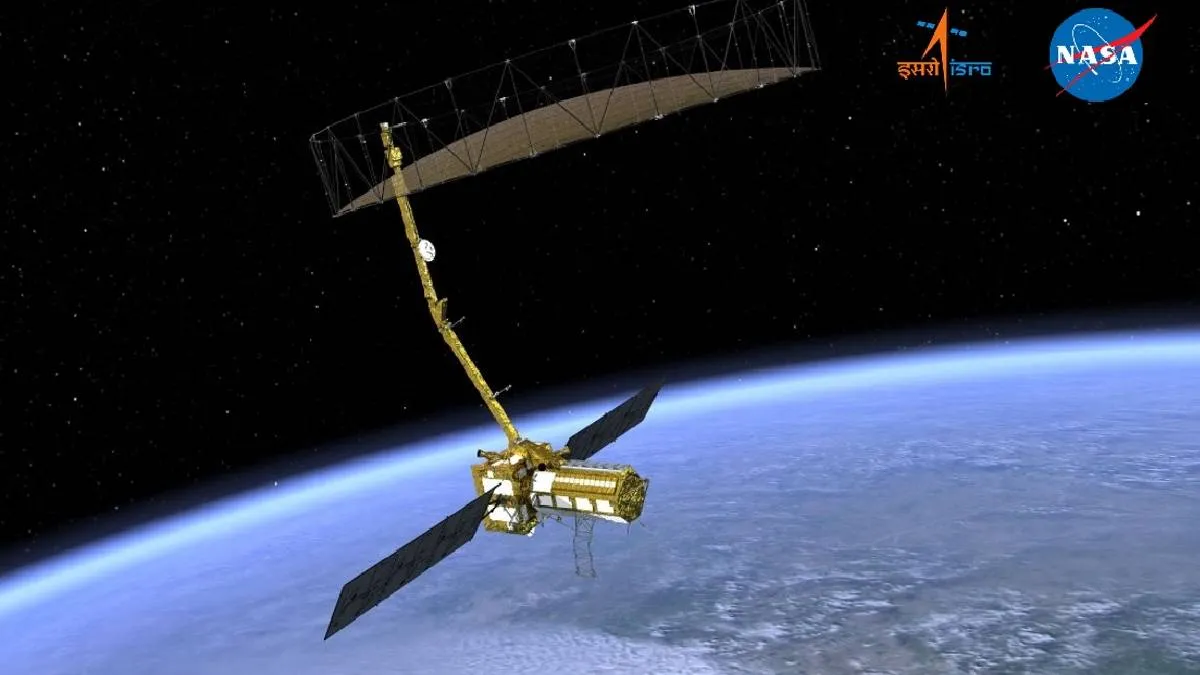
ISRO Chairman V Narayanan announced Wednesday that the NASA-ISRO Synthetic Aperture Radar (NISAR) satellite, the first ever jointly developed by the two space agencies, is set to be declared operational on Friday.
The 2,400 kg NISAR satellite, which was launched on July 30 using ISRO’s GSLV rocket from the Satish Dhawan Space Centre, is considered the most expensive Earth observation satellite ever built. It possesses the remarkable ability to monitor most of the planet’s land and ice surfaces twice every 12 days.
"Entire data calibration has been completed, and we will have a conclave on November 7 to declare the satellite operational," Narayanan confirmed at the Emerging Science, Technology and Innovation Conclave (ESTIC). He added, "All the data is very outstanding... it is going to be a highly useful satellite".
Advanced Dual-Band Sensing
The NISAR mission is unique as it is the first to carry two Synthetic Aperture Radar (SAR) systems: the L-Band and S-Band sensors. Both systems are designed to collect high-resolution data through clouds and precipitation, day and night.
The L-band radar provides deep penetration to measure soil moisture, forest biomass, and the motion of land and ice surfaces.
The S-band radar is more sensitive to small vegetation, observing specific agriculture and grassland ecosystems, as well as moisture in snow.
Update on Gaganyaan and Indian Space Station
Narayanan also provided updates on India's human spaceflight program, Gaganyaan, and the future space station.
The first uncrewed mission of the Gaganyaan project is expected to take place in January. ISRO plans to conduct a total of three uncrewed missions before sending astronauts into space on a home-built rocket by 2027. So far, over 8,000 tests have been carried out for the mission.
The head of ISRO also shared exciting news about India's plans for a space station. They are looking to launch the first part of this station by 2028, with the goal of having the entire space station up and running by 2035. This facility, which will weigh around 52 tons, is designed to support a small group of astronauts—between three to four people—for long missions in space.
ALSO READ: Urgent warning: Don't fall for new traffic challan fraud, here's how to avoid the scam