US deploys aircraft carrier USS Nimitz to Caribbean as Trump threatens to invade Cuba
Amidst rising tensions between the United States and Cuba, the US aircraft carrier USS Nimitz has arrived in the Caribbean Sea. The US Southern Command has described this as a significant military deployment for democracy and regional stability.
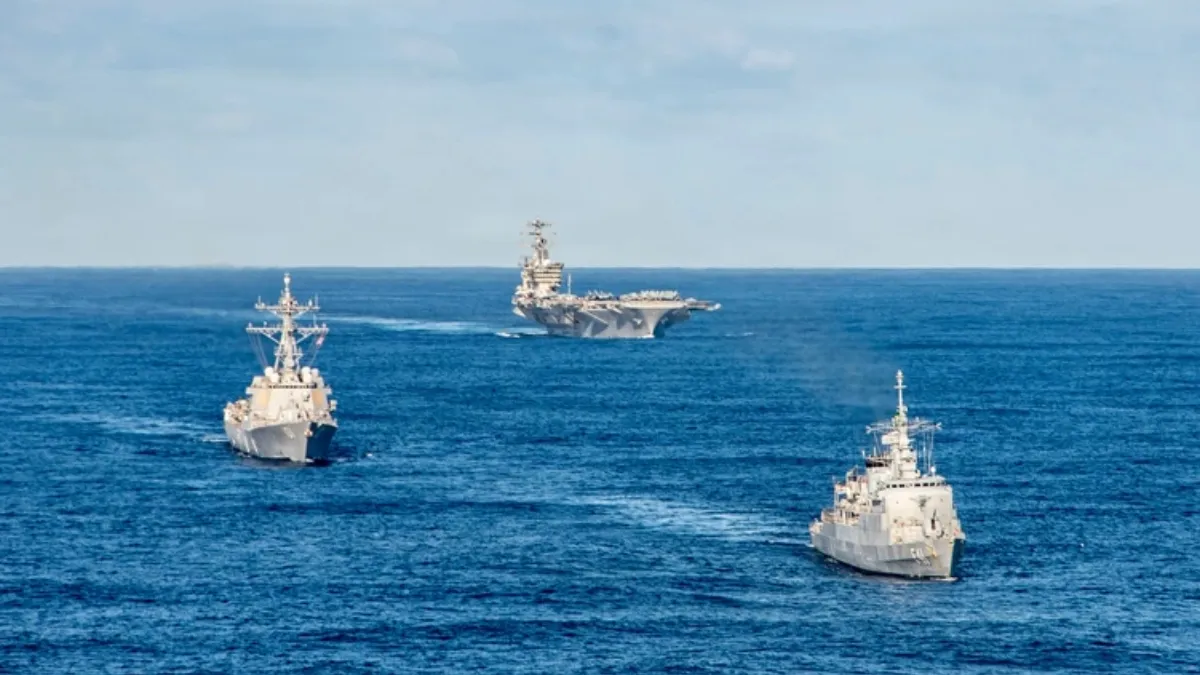
Amidst rising tensions between the United States and Cuba, the US Navy aircraft carrier, the USS Nimitz, has arrived in the Caribbean Sea along with its strike group. According to a report by the US media outlet The Hill, this deployment comes at a time when US President Donald Trump has intensified his rhetoric against Cuba and threatened action against the island nation.
Aircraft carrier USS Nimitz in Cuba
The US Southern Command, which oversees US military operations in the Caribbean and Latin America, announced this deployment on Wednesday. "USS Nimitz has proven its combat prowess across the globe, ensuring stability and defending democracy from the Taiwan Strait to the Arabian Gulf," Southcom said in a post on X.
The carrier strike group includes the Nimitz-class aircraft carrier USS Nimitz, its air wing comprising F/A-18E Super Hornets, EA-18G Growlers and C-2A Greyhounds, along with USS Gridley, an Arleigh Burke-class destroyer, and USNS Patuxent, a Henry J Kaiser-class underway replenishment oiler.
It is worth noting that the USS Nimitz was commissioned into the US Navy in 1975. Recently, this warship also conducted joint naval exercises with the Brazilian Navy off the coast of Rio de Janeiro, according to the US Embassy in Brazil.
Cuba on our mind: Trump
Earlier on Wednesday, President Trump said the administration has Cuba "on our mind" after the US Department of Justice formally charged former Cuban President Raul Castro with murder and other offences linked to the 1996 downing of two civilian aircraft over international waters that killed four people.
"It's very important," Trump said. "It was a very big moment for people, not only Cuban Americans, but people who came from Cuba, that want to go back to Cuba, see their family in Cuba."
US Secretary of State Marco Rubio, who is Cuban-American, also issued a message in Spanish to the Cuban people, backing the US fuel blockade on the island while blaming recurring power outages on Cuba's communist government.
CIA Director John Ratcliffe met Cuban officials on the island last week and warned that the window for talks would not remain open indefinitely.
Also Read: 'Either have a deal, or...: Trump hints Iran deal near, Tehran serves 'crushing blows' retort
Also Read: 'War will end very quickly': Trump claims Iran is desperate to make a deal, oil prices to plummet