Iran’s ‘new leadership’ signals openness to talks as US strikes continue, White House says
A White House official said Iran’s potential new leadership has signalled openness to talks with the US after American-Israeli strikes killed Ayatollah Ali Khamenei. President Donald Trump said he is willing to talk “eventually” as military operations continue.
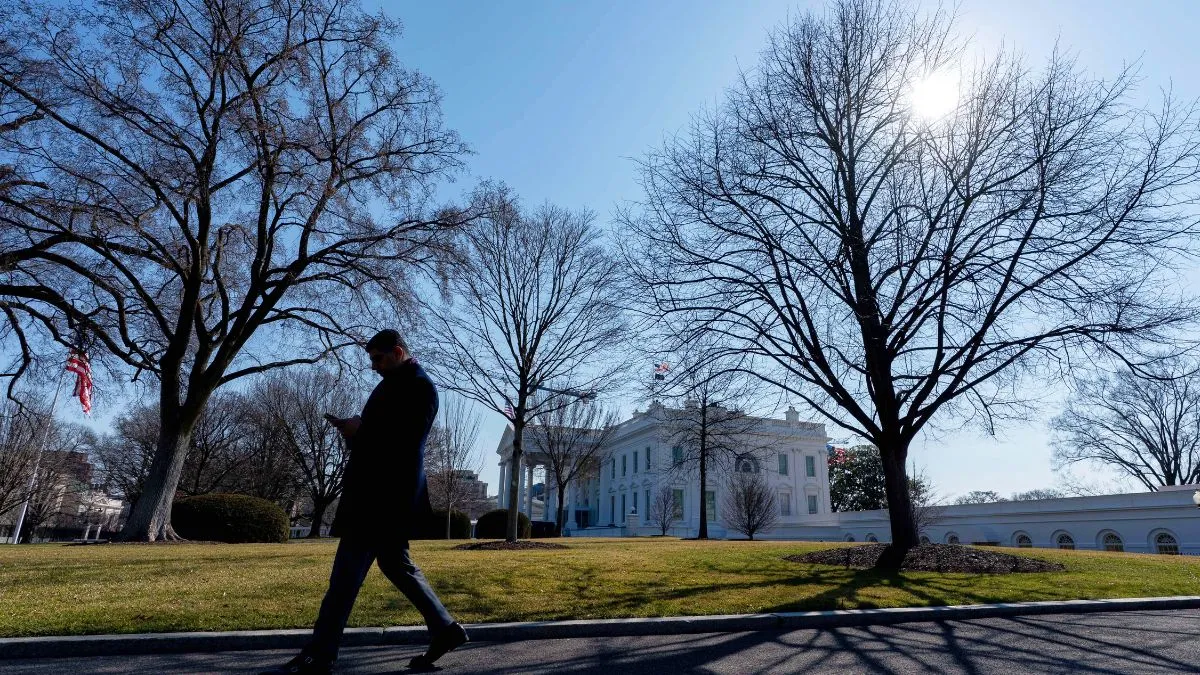
A senior White House official said Sunday that Iran’s “new potential leadership” has suggested it is open to talks with the United States after American and Israeli forces launched a major attack on Tehran, killing the country’s Supreme Leader and other high-ranking officials.
The official, who spoke on condition of anonymity to discuss internal administration deliberations, said President Donald Trump is “eventually” willing to talk, but for now the military operation “continues unabated.” The official did not identify the potential new Iranian leaders or explain how their willingness to talk was communicated.
Trump says he plans to speak with Iran’s new leadership
In an interview with The Atlantic on Sunday, Trump said he planned to speak with Iran’s new leadership.
“They want to talk, and I have agreed to talk, so I will be talking to them,” he said, declining to comment on the timing.
The potential diplomatic opening comes as further details emerge about the planning behind the US-Israeli strikes and the targets hit inside Iran.
US central command details airstrikes
US Central Command said B-2 stealth bombers struck Iran’s ballistic missile facilities with 2,000-pound bombs. The approach mirrors operations in June, when Trump authorised B-2 bombers to attack three key Iranian nuclear sites.
In his State of the Union address last week, Trump claimed Iran had been building ballistic missiles capable of reaching the US homeland, a justification he repeated on Saturday when announcing the bombardment.
Iran has not acknowledged building or seeking intercontinental ballistic missiles. However, the US Defense Intelligence Agency said in an unclassified report last year that Iran could develop a militarily viable intercontinental ballistic missile by 2035 “should Tehran decide to pursue the capability.”
CIA intelligence shared with Israel
Before the attacks, the Central Intelligence Agency had for months tracked the movements of senior Iranian leaders, including Supreme Leader Ayatollah Ali Khamenei, according to a person familiar with the operation.
The intelligence was shared with Israeli officials, and the timing of the strikes was adjusted in part based on that information, the person said.
The New York Times earlier reported on the CIA’s efforts before the Israeli-US strikes.
Lawmakers react to intelligence sharing
Sen. Tom Cotton, chairman of the Senate Intelligence Committee, declined to discuss operational details on Face the Nation but said tracking adversarial leaders “is obviously one of the highest priorities of our intelligence community.”
“Clearly, this operation is driven by intelligence collected by Israel and the United States that has once again proven that our nations have capabilities that no other nation on Earth has,” Cotton said.
Virginia Sen. Mark Warner told The Associated Press that historically, “our working relationship with the Mossad and Israel is really strong,” referring to Israel’s intelligence agency.
Warner said he has serious concerns about the justification for the strikes, Trump’s long-term plans and the risks facing US service members. The military announced Sunday that three American troops were killed and five seriously wounded in the Iran operation.
“No tears will be shed over their leadership being eliminated, but always the question is: OK, what next?” Warner said.
ALSO READ: PM Modi speaks to Israel's Netanyahu, reiterates 'need for early cessation of hostilities'