Bangladesh Election: Why Jamaat's win in Indo-Bangladesh border areas raises security concerns - Explained
Bangladesh Election: The Jamaat-e-Islami, which has a long history of anti-India activities won in the border areas of Satkhira-1, Satkhira-2, Satkhira-3 and Satkhira-4, Sherpur-1, Naogaon-2, Joypurhat-1, Rangpur constituencies (1, 2, 3, 5 and 6), Gaibandha-1.
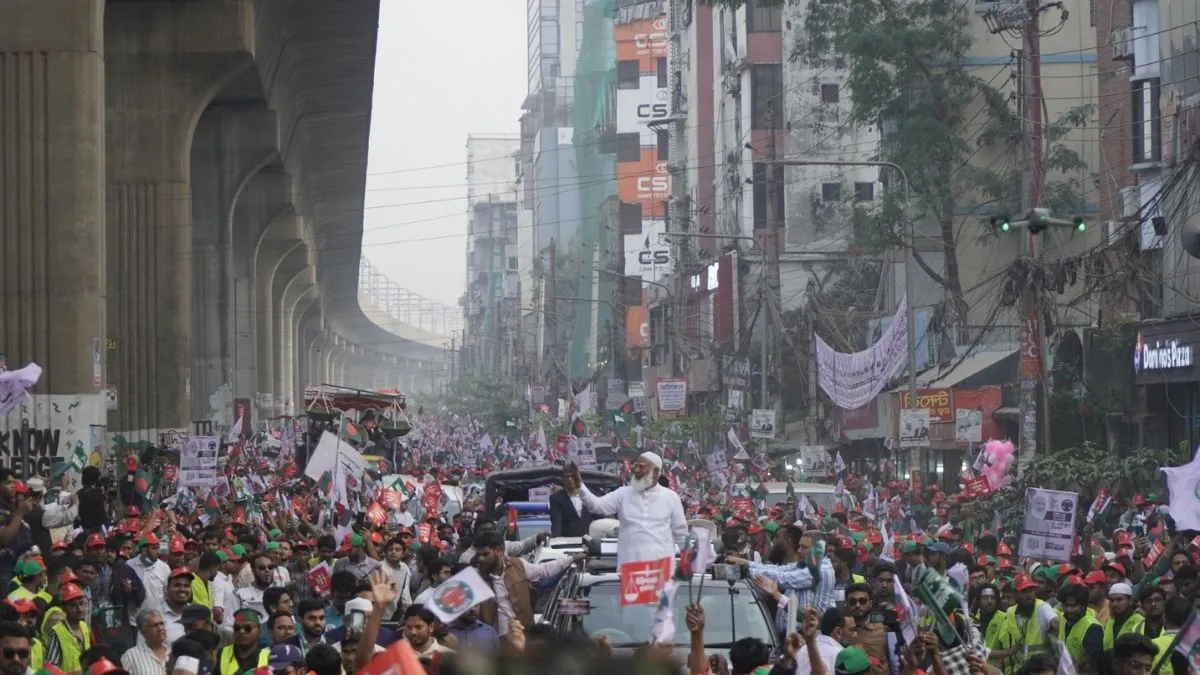
The Indian leaderships welcomed Bangladesh Nationalist Party (BNP)'s landslide victory with PM Narendra Modi congratulated BNP chief Tarique Rahman saying, "India will continue to stand in support of a democratic, progressive and inclusive Bangladesh." But at the same time, India is a bit concern with the Jamaat-e-Islami's victory in border areas neighbouring country's eastern and north eastern states of West Bengal, Meghalaya.
The Jamaat-e-Islami, which has a long history of anti-India activities won in the border areas of Satkhira-1, Satkhira-2, Satkhira-3 and Satkhira-4, Sherpur-1, Naogaon-2, Joypurhat-1, Rangpur constituencies (1, 2, 3, 5 and 6), Gaibandha-1. Jamaat-e-Islami and its allies won a total of 76 seats in the 13th parliamentary election. Bangladesh Election Results 2026 LIVE
Why Jamaat's win raises security concerns for India?
Jamaat-e-Islami is well known for its anti-India activities and it's top leaderships maintain bonhomie relationships with Pakistani establishment. During the 1971 Bangladesh Liberation war, the party opposed the independence of Bangladesh and was a part of Pakistan’s military oppression machinery. The role of Jamaat-linked collaborators such as Razakar, Al-Badr and Al-Shams for killing thousands of civilians during the 1971 Liberation War are documented in international criminal proceedings and tribunal records.
Why was Jamaat banned in Hasina regime?
Under Sheikh Hasina's government, Jamaat leaders faced persecution and top figures like Motiur Rahman Nizami and Ali Ahsan Mohammad Mojaheed were executed. The Bangladesh High Court cancelled Jamaat's registration in 2013, and spent in isolation for a decade. Following the Bangladesh PM Sheikh Hasina's ouster in 2024 which according to experts was a handicraft of Jamaat-e-Islami among others, the party moved to Bangladesh Supreme Court for restoration. In June 2025, the Bangladesh Supreme Court ordered the Election Commission to dispose of pending issues of Jamaat-e-Islami, including its registration.
The party was also earlier banned in 1972 after independence for seven long years which was lifted in 1979.
BNP sets for a landslide victory
BNP has registered a landslide victory in 13th parliamentary election. As per the latest trends, BNP has won 213 seats, Jamaat and allies bagged 71 seats. Islami Andolon Bangladesh has won one seat, others- 6 seats. The election mainly saw a contest between the Bangladesh Nationalist Party and its former ally, Jamaat-e-Islami. The Awami League, once led by former prime minister Sheikh Hasina, did not take part as the party has since been disbanded.
Bangladesh polls featured 127 million eligible voters, nearly half aged 18-37, with 4.57 million first-timers, across 299 constituencies. Some 1,755-1,981 candidates from 50-59 parties competed, BNP fielding 291 as frontrunner; banned Awami League was excluded. BNP-Jamaat rivalry centered on corruption, inflation, jobs and economic growth. A parallel vote tested Muhammad Yunus's interim government's 84-point National Charter 2025 for governance reforms.
Also Read: