An unfazed Iran refuses to stop Uranium enrichment, fires warning to US as tensions grow | Top Updates
Tehran has signalled that it would maintain its position that it must be allowed to enrich uranium, a central point of dispute with President Donald Trump, who bombed Iranian atomic sites in June during the 12 day Iran Israel war.
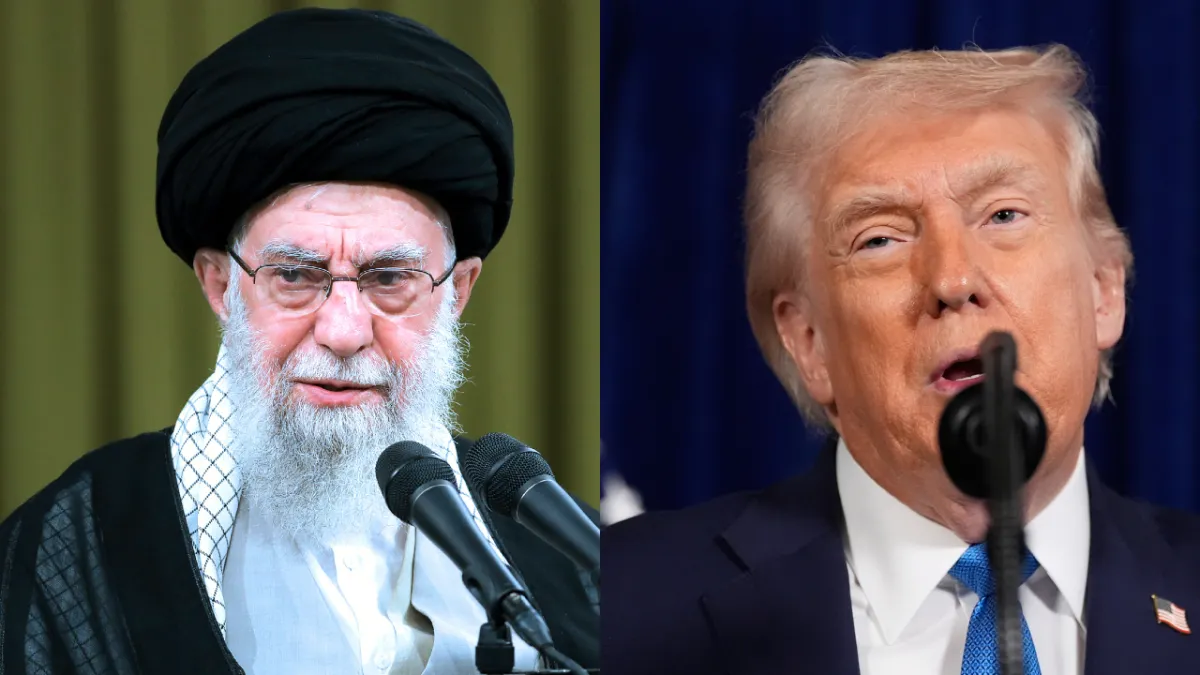
Iran's top diplomat has insisted that Tehran’s strength stemmed from its ability to "say no to the great powers," adopting a maximalist tone shortly after negotiations with the United States over its nuclear programme and amid nationwide protests.
Foreign Minister Abbas Araghchi, speaking to diplomats at a summit in Tehran, signalled that Iran would maintain its position that it must be allowed to enrich uranium, a central point of dispute with President Donald Trump, who bombed Iranian atomic sites in June during the 12-day Iran-Israel war.
Nuclear rhetoric
While Iranian President Masoud Pezeshkian described the talks held on Friday in Oman with the Americans as "a step forward," Araghchi’s remarks underlined the challenges ahead. The United States has already moved the aircraft carrier USS Abraham Lincoln, along with ships and warplanes, to the Middle East to pressure Iran into an agreement and to retain the capacity to strike the Islamic Republic should Trump choose to do so.
"I believe the secret of the Islamic Republic of Iran's power lies in its ability to stand against bullying, domination and pressures from others," Araghchi said. "They fear our atomic bomb, while we are not pursuing an atomic bomb. Our atomic bomb is the power to say no to the great powers. The secret of the Islamic Republic’s power is in the power to say no to the powers."
Araghchi’s explicit use of an “atomic bomb” as a rhetorical device appeared deliberate. While Iran has long maintained that its nuclear programme is peaceful, Western countries and the International Atomic Energy Agency say Tehran had an organised military programme aimed at developing a bomb until 2003.
Iran has been enriching uranium to up to 60 per cent purity, a short technical step from the weapons grade level of 90 per cent, making it the only non weapons state to do so. In recent years, Iranian officials have increasingly suggested that the Islamic Republic could pursue a bomb, even as diplomats have pointed to Iranian Supreme Leader Ayatollah Ali Khamenei’s pronouncements as a binding fatwa, or religious edict, prohibiting the construction of such a weapon.
Military pressure and uncertain talks
Pezeshkian, who instructed Araghchi to pursue talks with the Americans after likely securing Khamenei’s approval, also commented on the negotiations in a post on X on Sunday.
"The Iran US talks, held through the follow up efforts of friendly governments in the region, were a step forward,” the president wrote.
"Dialogue has always been our strategy for peaceful resolution. The Iranian nation has always responded to respect with respect, but it does not tolerate the language of force," he added.
Iran-US talks update
It remains unclear whether, when or where a second round of talks will take place. Trump offered few details after Friday’s meeting, but said: "Iran looks like they want to make a deal very badly as they should."
During the talks in Oman, US Navy Admiral Brad Cooper, the head of US Central Command, was present in the country, a move widely seen as a reminder to Iran of the American military footprint in the region. Cooper later accompanied US special envoy Steve Witkoff and Jared Kushner, Trump’s son-in-law, to the Lincoln in the Arabian Sea following the indirect negotiations.
Araghchi appeared to acknowledge the seriousness of a potential US military strike, reflecting concerns expressed by many Iranians in recent weeks. He noted that after multiple rounds of talks last year, the United States “attacked us in the midst of negotiations.”
“If you take a step back in negotiations, it is not clear up to where it will go,” Araghchi said.
Also read: Trump imposes more sanctions on Iran despite 'very good' talks in Oman | 10 Points