What was Op Parakram after the Parliament attack and why it became India's longest military mobilisation?
Operation Parakram was India's large-scale military mobilisation following the 2001 Parliament attack, aimed at pressuring Pakistan to act against terror groups. The deployment lasted nearly ten months and brought the two countries close to war.
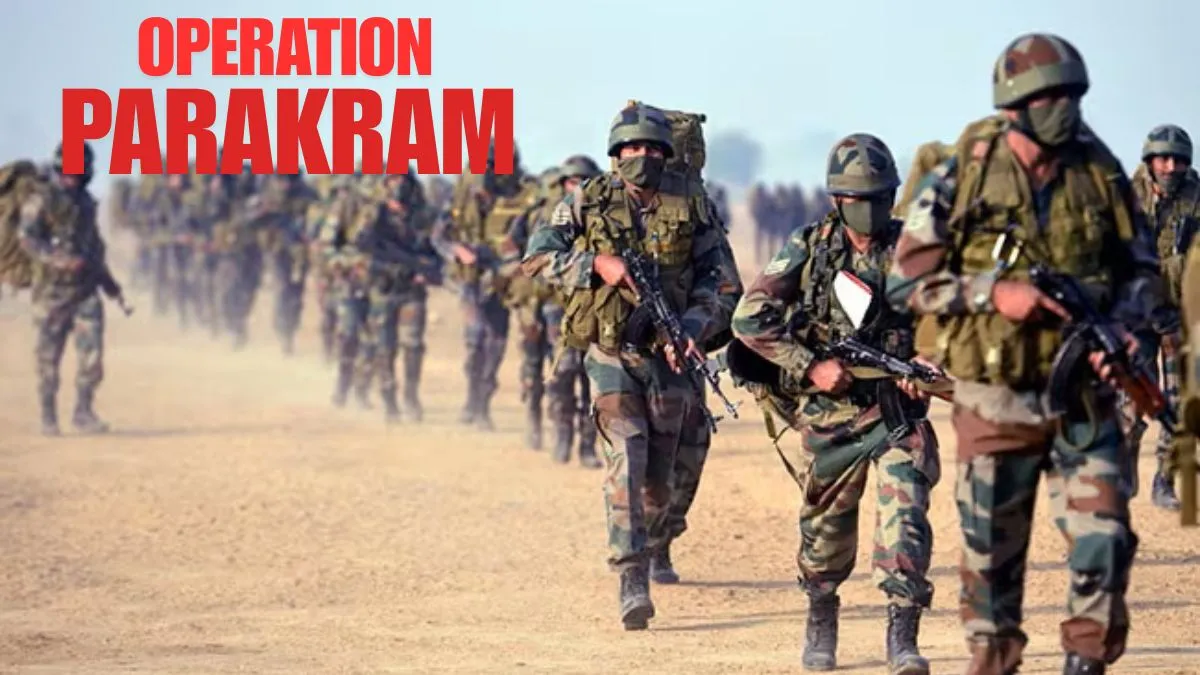
Operation Parakram was India's large-scale military mobilisation launched in the immediate aftermath of the December 13, 2001, attack on the Indian Parliament. The assault, carried out by heavily armed terrorists linked to Pakistan-based groups, was seen as a direct strike on the heart of India's democracy. In response, the Indian government ordered a full mobilisation of the armed forces along the western border. This mobilisation went on to become one of the largest military deployments India had undertaken since the 1971 war.
Why was Operation Parakram launched?
The primary objective of Operation Parakram was to exert strategic and political pressure on Pakistan. India wanted to demonstrate that attacks on its sovereignty would not go unanswered. The mobilisation aimed to force Pakistan to dismantle terror infrastructure operating from its soil and to send a clear message that India was prepared for escalation if necessary. While the operation stopped short of a full-scale war, the intent was unmistakable. India wanted accountability for the Parliament attack and a shift in Pakistan's counterterror posture.
The scale and deployment of forces
Operation Parakram saw more than 5,00,000 Indian troops deployed along the Line of Control and the international border. The Army, Air Force and Navy were brought into a high state of readiness. The mobilisation included heavy armour, artillery, missile units and air assets positioned for rapid offensive action. Forward airbases were activated and naval fleets were placed on alert. The scale surprised many global observers because it signalled India's willingness to escalate tensions in response to cross-border terrorism.
The cost, delays and near-war situation
One of the major criticisms of Operation Parakram was the time it took for Indian strike formations to reach operational positions. Months of deployment resulted in a prolonged standoff. During this period, there were multiple skirmishes, mine accidents and harsh-weather casualties on both sides. The cost of the mobilisation is estimated to have exceeded several thousand crore rupees. The high alert status lasted nearly ten months and brought India and Pakistan dangerously close to war on more than one occasion.
Diplomatic outcomes and final withdrawal
Although India did not launch a full military offensive, Operation Parakram contributed to diplomatic pressure on Pakistan. International actors, including the United States, intervened, pushing Pakistan to take commitments on reducing cross-border infiltration and acting against extremist groups. By October 2002, India began withdrawing troops as the political objective of creating pressure had largely been met. The operation ended formally in 2003.
Legacy of Operation Parakram
It should be mentioned here that Operation Parakram remains a significant chapter in India’s military and strategic history. It highlighted challenges in rapid mobilisation and triggered reforms in India's war-readiness, border infrastructure and joint-operational capabilities. More importantly, it underlined India's determination to respond firmly to attacks on national institutions. The operation continues to be studied for its lessons on deterrence, preparedness and civil-military decision-making.
ALSO READ: Operation Gibraltar: How Pakistan's failed plan triggered the 1965 India-Pakistan war | Explained