Vande Mataram gets back 4 stanzas, must be played at govt, school events: List of Centre's new guidelines
The last four stanzas of Vande Mataram - the National Song of India were removed by the Congress in 1937. These have now been added back by the Centre, keeping the hymn in its entirety.
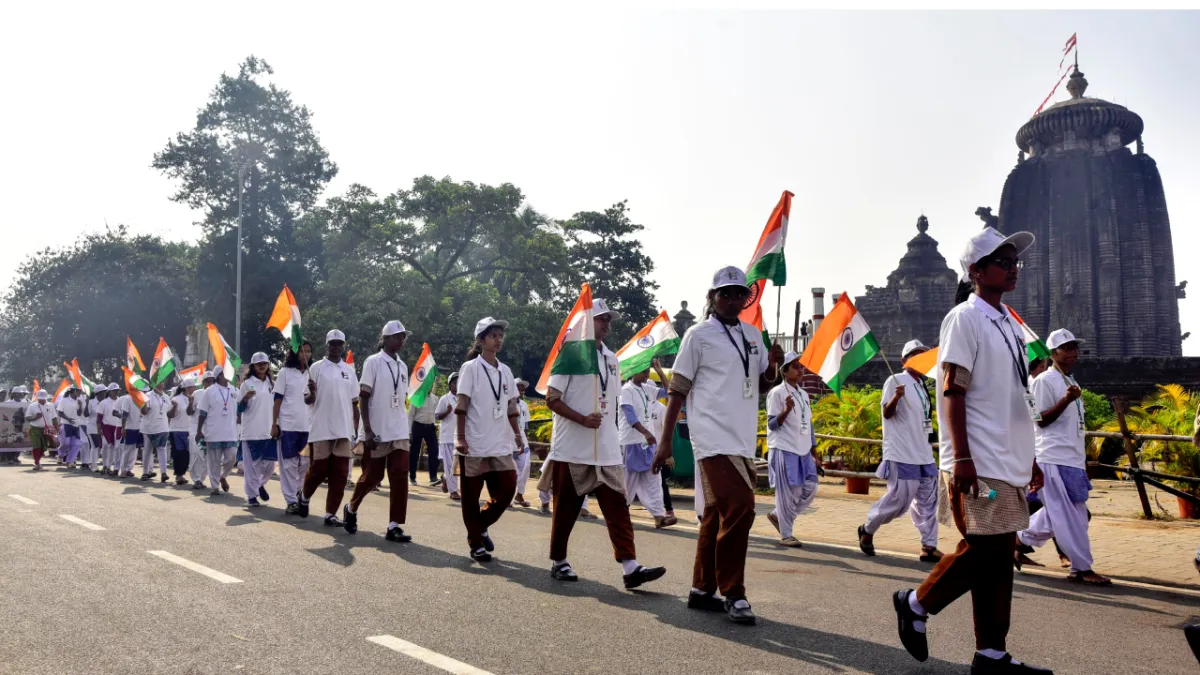
Vande Mataram - the National Song of India will now be sung or played with all of its 6 original stanzas, the Ministry of Home Affairs has said in its revised guidelines, bringing back the 4 stanzas which were removed by the Congress in 1937.
The Centre said that whenever the official version of the National Song is sung or played, the audience shall stand to attention. However, audiences are not expected to stand in cinemas during a newsreel or documentary.
The ministry issued guidance on the official version of the National Song and stressed the need to maintain proper decorum as a mark of respect.
New guidelines on Vande Mataram
- According to the guidelines, when the National Song and the National Anthem are sung, the National Song will be sung first.
- All 6 stanzas of the song written by Bankim Chandra Chatterjee, including the 4 removed by the Congress in 1937, will be played.
- ‘Vande Mataram’ will also be played at civilian award ceremonies such as the Padma awards and at all events attended by the President, during both arrival and departure.
- On all occasions when the National Song is sung, the official version shall be recited and accompanied by mass singing, the statement said.
- The ministry also instructed school authorities to make adequate provision in their programmes to popularise the singing of the National Song and the National Anthem, and to promote respect for the National Flag among students.
Stanzas added in Vande Mataram's official version
The Centre has brought back the last four stanzas, which the Congress removed in 1937. With the new revision, the National Song will now be in its entirety.
The stanzas that have been brought back are:
"Koti-koti kantha kalakala ninada karale,
Koti-koti bhujair dhrta kharakaravale,
Ke bole Ma tumi abale!
Bahubaladharinim namami tarinim,
Ripudala-varinim Mataram!
Vande Mataram!
Tumi vidya, tumi dharma,
Tumi hrdi, tumi marma,
Tvam hi pranah sarire!
Bahute tumi Ma sakti,
Hrdaye tumi Ma bhakti,
Tomarai pratima gadi mandire-mandire.
Vande Mataram!
Tvam hi Durga dasa-praharana-dharini,
Kamala kamala-dala-viharini,
Vani vidya-dayini,
Namami tvam namami kamalam,
Amalam atulam,
Sujalam suphalam Mataram!
Vande Mataram
Syamalam saralam susmitam bhusitam,
Dharanim bharanim Mataram!
Vande Mataram."
The Vande Mataram row
The move comes amid the central government’s recent push to popularise ‘Vande Mataram’. Parliament witnessed a heated debate over the song last year between the ruling BJP and the Congress.
Written by Bankim Chandra Chatterjee in Sanskritised Bengali in the 1870s, the 3 minutes 10 seconds song was first adopted by the freedom movement to praise the motherland. Unlike Jana Gana Mana, there was previously no official protocol for singing Vande Mataram.
The 6 stanza hymn was first published in Chatterjee’s 1882 novel Anandmath. In 1950, the first 2 stanzas were adopted as India’s National Song.
During the winter session of Parliament in December 2025, Prime Minister Narendra Modi led a debate in the Lok Sabha, highlighting the song’s origins and its role in the freedom struggle. He accused the Congress of betraying and sabotaging the song by removing key verses.