PM Modi inaugurates Delhi-Dehradun Expressway, calls it 'new gateway to development'
A 12-km elevated wildlife corridor, among the longest in Asia, has been built to allow animals to move freely across forest areas. The structure includes several animal passes, dedicated underpasses for elephants, and a tunnel near the Daat Kali temple.
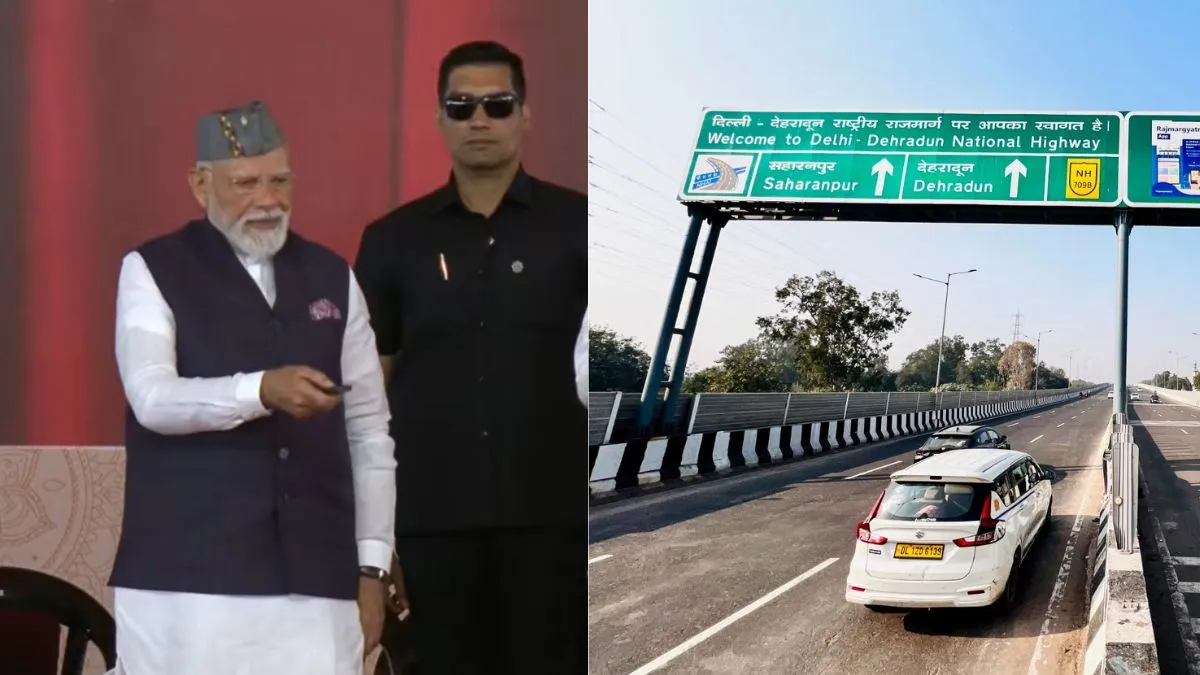
Prime Minister Narendra Modi on Tuesday inaugurated the much-awaited Delhi–Dehradun Economic Corridor. Spanning 213 km, the high-speed, access-controlled highway is expected to reduce travel time between the national capital and Dehradun from more than six hours to around two-and-a-half hours.
‘Delhi-Dehradun economic corridor is gateway of development’
After inaugurating the Delhi–Dehradun Economic Corridor, PM Modi addressed a large gathering in Dehradun, calling the new expressway a symbol of India’s fast-growing infrastructure and development push. The Prime Minister began by apologising for his delayed arrival, explaining that an enthusiastic roadshow along the route slowed his journey. He said the overwhelming public response reflected the deep connection between the government and the people of Uttarakhand.
Describing the newly launched project, PM Modi said the economic corridor is far more than just a road. He explained that such corridors act as “gateways and pathways of progress,” linking aspirations with opportunity. According to him, the project will not only improve travel but also support new business activity, logistics hubs, warehouses, and industrial development along the route.
He added that the Delhi–Dehradun corridor is expected to completely transform the economic landscape of the region. On India’s infrastructure growth, the Prime Minister said roads, highways, expressways, railways, air routes and waterways together shape the “future path” of the country.
He remarked that just as some read destiny in palm lines, a nation’s future is written through its development networks. Over the past decade, he said, India has been actively building these “lines of destiny” to move toward becoming a developed nation.Festival greetings and spiritual connect
PM Modi also extended greetings to citizens on Baisakhi, Bohag Bihu, and Puthandu, noting that the country is currently in a festive mood. He also spoke of the upcoming Char Dham Yatra, saying that pilgrimages to Yamunotri, Gangotri, Kedarnath, and Badrinath will soon begin, and called it a sacred time eagerly awaited by devotees across the country.
UCC and social justice push
Touching on governance reforms, the Prime Minister spoke about the Uniform Civil Code, saying it aligns with constitutional spirit and has already been taken forward by Uttarakhand. He said the government is working with the vision of social justice inspired by BR Ambedkar, focusing on equality and balanced development as key tools of empowerment for the poor and marginalised.
Clean Devbhoomi and upcoming Kumbh preparation
PM also urged citizens to keep pilgrimage sites clean, warning against plastic waste in Uttarakhand’s sacred regions. He noted that the Kumbh Mela is scheduled in Haridwar next year and called for collective efforts to ensure the event is organised in a clean, grand and well-managed manner, reflecting India’s cultural and spiritual heritage.
Delhi-Dehradun Economic Corridor Key Features
Faster travel, better connectivity
The newly opened corridor passes through Delhi, Uttar Pradesh and Uttarakhand, and is designed to offer smooth, high-speed travel with minimal interruptions. Built as a six-lane expressway, it aims to ease congestion on existing routes while providing a more reliable and comfortable journey for commuters.
Modern features for safer journeys
The corridor is equipped with an Advanced Traffic Management System (ATMS), which will help monitor traffic flow and improve safety. The route includes multiple interchanges, railway overbridges, major bridges and several wayside facilities to support travellers. With over 100 underpasses and multiple connectivity points, the expressway also links with major routes such as the Delhi–Mumbai Expressway and the Eastern Peripheral Expressway, ensuring seamless movement across regions.
Focus on wildlife protection
A key highlight of the project is its design through ecologically sensitive zones. A 12-km elevated wildlife corridor, among the longest in Asia, has been built to allow animals to move freely across forest areas. The structure includes several animal passes, dedicated underpasses for elephants, and a tunnel near the Daat Kali temple, all aimed at reducing human-animal conflict while maintaining ecological balance.
Phased development and key sections
The expressway has been developed in multiple phases, starting from Delhi and extending all the way to Dehradun. Some stretches, including a key 32-km section connecting parts of Delhi to Baghpat, were opened earlier and are already in use. The remaining sections complete the full corridor, creating a continuous high-speed route linking the two cities.
Cost, toll and travel savings
Built at a cost of over Rs 11,800 crore, the project represents a major investment in road infrastructure. While toll charges on the new corridor are higher than the older route, the reduced travel time and fuel savings are expected to benefit daily commuters and long-distance travellers alike.
For those making a return journey within a day, overall savings in time and travel efficiency are expected to outweigh the increased toll cost.
Also Read: Delhi to Dehradun in 2.5 hours: Check key features of Delhi-Dehradun economic corridor, toll charges