No mining allowed in NCR: Government clarifies Supreme Court's Aravalli order
Bhupendra Yadav said the Aravalli range is the oldest mountain range in our country and recently, the Supreme Court gave a judgment which has been misinterpreted.
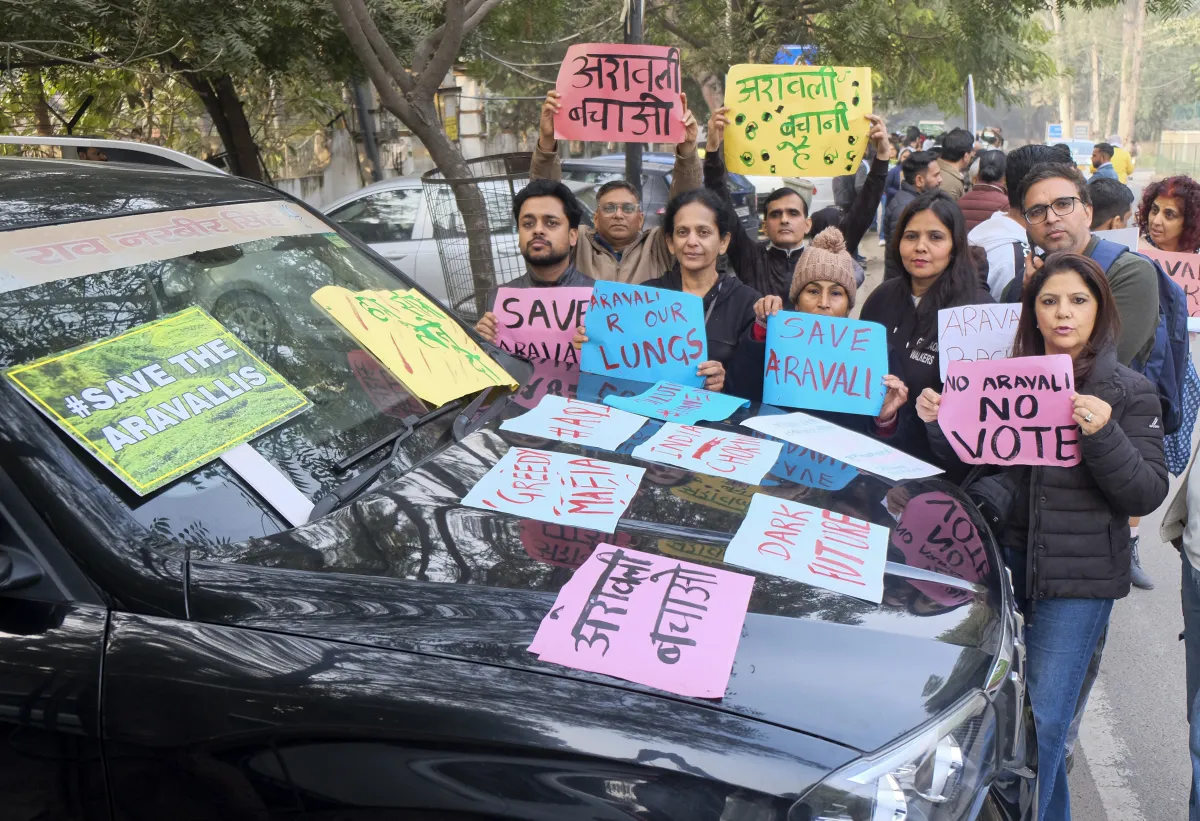
Amid protests in different parts of Rajasthan demanding the protection of the Aravallis, a crucial mountain range in the state, Environment Minister Bhupender Yadav said in the core area of the Aravalli range, mining is simply allowed. “Let me clarify that mining is not permitted in the NCR (National Capital Region), so the question doesn't even arise. The judgment of the Supreme Court also states that no new mining leases will be granted. In the core area of the Aravalli range, mining is simply not allowed,” he said.
Congress workers and members of different organisations raised slogans and called for action to preserve the Aravallis. The protests escalated as workers engaged in a confrontation with the police.
Bhupendra Yadav says SC judgment has been misinterpreted
Bhupendra Yadav said the Aravalli range is the oldest mountain range in our country and recently, the Supreme Court gave a judgment which has been misinterpreted. “I have seen this judgment... and I want to say that under the leadership of Prime Minister Modi, the Aravalli hills have actually expanded. The court's judgment stated that steps should be taken to protect and expand the Aravalli range The number of hills has increased, particularly in Haryana, Delhi, and Rajasthan. We have worked on the green belt of Delhi,” he said.
He further clarified that only 0.19% of the Aravalli range's total area of 1.44 lakh square kilometers is fit for mining and the rest of the Aravalli range is protected and preserved.
Centre asserts 90% of Aravalli will remain protected
Asserting that 90 per cent of the Aravalli region will remain "protected", the Centre on Sunday rejected claims that the new definition of the Aravalli range will allow large-scale mining and cited a Supreme Court-ordered freeze on new mining leases in the region.
The Centre also said a Supreme Court-approved framework provides for stronger protection of the mountain system and places a freeze on new mining leases until a comprehensive management plan is finalised.
Environment Minister Bhupender Yadav said that the SC-approved definition will bring more than 90 per cent of the Aravalli region under "protected area."
Yadav says no relaxation in protection of Aravalli
Replying to queries from media after a meeting on Project Elephant and the National Tiger Conservation Authority in the Sundarbans of West Bengal, Yadav emphasised that "no relaxation has been granted" with regard to the protection of the Aravalli region and claimed "lies" have been spread on the issue.
"Stop spreading misinformation!" he said in a post on X, amid allegations by the Congress and others that the step will destroy the Aravallis. "In the total area of 1. 44 lakh square kilometres of the Aravalli, mining eligibility can only be in 0.19 per cent of the area. The rest of the entire Aravalli is preserved and protected," said Yadav.
SC accepts recommendations on definition of Aravalli Hills
The Supreme Court, on November 20, 2025, accepted the recommendations of a committee under the Ministry of Environment, Forests and Climate Change on the definition of Aravalli Hills and Ranges.
According to the new definition, "Aravalli Hill is any landform in designated Aravalli districts with an elevation of 100 metres or more above its local relief" and an "Aravalli Range is a collection of two or more such hills within 500 metres of each other".
The government, however, asserted that it is "incorrect to conclude" that all landforms below 100 metres are open for mining. In an explanation issued amid the controversy over the "100-metre" criterion, the government rejected claims that mining had been permitted in areas below 100 metres and said the restriction applies to entire hill systems and their enclosed landforms and not merely to the hill peak or slope.
It said the definition of the Aravalli hills and range has been standardised across states on the directions of the Supreme Court to remove ambiguity and prevent misuse, particularly practices that allowed mining to continue dangerously close to hill bases.
Also Read:
Government cites Supreme Court order to reject Aravalli mining push charge