Indian Army warns Pakistan over recent drone activities in Jammu and Kashmir during DGMO-level talks
Indian Army Chief General Upendra Dwivedi said DGMO-level talks were held with Pakistan to raise concerns over recent drone sightings along the border. He noted that the Army is preparing a missile and rocket force as security along the Western Front and Jammu and Kashmir remains sensitive.
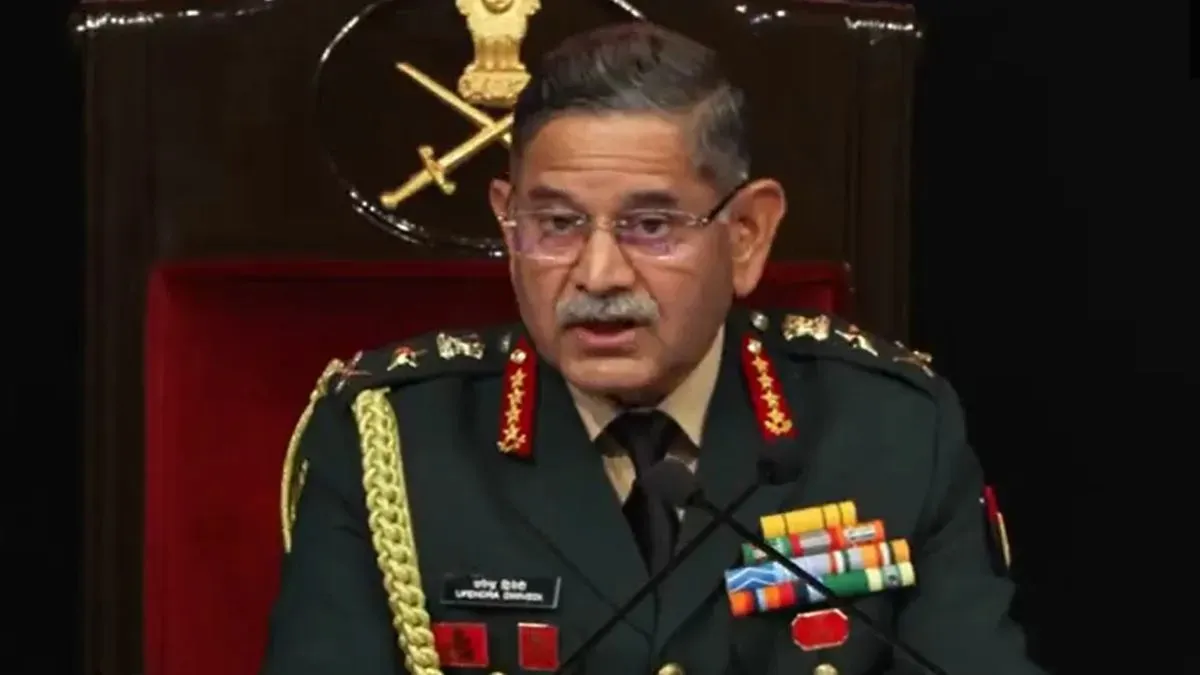
Indian Army Chief General Upendra Dwivedi said that DGMO-level talks were held with Pakistan today, during which concerns were raised about drones coming from the Pakistani side. The development comes just days after drones were spotted in the Naushera–Rajouri sector of Jammu and Kashmir. He added that the Indian Army is preparing a missile and rocket force. Speaking at a press briefing, General Upendra Dwivedi said the Western Front and Jammu and Kashmir have remained sensitive but fully controlled since May 10 as security forces eliminated 31 terrorists, with 65 per cent originating from Pakistan in 2025. This included the three Pahalgam attack perpetrators neutralised in Operation Mahadev, he said.
General Dwivedi said local terrorist numbers have dropped to single digits and recruitment has almost disappeared, with only two cases reported in 2025. "Eight terrorist camps are still active, six facing the LoC and two along the International Border. If they (Pakistani forces) attempt anything, we will take action based on that," said the Army Chief. He said positive change in the region is visible with rapid development, a tourism revival and a peaceful Sri Amarnath Yatra that welcomed more than four lakh pilgrims, surpassing the five-year average. He said the shift from "terrorism to tourism" is steadily materialising.
Northern front stable but requires constant vigil: Gen Dwivedi
General Dwivedi further said the situation along the Northern Front remains stable but requires sustained vigilance. He highlighted that apex-level engagements, restored communication and confidence-building measures have helped in gradually easing tensions. He said this improvement has enabled activities such as grazing and hydrotherapy camps along the northern borders. "With our continued strategic orientation on this front, our deployment along the Line of Actual Control remains balanced and robust. Concurrently, capability development and infrastructure enhancement are progressing through a whole-of-government approach," he added.
Global conflict spike and India's response
General Dwivedi said the past year witnessed a marked increase in global armed conflicts, underscoring the need for nations to stay prepared. He said, "Nations that stay prepared prevail." Referring to Operation Sindoor, he described it as India's calibrated and resolute response to cross-border terrorism, reflecting readiness, precision and strategic clarity. He emphasised that initiatives under the idea of Jointness, Atmanirbharta and Innovation, together with reforms launched by the government and the Army's decade-long transformation roadmap, collectively delivered substantial progress through 2025.
Operation Sindoor: Model of tri-service synergy
The Army Chief noted that Operation Sindoor stands out as a strong example of joint forces coordination under an unambiguous political directive. He said the operation continues and assured that any future provocation will receive a firm and immediate response. "I must acknowledge the proactive role of all stakeholders at the national level, including CAPFs, Intelligences, civic bodies, state administration and other ministries, whether it's MHA, Railways and many more," he added.
Western front and J-K situation under firm control
General Dwivedi said that since May 10, the Western Front and Jammu and Kashmir have remained sensitive but fully controlled. In 2025, security forces eliminated 31 terrorists, with 65 per cent originating from Pakistan. This included the three Pahalgam attack perpetrators neutralised in Operation Mahadev. Local terrorist numbers have dropped to single digits and recruitment has almost disappeared, with only two cases reported in 2025. "Eight terrorist camps are still active, six facing the LoC and two along the International Border. If they (Pakistani forces) attempt anything, we will take action based on that," said the Army Chief. He said positive change in the region is visible with rapid development, a tourism revival and a peaceful Sri Amarnath Yatra that welcomed more than four lakh pilgrims, surpassing the five-year average. He said the shift from "terrorism to tourism" is steadily materialising.
ALSO READ: 'Pakistan has no courage or capability to fight India': Lt Gen Manoj Katiyar warns against war