'India very much wedded to strategic autonomy': Jaishankar after US claim on Russian oil imports
External Affairs Minister S Jaishankar's remarks came against the backdrop of the US claim that India has agreed to stop importing Russian crude oil.
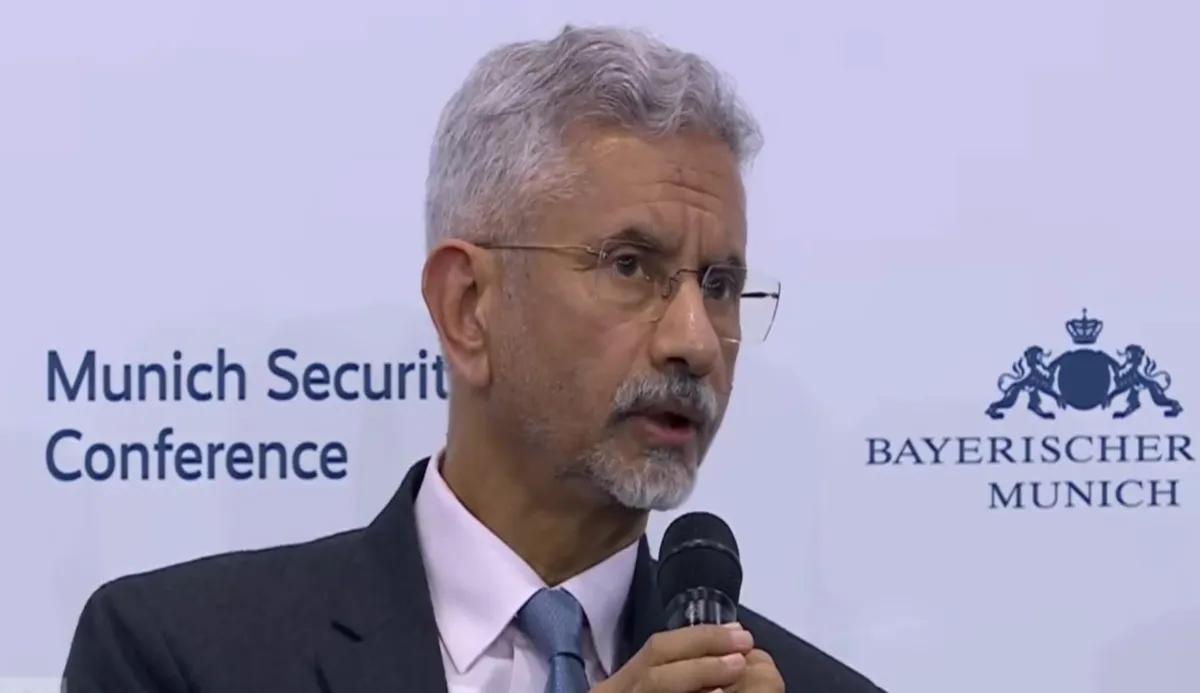
India remains firmly committed to its policy of 'strategic autonomy', and decisions on energy purchases will be guided by 'cost, risks and availability, not political pressure, External Affairs Minister S Jaishankar said on Saturday against the backdrop of Washington's assertions that New Delhi has committed to reducing Russian oil imports.
Speaking at an interactive session with German Foreign Minister Johann Wadephul on the sidelines of the Munich Security Conference, Jaishankar said the global energy market is "complex," and India's oil companies will take decisions based on what they consider to be in their best interest.
'India very much wedded to strategic autonomy': Jaishankar
"We are very much wedded to strategic autonomy because it is very much a part of our history and our evolution. And it is something which is very deep, it is something which cuts across the political spectrum as well," he said.
"As far as energy issues are concerned, this is a complex market today. I think the oil companies in India, as in Europe, as probably in other parts of the world, look at availability, look at costs, look at risks and take decisions that they feel are in their best interest," he said.
Jaishankar was responding to a question on whether India will stop buying Russian oil under the provisions of a trade deal and if such a move could impact New Delhi's policy of strategic autonomy.
India has neither confirmed nor denied Washington's claim that it has committed to halting the procurement of Russian crude oil.
Following a recent phone conversation between Narendra Modi and Donald Trump, both sides announced a significant reduction in US tariffs on Indian goods, lowering them to 18 per cent from the earlier 50 per cent.
The rollback also included the removal of a 25 per cent tariff that Trump had imposed on India in August last year, citing New Delhi’s continued purchase of Russian oil as the reason for the punitive duty.
India keeps option of making independent decisions: Jaishankar
Jaishankar underlined that India retains the freedom to take independent decisions, without always agreeing with its partners in the West. "We would not necessarily agree on everything, but I do believe that by doing that, and if there is an inclination to find common ground and overlaps, that would happen," he said.
"If the bottom line of your question is -- would I remain independent-minded and make my decisions, and would I make choices which may not agree with your thinking -- yes, it can happen," he said.
He also made a strong pitch for comprehensive reforms of the United Nations, arguing that the global body must adapt to the profound transformations reshaping the world order.
Jaishankar said recent global developments highlight the urgency of UN reforms, particularly after a series of major shocks over the past five years. These include the COVID-19 pandemic, the Ukraine conflict, rising tensions in the Middle East, and the growing influence of China and its impact on international systems, all of which have tested the effectiveness and credibility of existing global institutions.
Also Read: Trump lauds India-US trade deal as historic, says American coal exports will see a great boost
Also Read: US lifts additional 25% tariff on Indian goods following historic trade deal