Delhi blast: Eight suspects planned serial explosions across four cities, including Ayodhya, say sources
Delhi blast: A powerful blast near Delhi's Red Fort on November 10 left 13 people dead and several injured. The incident came days after a "white-collar terror module", allegedly linked to Jaish-e-Mohammed and Ansar Ghazwat-ul-Hind, was busted in Faridabad.
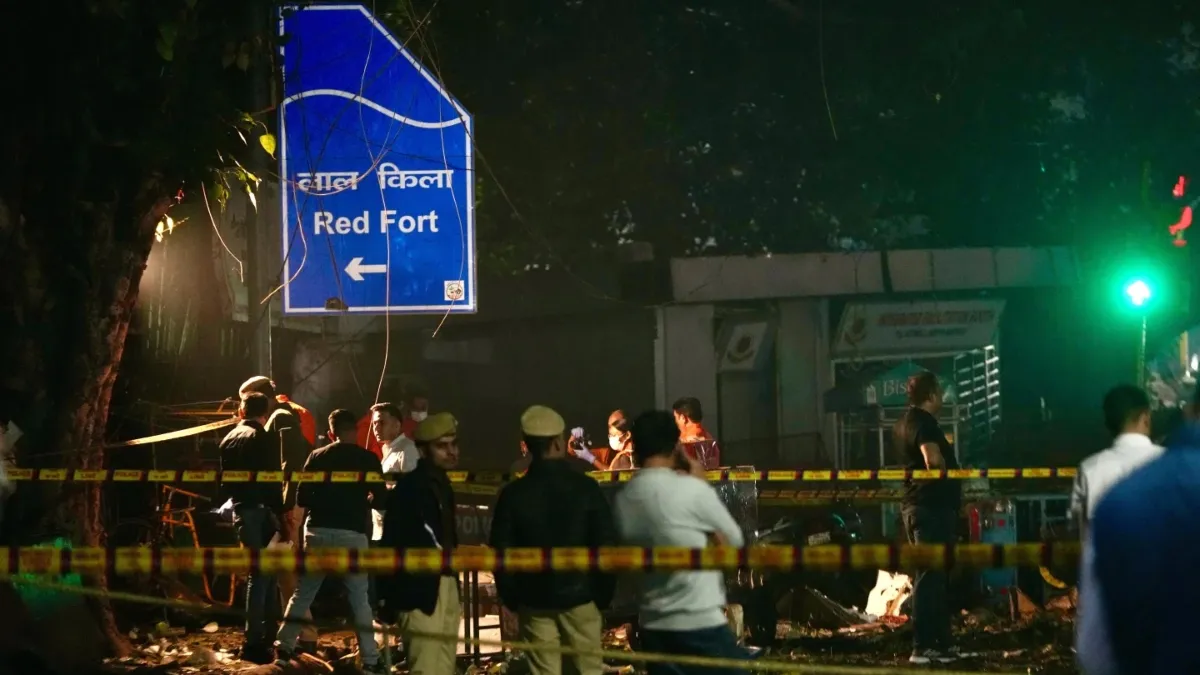
In another major revelation, investigating agencies have uncovered a larger conspiracy behind the Delhi blast near the Red Fort that claimed 13 lives. According to investigative agency sources, around eight suspects were involved in planning serial blasts at four different locations across India. The police were able to foil a major terror conspiracy involving a plan to carry out a series of blasts across multiple cities.
Sources from the investigative agency said the suspects had formed four groups, each consisting of two members. Each group was to carry multiple Improvised Explosive Devices (IEDs) and travel to their respective target cities.
Ayodhya and Prayagraj was also on target
The plan was to execute simultaneous blasts in four cities, including Delhi, Ayodhya, and Prayagraj, to cause maximum chaos and casualties.
Investigators have learned that old, second-hand cars were arranged to transport and conceal the explosives. Just like the i20 car used by Dr Umar, three more vehicles, including a red EcoSport, were being prepared for the attacks.
According to Haryana Police sources, the accused, who had been posing as doctors, were working on a large-scale terror operation.
Before the final date of the coordinated attacks could be set, Jammu and Kashmir Police arrested several suspects, including Dr Muzammil, effectively foiling a major national-level terror conspiracy.
If the conspiracy between this university and the doctors had not been exposed by the Jammu and Kashmir Police, a conspiracy was being hatched to carry out four to five simultaneous blasts in different parts of the country.
Massive amount of fertilizer for explosives procured
Sources revealed that the accused had jointly raised approximately Rs 20 lakh in cash, which was handed over to Umar for operational expenses. The funds were allegedly used to procure over 20 quintals of NPK fertiliser ( NPK fertilizer is a blend of three Nitrogen (N), Phosphorus (P), and Potassium (K) and can be used to extract explosive material ) worth around Rs 3 lakh from Gurugram, Nuh, and adjoining areas, intended for the preparation of IEDs.
Investigators have also uncovered that Umar created a Signal app group comprising two to four members to coordinate activities securely.
According to probe agencies, Dr Muzammil became inclined towards Ansar Gazwat-Ul-Hind, an offshoot of ISIS between 2021 and 2022 after maintaining contact with associates of slain terrorists. He was introduced to the network by one Irfan, alias Maulvi. Weapons recovered in 2023 and 2024 are believed to have been acquired by this module as part of their preparation for forming an independent terror group.
Investigation agencies continue to trace the broader network, suspecting that the accused had planned to execute the attack in the near future.
Initial probe suggests 'accidental' detonation of explosives
Meanwhile, findings of the initial probe into the blast near the Red Fort suggest it may have been "accidentally triggered" while a hastily assembled explosive device was being transported, following the busting of an inter-state terror module, officials said.
Sources said that the explosion was triggered in panic and desperation after raids by the security agencies across multiple locations in Delhi-NCR and Pulwama, J-K, to nab suspects believed to be part of the terror module. The car explosion was directly linked to a major terror module uncovered in Faridabad.
The Red Fort blast on a busy Monday evening came hours after eight people, including three doctors, were arrested and 2,900 kg of explosives seized with the uncovering of a "white collar" terror module involving the Jaish-e-Mohammed and Ansar Ghazwat-ul-Hind and spanning Kashmir, Haryana, and Uttar Pradesh.
Police sources say that Dr Umar was a member of a Jaish-e-Mohammed terrorist module, which also included Dr Muzammil and Dr Adil Ahmed Dar.
Dr Umar Nabi who was driving the explosives-laden car had planned a powerful blast timed around the Babri Masjid demolition anniversary on December 6, officials said.
Also Read: Delhi blast: DNA test confirms Dr Umar was driving i20 car that exploded near Red Fort, say sources