MMRDA tables Rs 48,072 crore surplus budget for 2026-27; big push to metro, tunnels and Mumbai 3.0
. This is the Authority's first surplus budget since 2017-18. The budget was presented by Dr Sanjay Mukherjee, IAS, Metropolitan Commissioner, MMRDA, in the presence of senior officials.
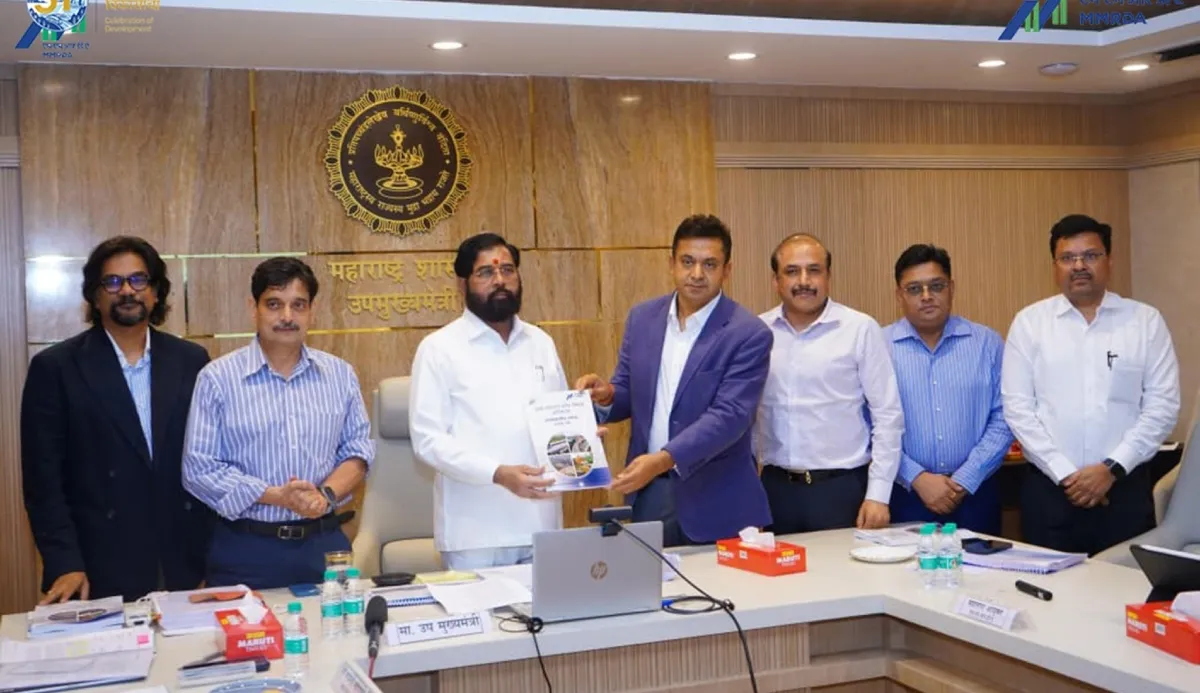
The Mumbai Metropolitan Region Development Authority (MMRDA) on Monday presented a Rs 48,072.57 crore budget for FY 2026–27, outlining an ambitious infrastructure-led growth plan focused on metro expansion, underground tunnels, growth hubs, and climate resilience. This is the authority's first surplus budget since 2017-18. The budget was presented by Dr Sanjay Mukherjee, IAS, Metropolitan Commissioner, MMRDA in the presence of senior officials.
With an estimated income of Rs 48,072.57 crore and expenditure of Rs 48,072.40 crore, the budget projects a surplus of Rs 17 lakh.
87% allocation for development projects
Out of the total outlay, Rs 42,026.14 crore (87.42%) has been earmarked for development projects and schemes, underscoring the authority's focus on large-scale infrastructure creation across the Mumbai Metropolitan Region (MMR).
Restructuring the MMR: Underground tunnel network
To ease the growing traffic congestion in the inner city and ensure faster intercity mobility, the MMRDA is continuously expanding high-capacity underground transport infrastructure. The allocations are:
- Underground tunnel from Orange Gate to Marine Drive Coastal Road: Rs 1,250.00 crore
- Underground tunnel from Gaimukh to Fountain Hotel: Rs 75.00 crore
- Thane–Borivali four-lane underground tunnel: Rs 3,029.51 crore
- Mumbai Integrated Tunnel (BWSL–BKC–HSR–T2 connectivity)/: Rs 1,189.00 crore
These projects are expected to significantly reduce traffic pressure and improve long-term mobility.
Multi-ring road network and major corridors
Strengthening the multi-ring road strategy, the budget allocates Rs 12,816.53 crore for key road corridors, elevated roads, bridges and expressway links, including:
- MTHL to Mumbai–Pune Expressway Link: Rs 603.00 crore
- Anand Nagar to Saket Elevated Road: Rs 880.12 crore
- Thane Coastal Road (Balkum–Gaimukh): Rs 1,025.77 crore
- Fountain Hotel to Bhayander Elevated Road: Rs 75.00 crore
- Kalyan Ring Road: Rs 600.00 crore
- Worli–Shivdi Elevated Corridor: Rs 936.07 crore
- Extended Mumbai Urban Infrastructure Projects: Rs 2,362.20 crore
- Mumbai–Wadhwana Expressway Corridor (Uttan–Virar Sea Link): Rs 2,000.00 crore
- Mumbai–Samruddhi Expressway: Saket to Amane Link Road: Rs 500.00 crore
- Eastern Freeway Extension: Chheda Nagar, Ghatkopar to Thane: Rs 1,106.75 crore
- Kalyan-Murbad to Badlapur Road, elevated road parallel to the Waldhuni River: Rs 200.00 crore
- Gaimukh to Paygaon Creek Bridge: Rs 682.10 crore
- Kasarvadavli, Thane to Kharbao Creek Bridge: Rs 840.71 crore
- Kolshet, Thane to Kalher, Bhiwandi Creek Bridge: Rs 105.51 crore
- Elevated road from NH-4 to Katai Naka: Rs 900.00 crore
Growth hubs and Mumbai 3.0
Under the Growth Hub framework aimed at economic decentralisation, Rs 4,600 crore has been provided:
- KSC (Karnala-Sai-Chirner) New Town: Rs 4,000.00 crore
- Raigad Pen Growth Center: Rs 500.00 crore
- Kharbao Integrated Business Park: Rs 100.00 crore
The allocation of Rs 4,000 crore for Mumbai 3.0 marks the beginning of the next phase of urban expansion in MMR. It aims to reduce traffic congestion on Mumbai, attract foreign investment, and develop an organized employment ecosystem in line with NITI Aayog's Growth Hub concept.
Massive push to integrated Metro network
MMRDA, implementing the country's largest metro expansion through a single agency, has allocated Rs 13,838.88 crore for multiple corridors, including Metro Lines 2B, 4, 5, 6, 9, 10, 12, 13 and 14, along with metro depots, employee housing, digital mobility platforms and multimodal integration. The expansion is expected to form the backbone of high-capacity public transport across the region.
Major Corridors:
- Metro Line 2A (D.N. Nagar–Dahisar): Rs 45.19 crore
- Metro Line 2B (D.N. Nagar–Mandale): Rs 1,224.60 crore
- Metro Line 4 (Wadala–Kasarvadavli): Rs 3,630.71 crore
- Metro Line 4A (Kasarvadavli–Gaimukh): Rs 176.54 crore
- Metro Line 5 (Thane–Bhiwandi–Kalyan): Rs 1,309.30 crore
- Metro Line 5A (Extension) Durgadi to Ulhasnagar: Rs 183.35 crore
- Metro Line 6 (Swami Samarth Nagar–Kanjurmarg): Rs 2,407.78 crore
- Metro Line 7 (Andheri East–Dahisar East): Rs 24.05 crore
- Metro Lines 9 and 7A (Dahisar–Mira-Bhayander/Andheri–CST Airport): Rs 1,151.87 crore
- Metro Line 10 (Gaimukh–Mira Road): Rs 100.00 crore
- Metro Line 12 (Kalyan–Taloja): Rs 1,054.54 crore
- Metro Line 13 (Ghodbunder–Virar): Rs 200.00 crore
- Metro Line 14 (Kanjurmarg–Badlapur): Rs 500.00 crore
- Mandale Metro Bhavan: Rs 403.31 crore
- Employee Housing Project (Malvani, Malad, and Mandalay): Rs 248.91 crore
- Kalyan Shilphata Junction to Rajnoli Chowk, Bhiwandi Flyover: Rs 150.00 crore
- Transport Stack – Digital Mobility Platform: Rs 25.00 crore
- Planning and Multi-Modal Integration Design for Metro: Rs 919.63 crore
- Metro Line 7 Elevated FOB: Rs 84.10 crore
This Metro extension strengthens the high-capacity public transport system across the region and will help reduce traffic congestion in the long run.
Social infrastructure, water security and green initiatives
- Slum redevelopment and housing: Rs 731.33 crore
- Water resources and sustainability projects: Rs 980.87 crore, including Surya Regional Water Supply Scheme
- Green MMR and climate resilience: Rs 250 crore for blue-green infrastructure, waste management, renewable energy and sustainable transport
This is among the first budgets to formally integrate climate preparedness as a recurring theme.
Memorials, IT and governance reforms
- Memorials to eminent leaders, including Dr Babasaheb Ambedkar and Balasaheb Thackeray: Rs 571.50 crore
- Information Technology initiatives, including digital delivery systems and ERP: Rs 235.34 crore
Revenue structure
The projected income of Rs 48,072.57 crore will be driven by land sales, urban transport fund, loans, state subordinate debt, project operations, government grants, TDR, ground rent and interest. MMRDA said the surplus reflects improved land monetisation, a stronger Urban Transport Fund and balanced financial planning.
Overall, the budget lays out a long-term vision for a connected, decentralised and climate-resilient MMR, with infrastructure at the core of Mumbai’s next phase of growth.
Also Read: Sunetra Pawar in Delhi: Key developments on NCP chief post and Parth Pawar's political future
Also Read: Mumbai launches India's first melody road as 'Jai Ho' plays on coastal stretch; commuters delighted