- News
- Maharashtra
- In a first, GRP books two Railway engineers for negligence over Thane train accident that killed 4
In a first, GRP books two Railway engineers for negligence over Thane train accident that killed 4
Assistant Divisional Engineer Vishal Dolas and Senior Section Engineer Samar Yadav of the Central Railway have been named as the main accused in connection with the accident.
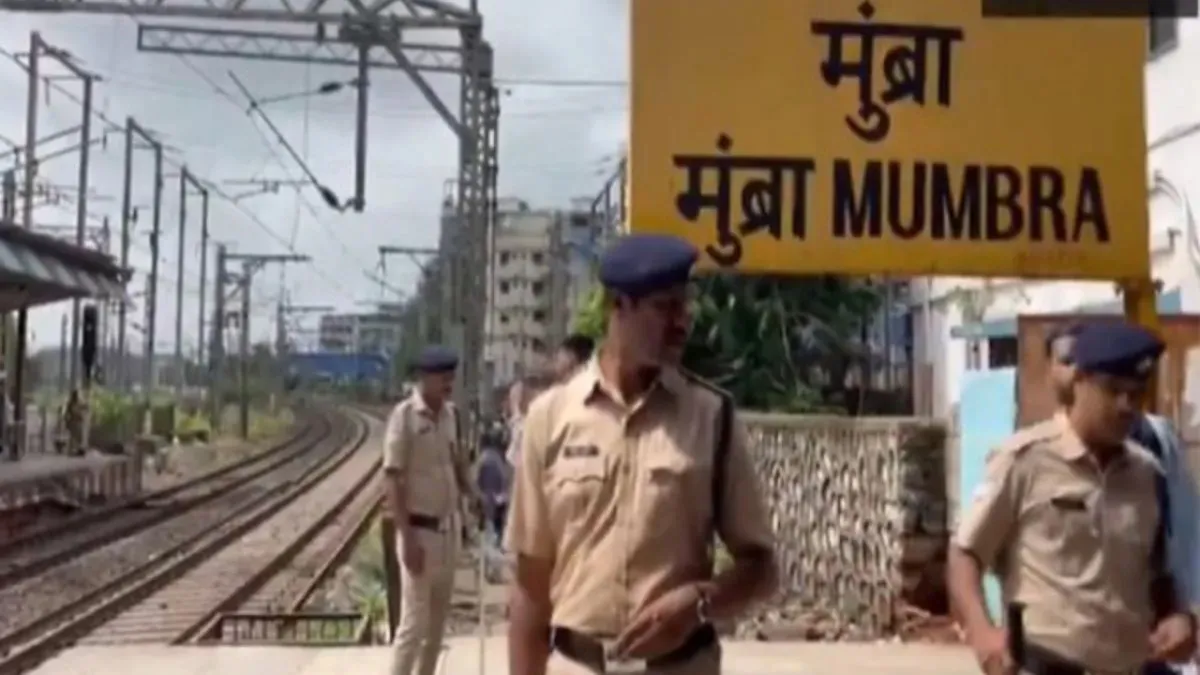
In a first-of-its-kind move, the Government Railway Police (GRP) has booked two Railway engineer over negligence in connection with a train acciddent that took place near the Mumbra station in Maharashtra's Thane on June 9, killing four people. In an FIR lodged on on Sunday, Assistant Divisional Engineer Vishal Dolas and Senior Section Engineer Samar Yadav have been named as the main accused.
This case is particularly significant because it marks the first time the GRP has registered a case against senior officials of Central Railway in a matter involving a railway accident.
Charges of negligence, endangering people's safety
According to the GRP, a case has been registered under Sections 125(A) and 125(B) of the Bharatiya Nyaya Sanhita, which deal with acts that endanger the life or personal safety of others, as well as wrongful restraint and wrongful confinement. In addition, other relevant sections related to criminal negligence have also been invoked. However, the police have not yet disclosed the complete list of all charges filed in the case.
Engineers ignored multiple warnings
The engineers involved have been accused of ignoring repeated warnings, showing negligence in carrying out critical repair work and leaving the railway tracks in an unsafe condition, which ultimately led to the tragic incident. Along with the four victims directly affected, nine others sustained injuries after falling from two overcrowded local trains. This happened between Diva and Mumbra railway stations when the trains were crossing each other on a curve, leading to the accident.
Lapses revealed during investigation
Investigators have revealed that the incident occurred due to maintenance negligence that took place only a few days before the accident. It was found that track number 4 near the station had been replaced without proper welding, which resulted in uneven tracks and the movement of trains becoming dangerously unstable. Technical inspection reports confirmed that, due to the absence of correct welding, one section of the rail line had sunk while another section remained elevated. This created severe jolts during train movement, eventually pushing the trains towards the adjacent track number 3 in a hazardous manner.
The investigation further confirmed that the distance between the parallel tracks did not meet the required safety standards. On curved sections, there must be a minimum track spacing of 4,506 millimetres, but at the site of the accident, the spacing was only 4,265 millimetres. Additionally, heavy rains before the accident highlighted deeper flaws in the maintenance process. During May and June, the area had experienced repeated incidents of waterlogging and erosion of the track ballast. Despite this, written requests for urgent repairs made by municipal engineers were ignored by the engineers now accused in the case.
Also read: Four killed after passenger train collides with goods train in Chhattisgarh's Bilaspur