Linga Bhairavi Temple: The shrine where Samantha–Raj got married; timings, rituals and visitor guide
Samantha Ruth Prabhu and filmmaker Raj Nidimoru were married in a sacred Bhuta Shuddhi Vivaha at Linga Bhairavi Temple, Coimbatore. The private ceremony blended ancient yogic ritual with quiet devotion at one of South India’s most revered spiritual spaces.
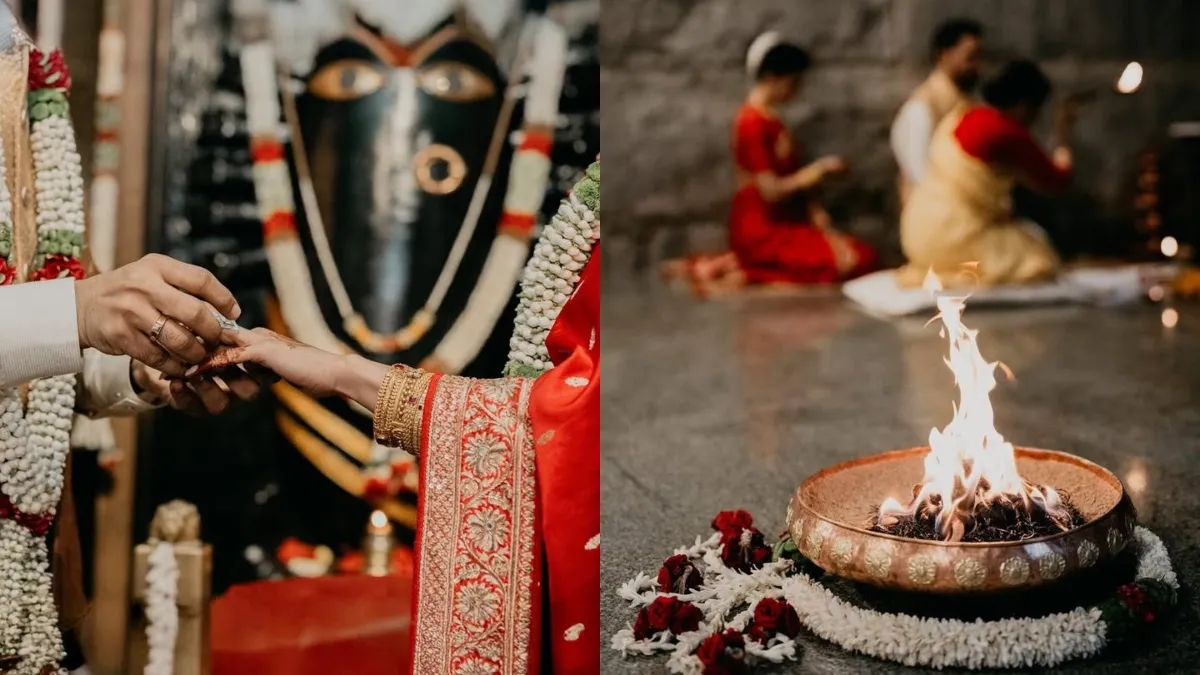
It was an auspicious occasion for Samantha Ruth Prabhu, an actor, and Raj Nidimoru, a director and producer, when they were joined in a sacred Bhuta Shuddhi Vivaha ceremony at the home of Goddess Linga Bhairavi in Isha Yoga Centre, Coimbatore, on Monday morning.
This private ceremony was attended only by close relatives and friends. The ceremony was performed in accordance with the ancient yogic method of Bhuta Shuddhi Vivaha, which creates an elemental connection between two people that is beyond thought or emotion or physical bodiliness.
Through Bhuta Shuddhi Vivaha, performed either at Linga Bhairavi temples or at a limited selection of locations, the five elements in both partners and their union are purified, and they receive Devi’s blessing for harmony, prosperity and spiritual alignment along their shared life path.
What is Linga Bhairavi?
Linga Bhairavi is a consecrated form of the Divine Feminine, a powerful “Devi” energy, envisioned by Sadhguru.
The temple is situated at the foothills of the Velliangiri Hills (Semmedu post), near the Isha Yoga Centre campus in Coimbatore, address: Shri Yogini Trust, Velliangiri Foothills, Semmedu, Coimbatore – 641114.
The form of Devi is unique: the Linga of Bhairavi is said to embody three-and-a-half chakras (muladhara, swadhisthana, manipuraka, and half of anahata), symbolising stability for body, mind and energy life.
In short, Linga Bhairavi is not just a statue or idol, but a living, energetic space meant to support spiritual growth, wellbeing, healing and inner transformation.
Timings and Daily Rituals at Linga Bhairavi
If you plan to visit, here's the daily schedule for Linga Bhairavi:
Temple Open Hours:
- Morning: 6:30 AM – 1:20 PM
- Evening: 4:20 PM – 8:20 PM
Devi Abhishekam (Daily Sacred Offering / Ritual) Times:
7:40 AM, 12:40 PM, and 7:40 PM.
On special occasions, full moon days (Purnima), festival days (like Navratri), special ceremonies with chants, arati (fire-ritual), music/dance may take place to celebrate Devi’s grace.
What Worship and Experience Mean Here
Visiting Linga Bhairavi is more than temple darshan — it's intended as a spiritual experience:
The temple aims to offer a path to inner wellbeing: mental, emotional, physical & spiritual. Devi’s grace is believed to help one navigate life’s challenges.
There are offerings, rituals, and processes (“Devi Seva”) — devotees can take part to express surrender, seek blessings, and receive healing or support.
For regular spiritual aspirants or those on retreat at Isha Yoga Centre, Linga Bhairavi is part of a broader ecosystem: meditation, yoga, sacred sites — offering a space of calm, inner reflection, and connection.
How to Reach and Visit Linga Bhairavi
If you're planning a visit:
Linga Bhairavi is 30 km west of Coimbatore city, nestled in the Velliangiri foothills.
Transport options: Direct buses run between Coimbatore city and the Isha Yoga Centre. You can also take a taxi from Coimbatore airport or railway station. Isha Travel Helpdesk (contact number provided on official site) can assist with taxis.
If driving: From Coimbatore, take the Perur/Siruvani Road via Ukkadam. After Alandurai, turn at Irutupallam junction; then, about 8 km further (2 km before Poondi), signs will guide you to Linga Bhairavi.
As the temple lies within the Isha Yoga Centre premises, a modest dress code and respect for the space are advised.
Special Celebrations and What to Expect
On auspicious lunar events like full moon (Purnima), often months like Thai or festivals such as Navratri, the temple holds special ceremonies: grand abhishekams, collective aratis (fire offerings), devotional music/dance, inviting devotees to bask in Devi’s grace.
These are believed to amplify the spiritual energy, and many people visit on these days to meditate, surrender their intentions, seek healing or spiritual growth.