- News
- Lifestyle
- Spirituality
- After 17 years, Ekambaranathar Temple in Kanchipuram witnesses Maha Kumbhabhishekam rituals
After 17 years, Ekambaranathar Temple in Kanchipuram witnesses Maha Kumbhabhishekam rituals
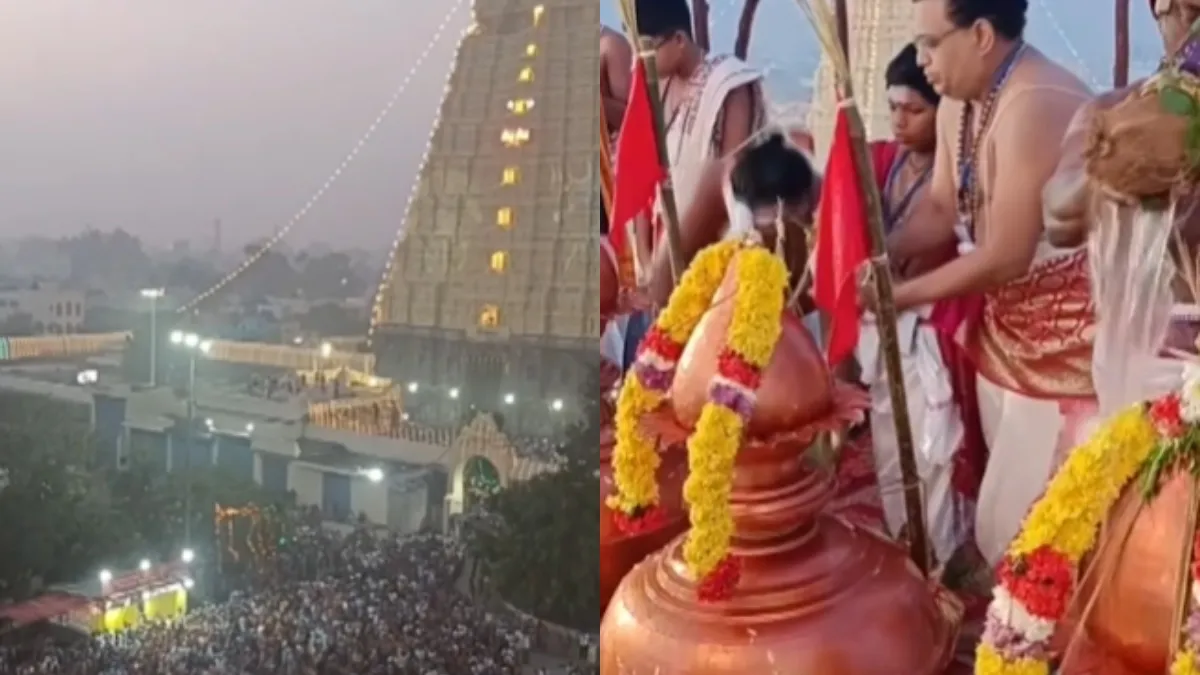
Kanchipuram’s Ekambaranathar Temple witnessed its Maha Kumbhabhishekam after 17 years, with priests performing homams, consecration rituals and the final anointment following major restoration works.
The prominent temple, Sree Padmanabhaswamy Temple in Kerala, was reopened after its Maha Kumbhabhishekam ceremony on June 8, 2025, after being closed for nearly 270 years.
Now, the grand Maha Kumbhabhishekam ceremony is being held at the Kanchipuram Ekambaranathar Temple. Ekambaranathar Temple is revered as the earth element (Prithvi) among the five Pancha Bhootha Sthalams.
The Maha Kumbhabhishekam is taking place today after 17 years, following restoration works worth Rs 29 crore, carried out without altering the temple’s ancient heritage.
Holy water collected from several sacred rivers across India was kept in consecration pots (kalasams) at the Yagasala, where special homams and pujas were performed.
About Maha Kumbhabhishekam
There are times in the existence of a temple where the stones, spires, and sanctum seem to be imbued with life; the moment when centuries of customs, sacred chants, and the faithfulness of countless devotees have been joined together as one act of revitalization; this is known as Maha Kumbhabhishekam, an elaborate consecration ceremony that enables a recently built or recently refurbished temple to function as a vibrant, breathing entity of divine power.
What Happens During Maha Kumbhabhishekam
Maha Kumbhabhishekam isn’t a single ritual; it’s a series of sacred ceremonies that together re-energise the temple and re-establish its sanctity.
Sacred Preparations Begin
The ceremonies are usually preceded by purification rituals conducted by priests or ritual specialists, who recite the Vedas, consecrate the water and herbs, and create sacred items for the ceremony.
The sacred vessels (also known as pots or kumbhas or kalashas) are filled with holy water, herbs, sandalwood, and other auspicious materials, symbolising the connection between the physical world and the spiritual realm.
Invoking the Divine Presence
Through rituals such as fire-sacrifices (homas), chanting of mantras, and recitation of Vedic and Agamic texts, priests invoke the divine energy into these sacred vessels. In effect, the divine presence is transferred from cosmic energy into these humble pots.
The process sometimes includes rites like “Kalakarshanam”, symbolically transferring the deity’s power into the vessels, especially if the old idols are being moved or if the temple structure has changed.
The Final Anointment
On the culmination day, at an auspicious moment, priests pour the sanctified water from the pots over the temple’s spires (kalasams), domes, gopurams, and the sanctum itself. This ritual bathing is the heart of Kumbhabhishekam and symbolises the infusion of divine life into the temple.