Guru Tegh Bahadur Jayanti: From Sis Ganj to Rakab Ganj, the sacred route of supreme sacrifice
On Guru Tegh Bahadur Jayanti, revisit the story of supreme sacrifice through Delhi’s two sacred gurudwaras, Sis Ganj Sahib, built at the site of his execution in Chandni Chowk, and Rakab Ganj Sahib, where his disciple burned his own home to cremate the Guru with honour.
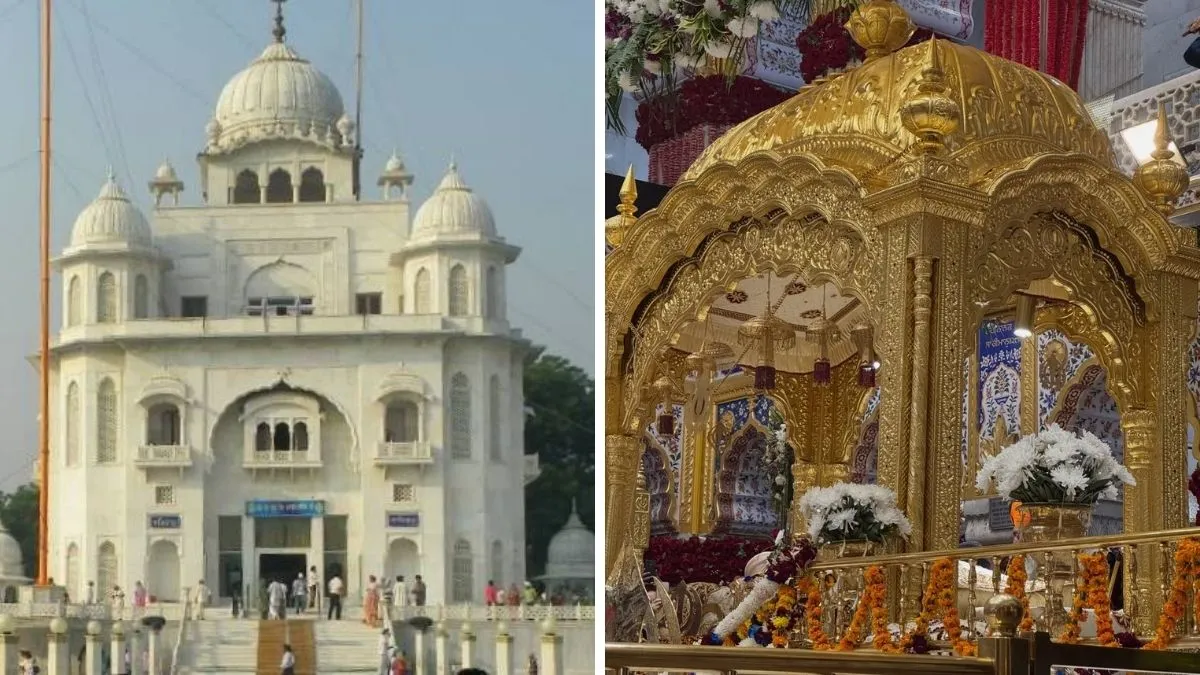
Some stories never fade with time; they become a part of our geography. Guru Tegh Bahadur's martyrdom isn't merely a page in Sikh history; it lives in stone, it lives in streets that still echo with reverence, and in two gurudwaras in Delhi that stand as monuments to supreme sacrifice and unshakable faith.
Every year on Guru Tegh Bahadur Jayanti, thousands gather not only to pray but to remember a leader who chose death over silence, protecting religious freedom for all, “Hind di Chadar”, the shield of India.
Delhi holds the most powerful markers of this legacy:
- Gurudwara Sis Ganj Sahib in Chandni Chowk: The site of his beheading, and
- Gurdwara Rakab Ganj Sahib: Where his body was cremated under extraordinary bravery.
Gurudwara Sis Ganj Sahib, Chandni Chowk
Gurudwara Sis Ganj Sahib stands on the very spot where Guru Tegh Bahadur was executed on November 24, 1675, on the orders of Mughal Emperor Aurangzeb, after refusing to convert and defending the religious rights of Kashmiri Pandits.
Walk through the gates and you enter history, not imagined, but real.
Inside, preserved with reverence, is:
- The well from which water was drawn for the Guru’s bath before execution
- The tree trunk where he was tied
- The site of the beheading is honoured as the holiest point in the complex
The gurudwara remains an oasis of peace despite being surrounded by the chaos of Old Delhi’s busiest market. To stand here is to understand that bravery isn’t loud; it’s quiet and unwavering.
Gurdwara Rakab Ganj Sahib
The story continues four kilometres away, at a place bound by loyalty beyond measure. After the execution, the Guru’s body was left in Chandni Chowk,guarded to prevent cremation. In an act of devotion and enormous courage, Lakhi Shah Vanjara, a disciple of Guru Tegh Bahadur, set his entire house on fire so that the body could be cremated respectfully without attracting attention.
That house stood where Gurdwara Rakab Ganj Sahib stands today, close to India Gate and the Parliament complex, a powerful reminder that the price of faith has always been steep.
Over time, the gurudwara has come to symbolise one thing: resistance, sacrifice, sewa, and equality-the very bedrock on which the Sikh faith is based.
Why these two gurudwaras matter today
In days where faith divides, Guru Tegh Bahadur’s message unites:
- Freedom of religion is a right for every human.
- Courage means acting even when consequences are immense.
Walking between these two gurudwaras is a pilgrimage through the heart of Delhi, but more importantly, through the heart of India.