Wolf Moon 2026 lights up skies over Guwahati, Lucknow, Kolkata and other Indian cities | Watch
The first Supermoon of 2026, was visible over several Indian cities like Guwahati and Kolkata among others on the evening of January 3. Appearing noticeably larger and up to 30 per cent brighter than a regular full moon, the event drew attention as clear winter skies offered a striking view.
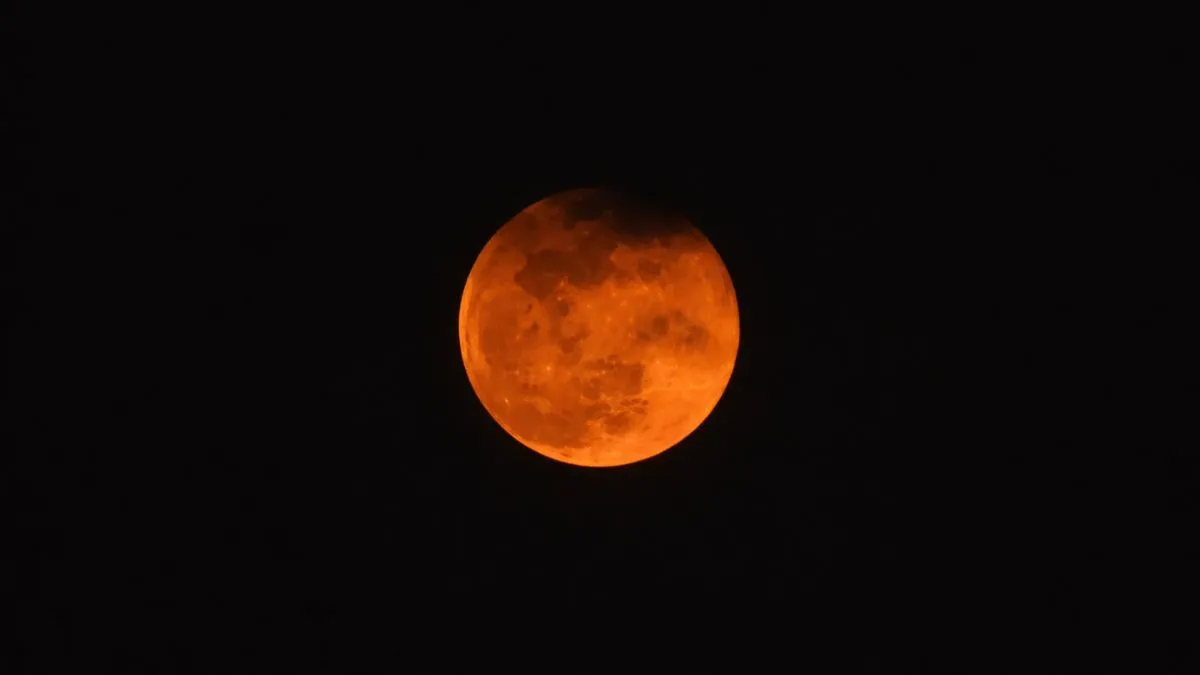
The first Supermoon of 2026 showed itself on the evening of January 3, Saturday at 5:54 pm. As the light faded, the Moon rose slowly. Bigger than usual. Brighter too. Enough to make people stop, look up, and take a few photos.
This was the Wolf Moon, the first full moon of the year. Astronomers call it a Supermoon because the Moon was closer to Earth than usual. That closeness matters. When it happens, the Moon can appear up to 30 per cent brighter than a normal full moon. Clear winter skies helped. The timing did the rest.
Along with Guwahati, the first Supermoon of 2026 is visible from several other Indian cities, like Kolkata, Lucknow, Odisha among others.
For the unversed, the first full moon of January is called the Wolf Moon due to a historical reason. In ancient times, during the harsh winter months in the Northern Hemisphere, the howling of wolf packs was more frequently heard, hence the name Wolf Moon.
On this day, the moon will be relatively closer to the Earth, causing it to appear larger and brighter. If the weather is clear, people will be able to see it easily without a telescope or any other astronomical equipment. The experience of viewing it from an open field or rooftop will be even more special.
Special religious significance
January 3, 2026 is considered extremely sacred in religious beliefs as Paush Purnima. On this occasion, devotees across the country take a holy dip in the Ganges and other sacred rivers and perform acts of charity. It is believed that worshipping Lord Vishnu and Goddess Lakshmi on Paush Purnima brings happiness and prosperity. The Magh Mela in Prayagraj also formally begins on this day, with millions of devotees participating.
Earth will reach its closest point to the Sun
Another significant astronomical event will occur on this day. On January 3, at approximately 10:45 PM (Indian Standard Time), the Earth will reach its closest point to the Sun in its orbit. This position is called perihelion in astronomy. At that time, the distance between the Earth and the Sun will be approximately 147,099,894 kilometers.
During perihelion, the Earth moves at its fastest speed in its orbit, which is approximately 30.27 kilometers per second. Conversely, when the Earth is farthest from the Sun, that position is called aphelion, which will occur on July 6, 2026.
Can a brighter moon disrupt your sleep?
Many people swear they sleep worse during a full moon. Science has tried to test that feeling. A well-known 2013 study published in Current Biology found that people took longer to fall asleep during a full moon. Deep sleep was shorter. Melatonin release was delayed. This happened even when participants could not see the Moon.
But later research complicated things. Larger reviews, including those in Sleep Medicine Reviews, found no strong or consistent pattern across populations. Some people were affected. Many were not. Researchers now believe light exposure and routine matter far more than the Moon itself.
In simple terms, a bright Supermoon may affect sleep if your room fills with light. Thin curtains. Open windows. Otherwise, stress, screens, and late nights are usually the real culprits.
ALSO READ: Wolf Moon 2026: How the first full moon of the year got its name