Sabja vs chia seeds: From soaking time to health benefits, dietician explains 5 key differences
Sabja and chia seeds may look similar, but they differ in appearance, soaking time, seasonal use, and health benefits. A dietician explains how each seed supports different health goals, from digestion to weight management.
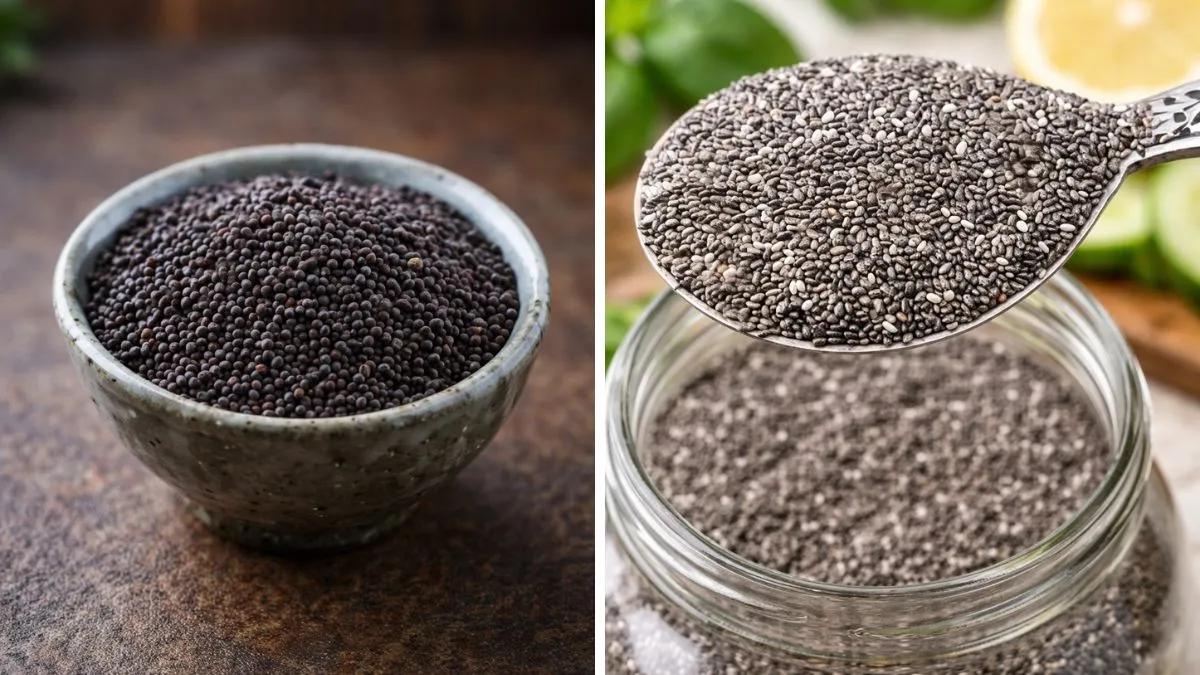
Seeds are often grouped together as healthy add-ons. And yes, they are. But not all of them do the same job. Some support digestion better, some help with weight goals, others work more on overall nutrition.
Sabja and chia seeds are a good example of this confusion. They look similar at first glance, but they are not interchangeable. Knowing the difference can actually help you make better choices depending on what your body needs.
Dietician Shweta J Panchal recently explained these differences in an Instagram video on April 10. Here is a clearer look at how the two compare.
1. Appearance: Key visual differences between sabja and chia seeds
At a quick glance, they may seem identical. But there are small visual differences.
“Sabja seeds are jet black in colour and chia seeds are greyish in colour with a few black and white speckles,” the dietician said.
2. Seasonal nature: How sabja and chia seeds differ in seasonal use
Not all seeds are meant for every season in the same way.
Sabja seeds are known for their cooling properties. They are often used during summer, especially to help with issues like acidity and bloating.
Chia seeds, on the other hand, are more neutral. They can be consumed throughout the year without any specific seasonal restriction.
3. Soaking time: Difference in how quickly sabja and chia seeds absorb water
Preparation is where the difference becomes more noticeable.
“When you add sabja seeds in water, it hardly takes them 5-10 minutes to swell up,” the dietician said.
Chia seeds take more time. They usually need at least 30 minutes, and sometimes even overnight, to reach that gel-like consistency.
4. Nutritional focus: How sabja and chia seeds differ in health benefits
Both are nutritious. Just in slightly different ways.
“If you are looking for better gut health, bloating, acidity, and constipation, sabja seeds would be your go-to option. If you are looking for overall higher fibre intake, weight loss, better omega-3 content, which will also help your skin health, then chia seeds would be your go-to option,” Shweta explained.
5. Usage: Difference in how sabja and chia seeds are used in everyday diets
The way you use them also varies.
Sabja seeds are commonly added to drinks. Think lemon water, coconut water, or traditional sharbat. They work well in light, refreshing options.
Chia seeds are more flexible. You will usually find them in smoothies, breakfast bowls, or puddings. They fit better into meal-based dishes.
ALSO READ: Chia seeds in water vs curd: Which is better for your health
At the end of it, it comes down to your own needs. Your diet, your goals, your routine. Both seeds have their place. Just not in the exact same way.
Disclaimer: Tips and suggestions mentioned in the article are for general information purposes only and should not be construed as professional medical advice. Always consult your doctor or a dietician before starting any fitness programme or making any changes to your diet.