Anti-Valentine’s Week 2026: From Slap Day to Breakup Day and what it’s really about
Anti-Valentine’s Week, observed from February 15 to 21, offers a humorous alternative to Valentine’s celebrations. From Slap Day to Breakup Day, this article explains what each day represents and why it resonates with singles, situationships and people choosing self-respect over forced romance.
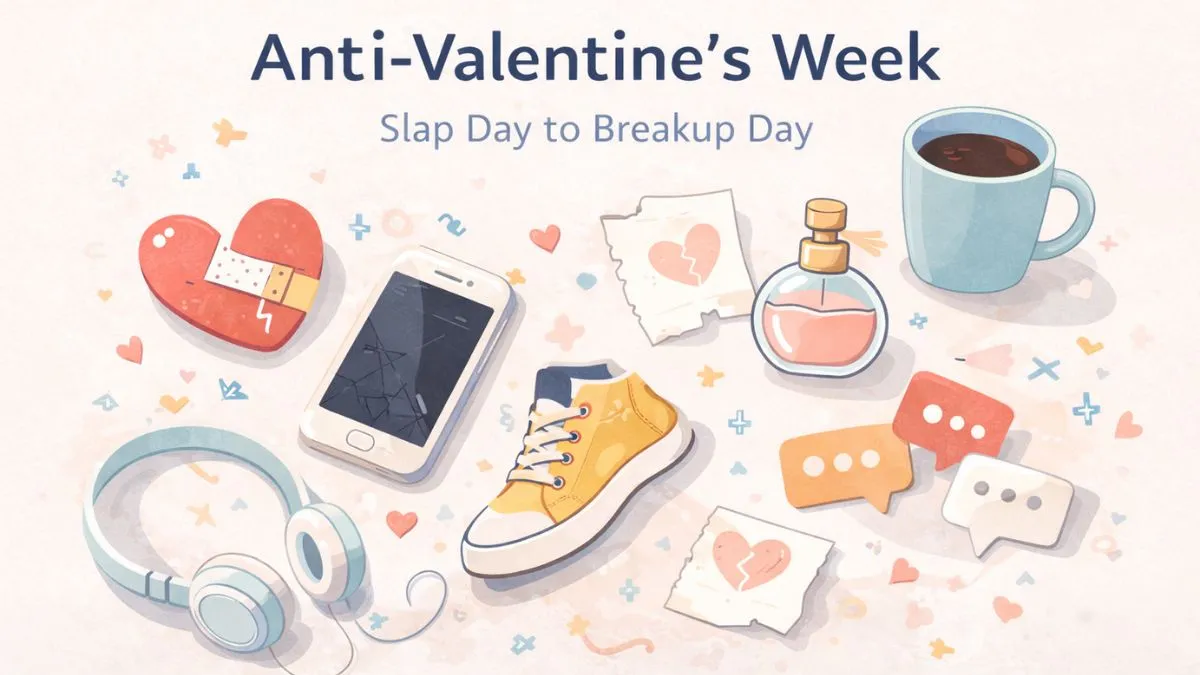
After seven straight days of roses, promises and public affection, Anti-Valentine’s Week arrives like a reality check. It doesn’t cancel love. It simply pokes fun at situationships, emotional exhaustion and relationships that should have ended three red flags ago.
Celebrated from February 15 to 21, Anti-Valentine’s Week is mostly humorous, sometimes cathartic, and very online. Let's talk about importance days for Anti-Valentine's Day.
What is Anti-Valentine’s Week?
Anti-Valentine’s Week is an unofficial cultural response to Valentine’s Week. Instead of romance milestones, it focuses on closure, boundaries and emotional clarity, often wrapped in sarcasm. It’s especially popular among singles, people stuck in situationships, and anyone who has ever texted “it’s complicated”.
Anti-Valentine’s Week calendar
| Day | Date |
| Slap Day | February 15 |
| Kick Day | February 16 |
| Perfume Day | February 17 |
| Flirt Day | February 18 |
| Confession Day | February 19 |
| Missing Day | February 20 |
| Breakup Day | February 21 |
Day-by-day guide to Anti-Valentine’s Week
Slap Day (February 15)
Despite the name, Slap Day is not about violence. It’s symbolic.
It represents slapping away bad decisions, red flags and self-doubt. Think of it as a mental wake-up call rather than a literal act.
Kick Day (February 16)
Kick Day is about kicking toxic habits, unhealthy attachments and people who drain your energy.
It’s less about anger and more about choosing distance, unfollowing quietly, and not replying “hey” at 2 am.
Perfume Day (February 17)
Perfume Day is surprisingly wholesome.
It’s about fresh starts, self-care and smelling good for yourself. Many people use it as a reminder to focus on confidence, grooming and feeling good in their own space.
Flirt Day (February 18)
This day celebrates light, harmless flirting without expectations.
No commitments. No emotional contracts. Just playful conversations, compliments and remembering that attraction doesn’t have to lead to heartbreak.
Confession Day (February 19)
Confession Day is about honesty, especially with yourself.
Some people confess feelings. Others confess that they’re done trying. It’s about emotional clarity, not dramatic revelations.
Missing Day (February 20)
This is the most emotional day of the week.
Missing Day acknowledges nostalgia, memories and people who mattered once. It doesn’t ask you to go back. It just allows you to feel without judgement.
Breakup Day (February 21)
Breakup Day is the final chapter.
It’s about endings, closure and choosing peace. For many, it’s symbolic rather than literal, a reminder to finally let go of what no longer fits.
Why Anti-Valentine’s Week resonates with so many people
Situationship culture made it necessary
Undefined relationships, mixed signals and emotional ambiguity are exhausting. Anti-Valentine’s Week gives language to that fatigue.
It normalises choosing yourself
Not every love story needs fixing. Some just need an ending.
It uses humour instead of bitterness
The tone is playful, not cynical. It allows people to laugh at experiences that once hurt.
Anti-Valentine’s Week isn’t about hating love. It’s about being honest about reality. Sometimes growth looks like romance. Sometimes it looks like walking away, unfollowing, and sleeping peacefully. And honestly, both deserve a celebration.