Why young working women are quietly missing early signs of hypertension
An insight into why younger working women in urban India are increasingly vulnerable to hypertension due to chronic stress, poor sleep, long work hours and continuous mental overload, often without recognising the early warning signs.
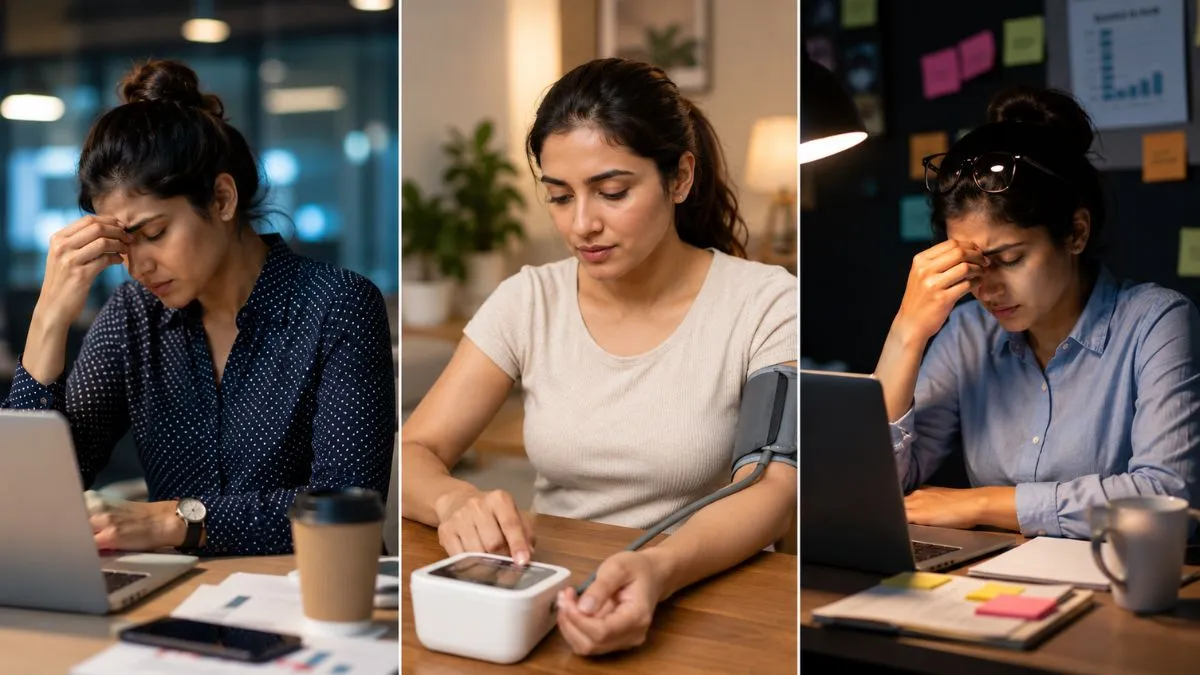
For years, hypertension was largely viewed as a condition associated with ageing. But health experts now say that younger working women in urban India are increasingly becoming vulnerable to high blood pressure, often without recognising the early warning signs.
According to Suhasini Deshmukh, nutritionist and Co-Founder and Director of MedRabbits Healthcare, the concern is not just rising hypertension itself, but how silently it develops while many women continue functioning normally through demanding professional and personal routines.
Why is hypertension in women often overlooked?
The main reason that makes young women undiagnosed when it comes to hypertension is the fact that they associate symptoms of this disease with normal levels of stress and exhaustion.
The article states that symptoms like:
- Fatigue
- Irritability
- Poor sleep
- Headaches
- Anxiety
- Tiredness
are often seen as normal signs of an active urban lifestyle.
Meanwhile, underlying cardiovascular strain may quietly continue building over time.
The new urban lifestyle triggers affecting women’s health
The article explains that modern hypertension triggers are no longer limited to traditional lifestyle risks alone. “Stress today is constant, not occasional,” the article notes, explaining how many women remain mentally overloaded throughout the day with very little recovery time.
Sleep deprivation is becoming a cardiovascular issue
The article highlights how sleep is increasingly sacrificed by working women trying to balance careers, household responsibilities and personal time. Late-night work habits, digital dependency and difficulty mentally disconnecting from work are gradually affecting the body’s ability to recover from daily stress.
Over time, this pattern may quietly affect:
- Blood pressure regulation
- Hormonal balance
- Cardiovascular health
- Energy levels
The article stresses that sleep deprivation should no longer be viewed only as a lifestyle inconvenience but as a significant health concern.
‘Always available’ work culture may be quietly increasing stress
One of the most overlooked shifts in urban work culture, according to the article, is the disappearance of genuine downtime. Notifications, working emails, and virtual conferences outside regular work hours have caused a blur of professional work and rest time. Even after being disconnected, people continue thinking about their work responsibilities and do not allow the nervous system to calm down completely.
This chronic state of high alertness can eventually affect:
- Blood pressure level
- Quality of sleep
- Resting cycles
- Resilience of the heart in general
Pollution and a sedentary lifestyle contribute to the problem even more
Moreover, there is a concealed combination of urban health hazards faced by women at the present time:
- Extended commuting time
- Traffic and air pollution
- Sedentary work process
- Lack of any movement despite constant fatigue
Women feel constantly exhausted but rarely make any effort during the day. This creates the wrong impression about exhaustion as a sign of physical activity.
Why should monitoring of the blood pressure be integrated into self-care practices?
Despite the growing interest of women in physical exercises and healthy eating, monitoring BP is still not perceived as necessary among young generations.
Monitoring of the BP can be made just as frequently as:
- Sleep tracking
- Regular exercise
- Healthy food consumption
It is especially important to mention that hypertension can occur regardless of age, body weight, or overall health condition. According to Suhasini Deshmukh, the larger issue today is that many younger women continue managing their daily lives efficiently while underlying cardiovascular strain quietly builds in the background.
The article concludes that better sleep, stress management, movement, recovery and earlier preventive care may become increasingly important for protecting long-term cardiovascular health in urban women.
Also read: World Hypertension Day: Why some people get hypertension despite living a healthy lifestyle