What are passive euthanasia and active euthanasia? Explained after Supreme Court's Harish Rana verdict
The Supreme Court has allowed passive euthanasia for Ghaziabad resident Harish Rana, who has been unconscious for nearly 13 years after a severe accident. The decision has renewed discussion around euthanasia laws in India. Here is a simple explainer on what passive and active euthanasia mean.
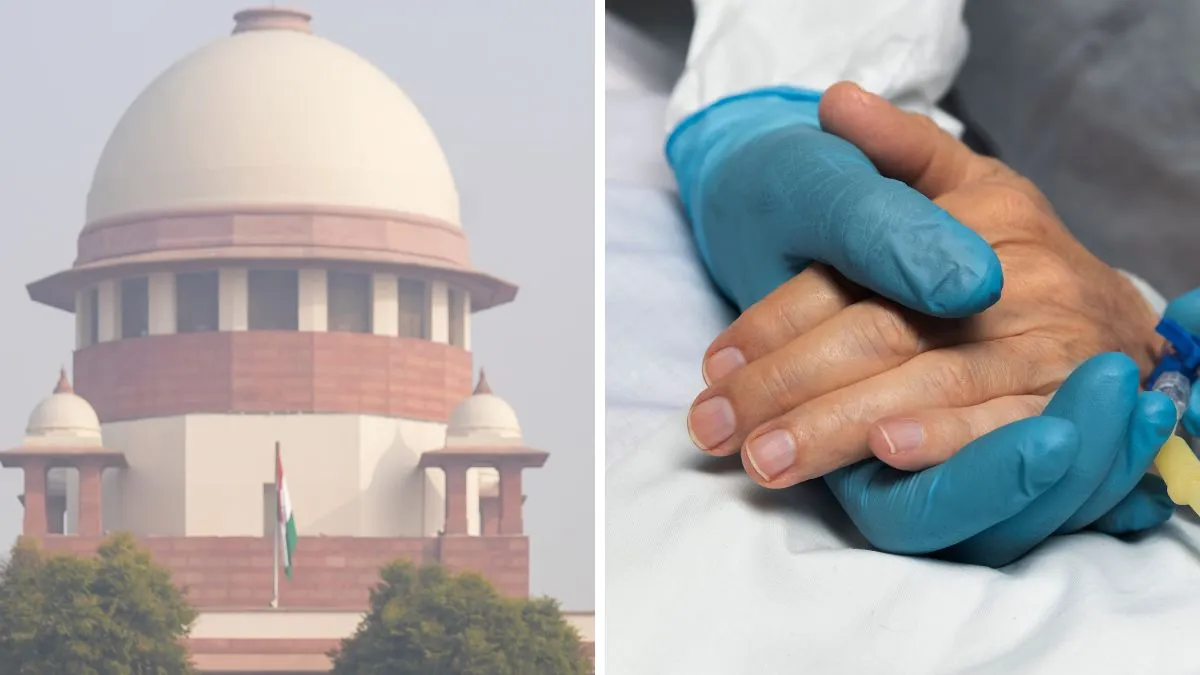
A recent decision by the Supreme Court of India has once again brought the complex and emotionally charged topic of euthanasia into public discussion. The court allowed passive euthanasia for Ghaziabad resident Harish Rana, who has been lying unconscious for nearly 13 years following a severe head injury.
The court said Rana will be admitted to the palliative care unit of All India Institute of Medical Sciences (AIIMS), where medical treatment sustaining his life will be gradually withdrawn. The judges also emphasised that the entire process must be carried out with dignity. The case has prompted many people to ask a basic but important question: What exactly is euthanasia, and what is the difference between passive and active euthanasia?
What is euthanasia?
Euthanasia means the deliberate act of ending the life of an individual to relieve him or her of the prolonged pain and suffering caused by serious illness or incurable medical conditions. The word euthanasia comes from the Greek word meaning good death. In medical and legal discussions, euthanasia usually applies to patients who are in a terminal condition, permanently unconscious, or facing unbearable suffering with no chance of recovery.
Globally, euthanasia laws differ widely. Some countries permit certain forms of assisted dying under strict conditions, while others prohibit it completely.
What is passive euthanasia?
Passive euthanasia means that treatment is not given to the person who is suffering and is being kept alive by treatment. This may include disconnecting life-supporting equipment such as ventilators and medicines that artificially prolong life. Instead of actively ending life, doctors let the progression of the disease run its course. Passive euthanasia is allowed in India with strict guidelines laid out by the Supreme Court.
In the Harish Rana case, doctors at AIIMS will be in charge of disconnecting life-supporting treatment while at the same time providing comfort and palliative treatment to the patient.
What is active euthanasia?
Active euthanasia is defined as “intentionally performing an action with the intent of ending a person’s life by a direct action such as giving a lethal injection.” This method actively causes death instead of allowing it to occur naturally through the progression of the disease. This is illegal in India and is considered a criminal offence. However, in a few countries like the Netherlands and Belgium, active euthanasia is permitted under strict medical and legal control.
Why the Harish Rana case reached the Supreme Court
Harish Rana, who hails from Ghaziabad, suffered a critical head injury in 2013 after falling from the fourth floor of his hostel building while he was pursuing his studies in Chandigarh. Harish has been permanent vegetative state with 100 per cent disability and quadriplegia. Medical reports indicate that his condition cannot be improved. Therefore, there is no scope for him to regain consciousness.
Over the years, the prolonged bedridden state has resulted in bedsores and other complications. The parents, who have been taking care of their son for over a decade, approached the Supreme Court and sought permission for passive euthanasia. The Supreme Court, after going through the medical reports and consulting the parents, granted the request, stating that the decision was a difficult one.
The debate around dignity and end-of-life care
Euthanasia is one of the most controversial ethical dilemmas in medical science. The supporters of euthanasia believe that patients living with incurable diseases should have the right to a peaceful death rather than living in pain. On the other hand, opponents of euthanasia are concerned that there is a high probability of misusing this practice and believe that medical science should entirely focus on saving human life.
The present legal scenario in India is trying to maintain a balance between both views by allowing passive euthanasia in critical situations. The debate over euthanasia is constantly changing, but in the case of Harish Rana, there are a number of human dilemmas at play.
Also read: SC allows passive euthanasia for Harish Rana, who is in a coma for 13 years, in landmark verdict