- Home
- Explainers
- Why did India abstain from voting against the Taliban at UNGA? Explained
Why did India abstain from voting against the Taliban at UNGA? Explained
India’s Permanent Representative to the UN Ambassador Parvathaneni Harish, in the explanation of vote, said that any coherent policy to address a post-conflict situation must combine a mix of policy instruments – incentivising positive behaviour and disincentivising harmful actions.
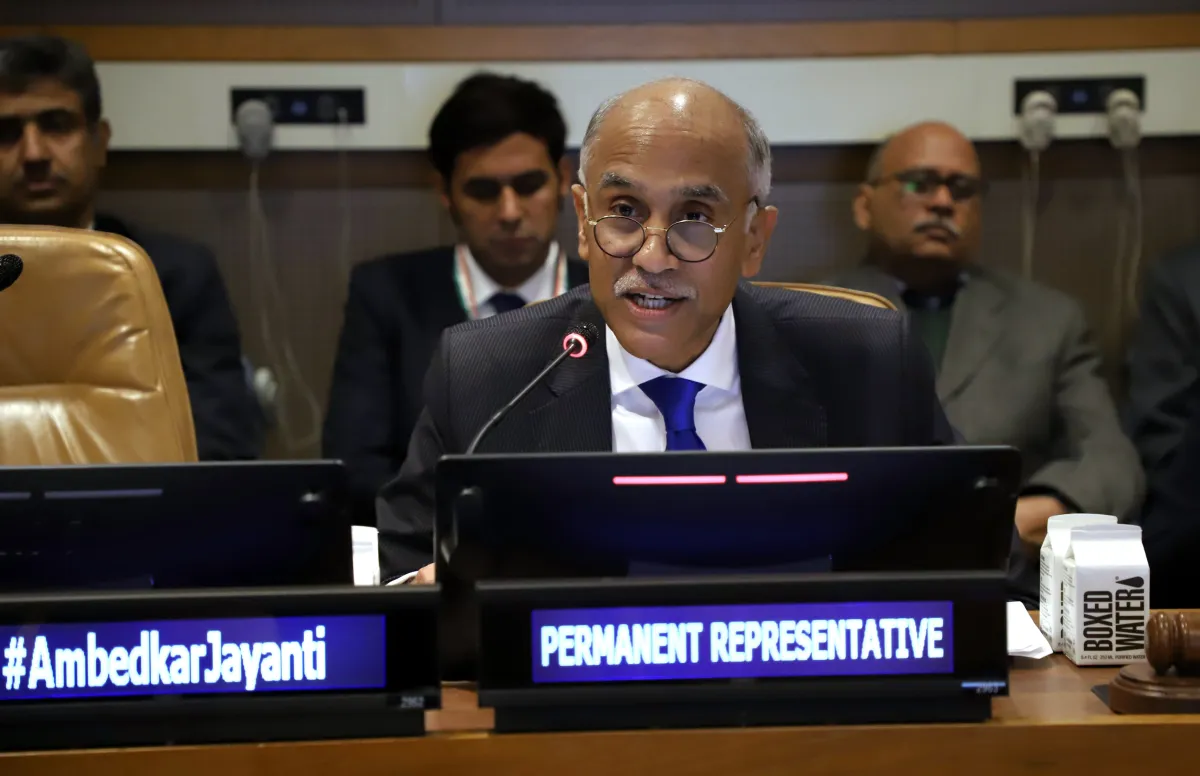
In a significant development, India abstained in the UN General Assembly on a draft resolution on Afghanistan, noting that a “business as usual” approach is unlikely to deliver outcomes that the global community envisions for the Afghan people.
The 193-member UN General Assembly on Monday adopted the draft resolution, introduced by Germany on ‘The situation in Afghanistan’. The resolution was adopted with 116 votes in favour; two against and 12 abstentions, including India.
Why did India abstain from voting against the Taliban?
India’s Permanent Representative to the UN Ambassador Parvathaneni Harish, in the explanation of vote, said that any coherent policy to address a post-conflict situation must combine a mix of policy instruments – incentivising positive behaviour and disincentivising harmful actions.
“An approach focused only on punitive measures, in our view, is unlikely to succeed. The United Nations and the broader international community have adopted more balanced and nuanced approaches in other post-conflict contexts,” Harish said.
Harish stressed that India is closely monitoring the security situation in Afghanistan and underscored that the international community must direct its coordinated efforts towards ensuring that entities and individuals designated by the UN Security Council, the Al Qaeda and their affiliates, ISIL and their affiliates, including Lashkar-e-Taiba and Jaish-e-Mohammed, along with their regional sponsors who facilitate their operations, no longer exploit the Afghan territory for terrorist activities, a reference to Pakistan.
UN resolution highlights importance of regional partners
The resolution, noting regional cooperation, highlighted the importance of the contributions of neighbouring and regional partners and regional organisations to the well-being of the Afghan people.
This included educational opportunities provided by countries like India, Iran and Turkiye, as well as the regional programme to support Afghan students’ access to higher education in Kazakhstan, Kyrgyzstan, Turkmenistan and Uzbekistan.
These opportunities serve as a practical example of regional solidarity and investment in the future of Afghanistan.
UN resolution urges Taliban to establish mechanisms
The resolution further urged the Taliban to establish mechanisms to enable cooperation with the interested actors and to benefit from their knowledge and expertise in this regard.
The resolution recognised the importance of the potential role of Afghanistan in connecting Central and South Asia, as well as its economic development and integration into interregional economic processes for lasting peace and stability.
It noted the historical role of Afghanistan as a land bridge in Asia, and recalls that regional economic cooperation plays an important role in achieving stability and development in Afghanistan.
It also recognised the importance of regional connectivity projects with neighbouring countries and Central Asia that can provide a pathway to economic growth and stabilisation in Afghanistan.
Here’s what Harish said on India’s immediate priorities in Afghanistan
Harish said India’s immediate priorities in Afghanistan include the provision of humanitarian assistance and the implementation of capacity-building initiatives for the Afghan people.
“We have been working closely with UN agencies to support the Afghan people in critical areas such as health, food security, education and sports.
India’s commitment to Afghanistan’s reconstruction is demonstrated through more than 500 development partnership projects across all provinces,” he said.
Since August 2021, when the Taliban took over Kabul, India has supplied around 50,000 MTs of wheat, over 330 MTs of medicines and vaccines, 40,000 litres of the pesticide Malathion, and 58.6 MTs of other essential items, supporting millions of Afghans in dire need of humanitarian assistance.
In partnership with the United Nations Office on Drugs and Crime (UNODC), India has provided 84 MTs of assistance and medicines and 32 MTs of social support items for drug rehabilitation programmes in Afghanistan, particularly those focused on women.
India also continues to offer scholarships and fellowships to Afghan students. Since 2023, India has provided scholarships for undergraduate and postgraduate courses to 2,000 Afghan students, including nearly 600 girls and women, Harish said in the General Assembly.
(With inputs from PTI)
Also Read:
PM Modi receives Brazil's highest civilian honour, says people-to-people ties are important
Trump goes on tariff tirade again, threatens BRICS nations including India with 10% extra levies