- Home
- Explainers
- Trishul: Indian Armed Forces flex their might in mega exercise and a post Operation Sindoor doctrine
Trishul: Indian Armed Forces flex their might in mega exercise and a post Operation Sindoor doctrine
The strategic location and timing of the Trishul tri-services military exercise make clear that it is not routine training, but a strategic demonstration of readiness and of India’s willingness to translate doctrine into joint action.
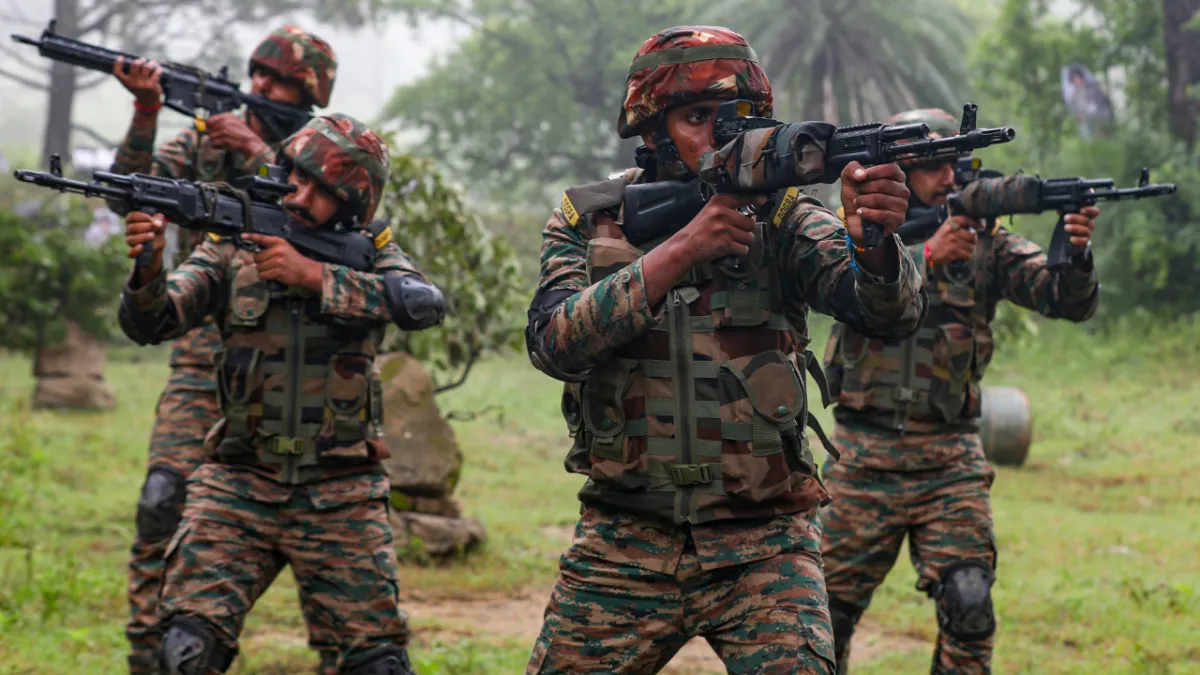
Trishul, a large scale tri-service exercise of the Indian Armed Forces is being held from October 30 to November 10, 2025, is being staged along India's western border with a strong focus on the Sir Creek area in a strong message Pakistan and the terror ecosystem it harbours and sponsors. The drill brings together the Army, Navy and Air Force to rehearse coordinated high intensity operations that range from air land manoeuvres to maritime interdiction and precision strikes.
Its timing and location make clear that Trishul is not routine training, but a strategic demonstration of readiness and of India’s willingness to translate doctrine into joint action.
Operation Sindoor
Operation Sindoor, conducted in May 2025 in response to a major cross border terror attack, involved coordinated strikes across by the Indian Aermed Forces aimed at dismantling terror infrastructure in PoK and Pakistan in retaliation to the April 22 Pahalgam terror attack. Official summaries and parliamentary replies describe Sindoor as a targeted, time bound action that used precision capabilities while attempting to limit escalation. The operation has been widely discussed in Indian commentary as catalysing a more assertive, proactive posture across services.
The post Operarion Sindoor doctrine
The phrase post Sindoor doctrine captures the shift from reactive defence to integrated, pre emptive deterrence. That approach emphasises multi domain synergy, rapid counter operations and the use of precise standoff effects to neutralise threats before they can be projected into Indian territory. This is being seen as an improvement on the learnings from Operation Sindoor to strengthen Indian Armed Forces and accelerate reforms that make joint planning and execution the default mode of operations.
How Trishul is the mebodiement of India's new approach
Trishul operationalises the post Sindoor doctrine by testing command and control arrangements that knit together land sea and air assets under a single coordinated plan. Exercises simulate fast decision cycles, integrated fires and logistics linking, and the legal and political choreography needed for calibrated cross border action. Public facing elements of Trishul also send a deterrent message to adversaries by demonstrating that India can mount sustained, combined responses across domains with minimal delay.
A doctrine rooted in combined capability aims to deter aggression by raising the costs of hostile action. It also requires clear rules of engagement, political resolve and measured escalation management to avoid unintended conflict. Trishul is therefore as much about signalling credible deterrence as it is about refining operational integration, reflecting a newly confident posture in the post Sindoor security environment.