- News
- Explainers
- Amid widespread anti-Hindu violence, what Tarique Rahman's return to Bangladesh means for India
Amid widespread anti-Hindu violence, what Tarique Rahman's return to Bangladesh means for India
Events in Bangladesh are under close watch in New Delhi. During Sheikh Hasina’s tenure, Dhaka maintained strong ties with India, kept Pakistan at a distance and carefully balanced its relationship with China. Since her removal from office, things have been the opposite under Muhammad Yunus.
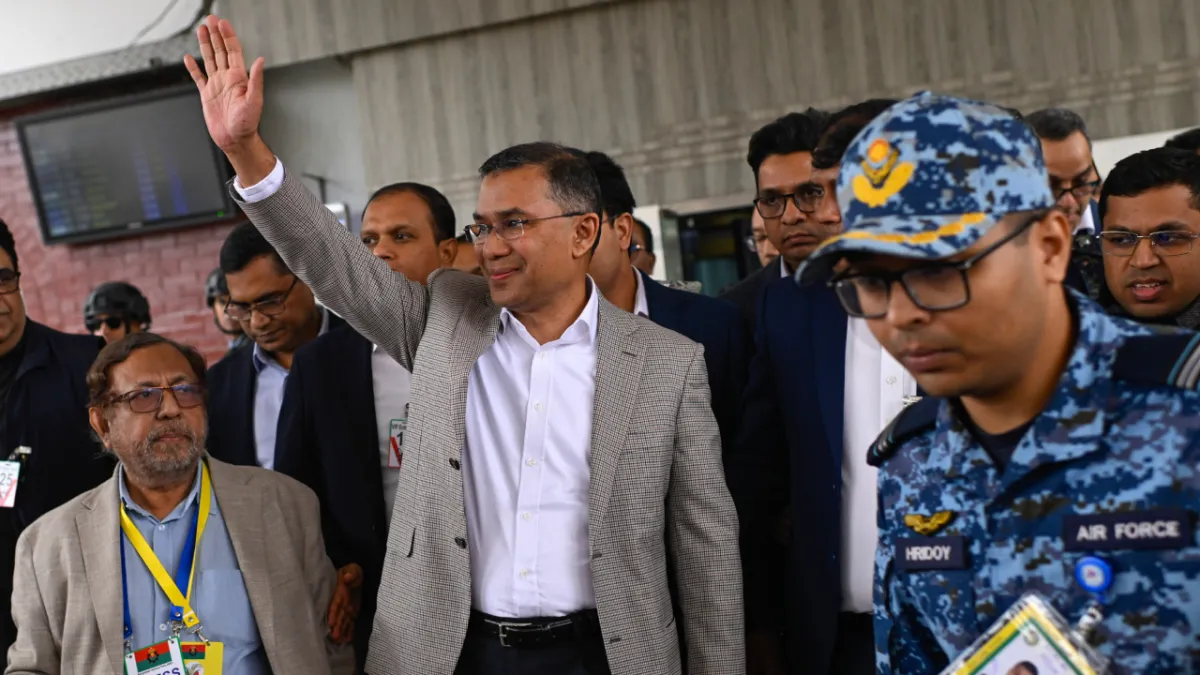
Bangladesh Nationalist Party acting chairman Tarique Rahman returned to Dhaka on Thursday, ending more than 17 years in self-imposed exile in the United Kingdom. His return marks a significant political moment amid renewed unrest and uncertainty in Bangladesh.
Rahman was received at the airport by senior members of the BNP Standing Committee. He arrived with his wife Zubaida Rahman and daughter Zaima Rahman. The BNP had announced his return on December 12, weeks after Rahman wrote on social media that he longed to be near his critically ill mother during what he described as her moment of crisis.
Rahman is the 60-year-old son of former prime minister Khaleda Zia, who has been unwell for an extended period.
Political context and unrest
Rahman’s return comes against the backdrop of fresh political instability following the killing of radical youth leader Sharif Osman Hadi, known for his anti-India stance and a key figure in the movement that led to the ouster of former prime minister Sheikh Hasina. Bangladesh has witnessed repeated spells of violence since Hasina was forced out of office.
The BNP has emerged as a major force in the changed political landscape after the Awami League government was toppled in a student-led and violent movement known as the July Uprising on August 5, 2024.
What Rehman's return means for India
Developments in Bangladesh are being closely watched in New Delhi. Under Sheikh Hasina, Bangladesh maintained close ties with India, kept Pakistan at arm’s length and balanced relations with China. Since her ouster, the interim administration under Muhammad Yunus has signalled a shift, including outreach to Pakistan and growing distance from India.
India is particularly wary of the rising influence of Jamaat e Islami, which is widely seen as aligned with Pakistan’s intelligence establishment and has been linked to anti-India rhetoric.
Silver lining in strained India-Bangladesh ties?
In this scenario, the BNP is being viewed in India as a comparatively liberal and democratic option, despite historically strained relations. New Delhi will hope that Rahman’s return strengthens the BNP’s prospects and leads to a more predictable relationship if the party returns to power.
There have been tentative signs of a reset. On December 1, Prime Minister Narendra Modi publicly expressed concern over Khaleda Zia’s health and offered India’s support, a gesture acknowledged by the BNP, marking a rare moment of warmth between the two sides.
Rahman has also been critical of the Yunus-led interim government, questioning its mandate to take long-term foreign policy decisions. He has distanced himself from Jamaat e Islami and ruled out any electoral alliance with the Islamist party, a position that is likely to be closely followed in both Dhaka and New Delhi.
Shifting power equations in Bangladesh
Following Hasina’s removal, the interim government disbanded the Awami League under provisions of the Anti Terrorism Act through an executive order. In the new political equation, Jamaat e Islami, which had been a BNP ally during the 2001 to 2006 period in power, has now emerged as its main rival, along with other Islamist groups.
Jamaat e Islami, which had been banned under the Hasina government, has re entered politics and is attempting to expand its influence in a fractured political environment.
Rahman as prime ministerial contender?
Rahman has emerged as a leading contender for the prime minister’s post ahead of the general elections scheduled for February. His return is expected to galvanise BNP workers and strengthen the party’s campaign at a critical juncture.
The killing of Osman Hadi has reignited tensions across the country. Hadi’s family has alleged that the murder was aimed at sabotaging the electoral process, adding to concerns about whether polls can be held in a stable environment.
Also read: Tarique Rahman lands in Dhaka; BNP's big reception to mark homecoming after 17 years