- Home
- Entertainment
- When Dharmendra was rejected by filmmakers: 'Hockey player nahi, hero chahiye'
When Dharmendra was rejected by filmmakers: 'Hockey player nahi, hero chahiye'
As fans mourn Dharmendra, many are revisiting the Aap Ki Adalat interview where he opened up about childhood discipline, brutal rejections and the dream that brought him to cinema. It's one of those rare conversations where the legend felt completely unfiltered, honest and heartbreakingly real.
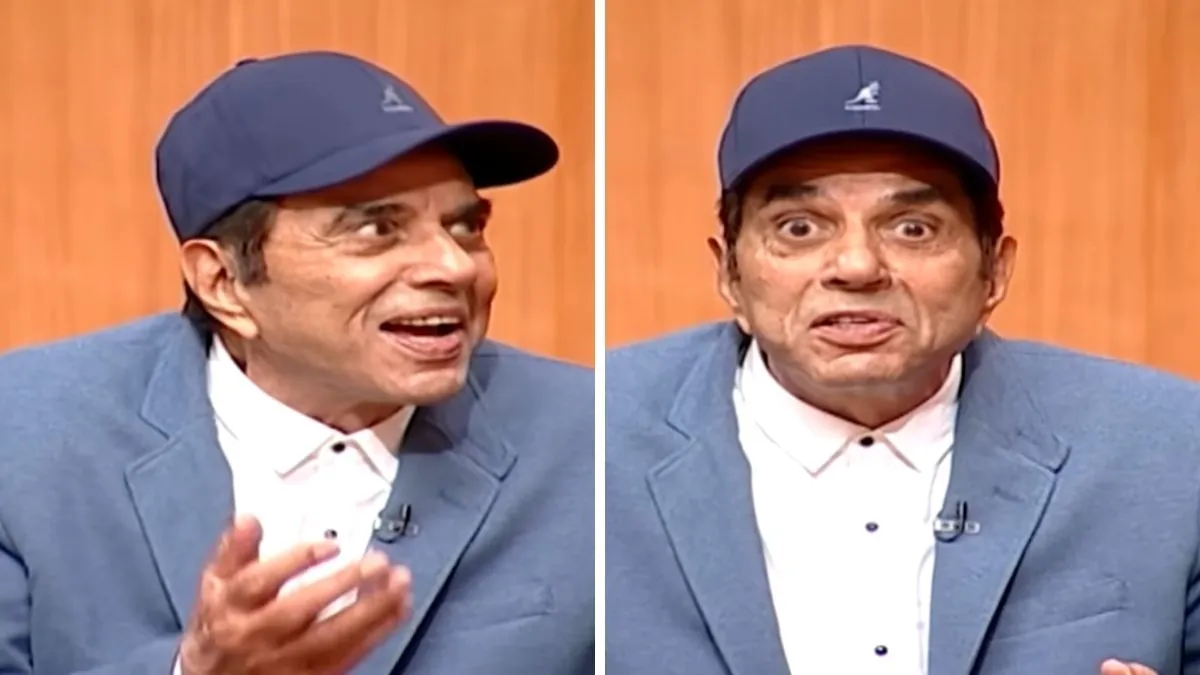
The Indian film industry lost a true original today, Dharmendra, the man who defined heroism long before muscles, machines and box office numbers became part of the formula. In moments like these, fans return to old interviews to remember the human behind the legend, and few conversations reveal his heart better than his appearance on Aap Ki Adalat with Rajat Sharma.
During his interaction with Rajat Sharma, Dharmendra revealed how people were not keen on hiring him. Here's what he shared.
'I came to sleep next to my father, not to be punished'
Rajat Sharma asked him about growing up in a strict household, and Dharmendra smiled while recalling a story so real it instantly transports you back to his childhood.
He remembered, "My father was a schoolteacher; imagine how disciplined he must have been. I was very young once, and I felt like sleeping next to him. I asked my mother, and she said, 'Go, let him sleep.' But when he made me lie down, he said, 'Pahaade suna mujhe' – start reciting your multiplication tables. I thought, "I came here to sleep, not to die!"
Even in the laughter, you sense the steel that hardship forges.
Cinema as destiny
The first time he saw a film in a theatre, everything changed. Skipping school felt like freedom, he said, but what came after was bigger than rebellion.
"I watched my first film, 'Shaheed'. Walking out of the theatre, I thought: Where do these people live? I want to go there. Maybe God melted because of the sincerity in my heart."
That pure longing eventually brought a boy from a middle-class home in Punjab to Mumbai with no idea how he would survive, only a dream.
'We don't need a hockey player. We need a hero'
Rajat Sharma reminded him that many producers initially rejected him, even telling him to go back to wrestling instead of trying films. Dharmendra nodded, remembering each bruising moment without bitterness.
"I was signed for Bandini, but Vimal Da and Guru Dutt always took time to make films. In a city like Mumbai, coming from a middle-class background, how do you manage? Later, I was called for a screen test for Love in Shimla. They looked at me and said, 'We need a hero, not a hockey player.'"
A line that would break ordinary spirits, but then he delivered the lesson that defined his entire journey: "I kept self-respect. Work is worship. I thought only about work."
The turning point: Dharmendra's debut in 'Dil Bhi Tera, Hum Bhi Tere'
Destiny finally opened its doors for the original He-Man of Bollywood in 1960. Dharmendra made his debut with 'Dil Bhi Tera, Hum Bhi Tere', directed by Arjun Hingorani, the man who would later become one of the most important figures in his early career.
It wasn't a glamorous launch or an overnight sensation, but the film planted the seed of a star India would soon worship. From that humble start, he worked tirelessly, film after film, building his place in cinema through sheer sincerity, discipline and emotional truth.
A life that proved persistence wins
From that young man rejected for looking "too strong" to becoming the most adored romantic and action star of his generation, Dharmendra is living proof that dreams are not granted; they're earned.
Today, as the industry mourns, fans will celebrate the legacy of a man who fought quietly, worked relentlessly, and loved deeply.
The hero who refused to quit, even when the world told him to.