- News
- Entertainment
- Hollywood
- Diane Keaton, ‘The Godfather’ actress, dies at 79 after five decades of brilliance
Diane Keaton, ‘The Godfather’ actress, dies at 79 after five decades of brilliance
Diane Keaton, the Oscar-winning actress known for her roles in ‘Annie Hall’ and ‘The Godfather’, has passed away at 79. From redefining rom-com heroines to inspiring generations with her wit and eccentric style, here’s a look at her film career, family, and legacy.
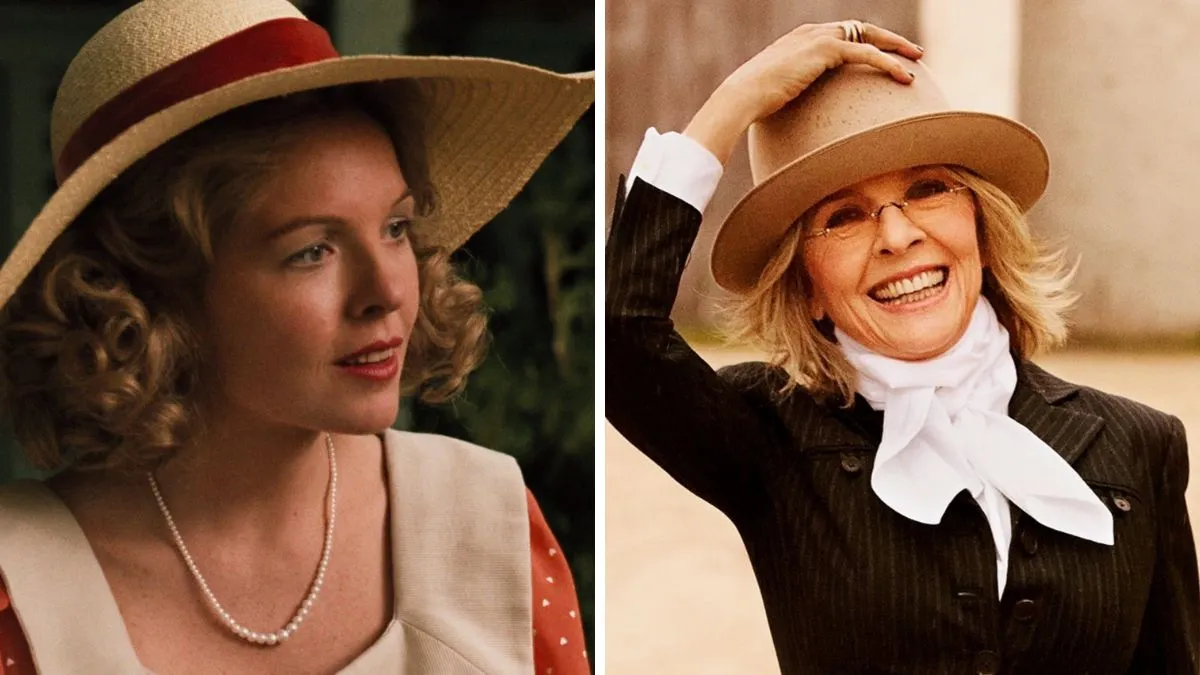
Oscar-winning actress Diane Keaton passed away in California, she was 79. It was her quirky wit, emotional depth and signature style made her a cultural icon. The cinephiles across the world mourn, not only for the death of a screen legend, but for the loss of a free spirit who defied being humorous, exposed and authentic on her own terms.
She became the modern romantic: capricious, flakily neurotic, fundamentally human. From 'The Godfather' to 'Annie Hall', from broad comedies to introspective dramas, Keaton navigated genres — and audiences’ hearts — with rare fearlessness. Her death leaves a void not only in casting announcements, but in the way we think of women in film: bold, quirky, real.
Diane Keaton’s Hollywood career
Diane Hall (who later used her mother's maiden name, Keaton) was born on January 5, 1946, in Los Angeles. She broke through in the early 1970s with appearances as Kay Adams in 'The Godfather' (1972) and 'The Godfather Part II' (1974) roles that introduced her to international audiences and proved her capability of standing her ground in a male-dominated cast.
But it was 'Annie Hall' (1977), Woody Allen’s semi-autobiographical love story, that turned her into a star. Her idiosyncratic look, the tie, baggy trousers, bowler hat — and her bittersweet comic voice created a new standard for romantic heroines: emotionally literate, socially awkward, quietly devastating. That performance earned her the Academy Award for Best Actress.
Throughout the years, Keaton kept moving between comedic and dramatic roles, 'Manhattan' (1979), 'Looking for Mr. Goodbar' (1977), 'Reds' (1981), 'Crimes of the Heart' (1986). She even went behind the camera, directing 'Hanging Up' (2000).
In her later years, she gravitated toward parts that felt lived, and not manufactured: 'Something's Got to Give', 'Baby Boom', 'The First Wives Club', and 'Summer Camp' (2024), one of her last appearances. Her career lasted for more than half a century and gained her an Academy Award, a BAFTA, several Golden Globes, and a spot on Hollywood's lasting lights.
Her Impact on Pop Culture
Diane Keaton's offbeat persona, her refusal to play “the pretty one,” her aesthetic choices (oversized glasses, men’s ties, quirky hats) rippled through fashion and cinema. The “Annie Hall look” became shorthand for charming nonconformity.
She became the emblem of emotional honesty in romantic comedies, a woman allowed to be neurotic, melancholic, even messy. In an industry that often demands women be flawless, she insisted on cracks, on pauses, on silences. Her presence also challenged ageism. Into her 70s, she continued to headline films and refused to fade quietly.
Diane Keaton’s family and personal life
Though she never married, Keaton adopted two children: daughter Dexter (born 1996) and son Duke (born 2001). She often spoke about her desire to give them private, grounded lives away from Hollywood’s glare.
Her family shaped her deeply. Her mother, Dorothy Keaton Hall, suffered from Alzheimer’s, and Keaton later framed much of her memoir Then Again around her mother’s journals and memories. She was also a passionate advocate for architecture preservation, serving on the board of the Los Angeles Conservancy, and an avid photographer and real-estate developer.
Early in life, she struggled with bulimia, a battle she later spoke about candidly, helping destigmatise eating disorders. Though she was private about her health in later years, reports suggest her decline came suddenly, surrounded by close friends and family.
Diane Keaton’s departure leaves a hush over Hollywood. But even as the lights dim, the flicker of her legacy remains vivid. She was a figure of contradictions: elegant yet knobby, self-effacing yet unforgettable, funny yet haunted.
Her absence will be felt in directors’ pitch rooms, in casting calls, and in every scene where a woman’s wit outpaces her charm. But we’ll return to her work — to 'Annie Hall', 'The Godfather', 'Something’s Got to Give', 'Baby Boom,' and recognise how rare it is to have an artist who changes the vocabulary of emotion.
May she rest in peace, and may her films live forever.