Delhi government raises family annual income limit to Rs 2.5 lakh for ration card eligibility
The Delhi government also announced the rollout of a digital currency system for ration card holders, under which funds will be transferred directly to beneficiaries’ bank accounts to enable them to purchase ration through the new mechanism.
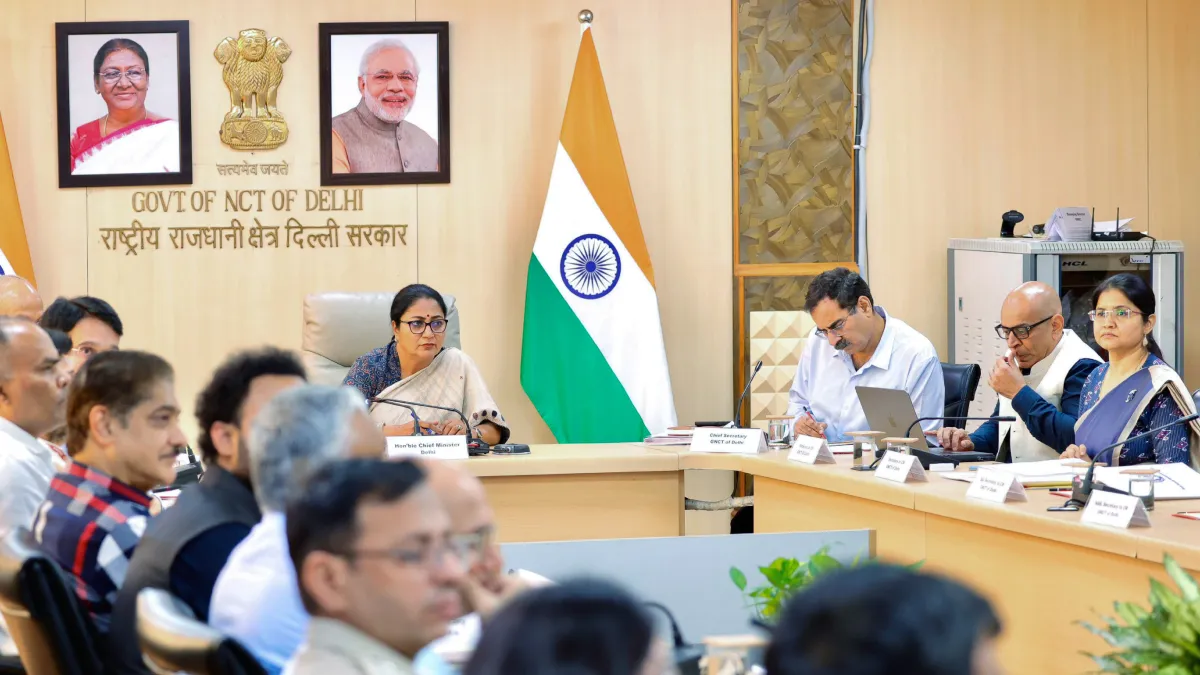
The Delhi Cabinet on Tuesday took a major decision to expand access to ration cards by increasing the annual family income limit from Rs 1.30 lakh to Rs 2.5 lakh.
The Delhi government also announced the introduction of a digital currency system for ration card holders. Under the new mechanism, the digital currency amount will be transferred directly to beneficiaries’ bank accounts, allowing them to purchase ration using the allotted funds.
Officials said ration will be available only through the digital currency system, a move aimed at curbing irregularities and leakages in the public distribution system.
The decision comes days after the Delhi government removed nearly 7.72 lakh members’ names from ration cards during a verification drive. New ration cards will now be issued in their place, officials said.
Delhi government eases Jal Board policy to reduce charges
In another key decision, the government had also approved a simplified Delhi Jal Board (DJB) policy for properties, aimed at reducing water infrastructure charges and easing the financial burden on residents, Chief Minister Rekha Gupta announced on Friday.
Addressing reporters, Gupta said water infrastructure charges will now apply only to new construction projects or additional construction carried out on existing properties.
"Water and sewer infrastructure charges will now be determined based on the actual water demand rather than the total area of a building," she said.
The chief minister added that the revised policy is designed to enhance transparency, encourage development and provide relief to citizens who were earlier required to pay hefty charges.
"Families building new homes or carrying out additional construction often had to pay charges running into several lakhs of rupees, causing significant hardship. Keeping this in view, the Delhi government has reviewed the entire system and decided to make it simpler, more transparent and more beneficial for the public," the chief minister said in a statement.
The government has also announced concessions for various categories of colonies and economically weaker sections. According to the new policy, properties located in E and F category colonies will receive a 50 per cent concession in infrastructure charges, while those in G and H category colonies will be eligible for concessions of up to 70 per cent.
In another relief measure, residential units measuring 50 square metres or less, built on plots larger than 200 square metres, will receive an additional 50 per cent concession. Officials said the move is expected to directly benefit small families and middle-class households.
Delhi Water Minister Parvesh Sahib Singh said religious institutions and charitable organisations registered under Section 12AB of the Income Tax Act will also be entitled to an additional 50 per cent concession on water and sewer charges.
He further said that plots measuring up to 200 square metres will continue to remain exempt from these charges.