India-EU trade deal: What gets cheaper for Indian consumers and why the deal matters?
India-EU trade deal: India and the EU currently conduct trade worth over 180 billion euros annually. This deal is expected to significantly benefit both European and Indian consumers.
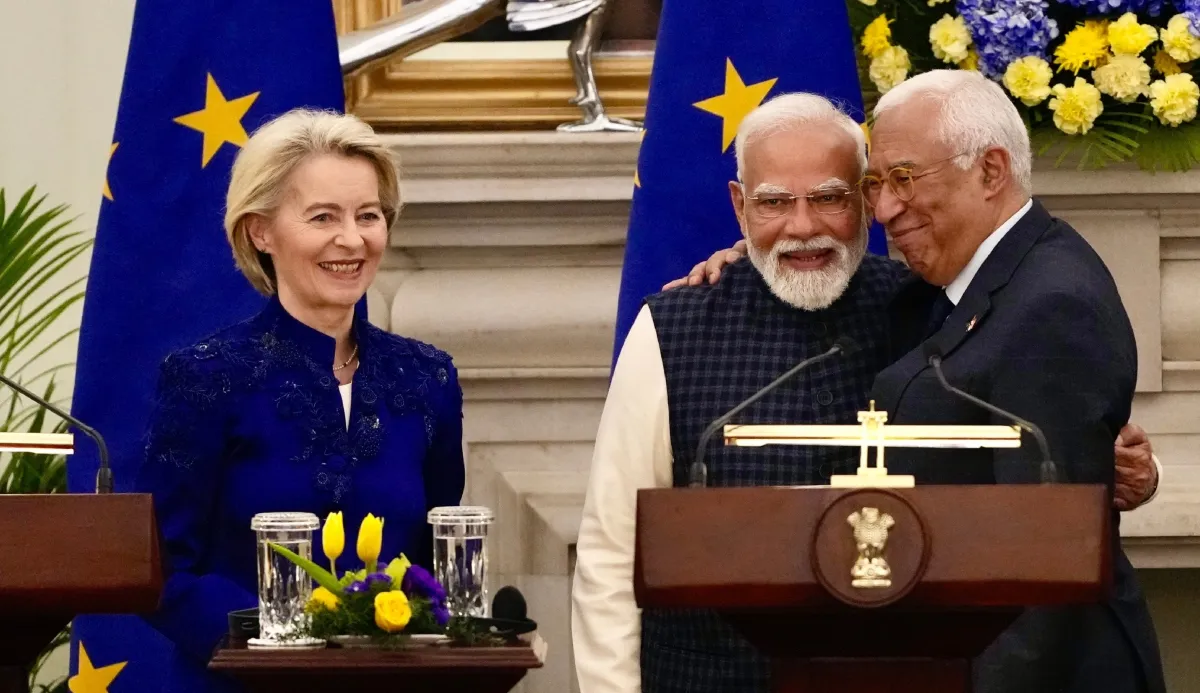
India and the European Union (EU) on Tuesday concluded negotiations on a historic, ambitious, and commercially significant free trade agreement (FTA), the largest trade deal ever undertaken by either side. At a time when the global economy is facing numerous challenges and rising geopolitical tensions, this deal reflects India and the EU's shared commitment to economic openness and rules-based global trade.
Prime Minister Narendra Modi described the pact as the "mother of all deals", noting that together India and the EU account for nearly 25 per cent of global GDP and one-third of world trade. The agreement is expected to have wide-ranging implications for prices, industry competitiveness, and supply chains.
What will become cheaper for Indian buyers?
Industrial and technology products
The agreement will significantly lower or eliminate import duties on a wide range of European industrial goods, reducing costs for Indian consumers and manufacturers:
- Chemicals: Import duties of up to 22% will be eliminated in most cases, making chemical inputs cheaper for Indian industries.
- Machinery: Tariffs as high as 44% on European machinery will largely be removed, reducing the cost of capital goods.
- Pharmaceuticals: Duties of up to 11% on EU medicines will be almost completely eliminated.
- Medical and surgical equipment: Around 90% of optical, medical, and surgical equipment will become duty-free, potentially lowering healthcare costs.
- Aircraft and spacecraft: Tariffs will be eliminated on almost all products in this category, benefiting aviation and space sectors.
Relief for the automobile sector
- European cars: Import duties will be gradually reduced to 10% under an annual quota of 250,000 vehicles, making premium European cars more affordable.
- Auto parts: Tariffs will be fully eliminated over 5–10 years, helping Indian auto manufacturers and suppliers.
Impact on food and beverages
- Indian consumers are also expected to see lower prices on select imported food products:
- Tariffs on olive oil, margarine, and select vegetable oils will be reduced or eliminated.
- Import duties on fruit juices and processed foods will be removed.
- Beer tariffs will be cut to 50%.
- Wine duties will fall to the 20-30% range over time.
Impact on overall trade
Under this agreement, more than 90% of EU products exported to India will be subject to reduced or zero tariffs. This is estimated to save European exporters approximately €4 billion annually, the direct benefit of which is likely to accrue to Indian consumers and domestic industries in the form of lower prices and improved input costs.
India-EU trade exceeds €180 billion annually
Currently, trade between India and the EU exceeds €180 billion annually, supporting approximately 800,000 EU jobs. Under this agreement, tariffs on 96.6% of EU products in India will be reduced or eliminated, which is expected to double EU exports to India by 2032. The tariff reductions are expected to result in annual duty savings of approximately €4 billion on European products.
This agreement represents the largest trade concession ever granted by India to any trade partner. It will give EU industrial and agri-food companies preferential access to the world's fastest-growing large market of 1.45 billion people, with a GDP of approximately €3.4 trillion.
Significant benefits for European companies
India has granted the EU tariff concessions that it has not given to any other partner.
- Tariffs on cars reduced from 110% to 10% in a phased manner
- Tariffs on auto parts completely eliminated (within 5–10 years)
- Most tariffs eliminated on machinery (44%), chemicals (22%), and pharmaceuticals (11%)
- A separate chapter has been included for small and medium-sized European businesses (SMEs) to ensure they can fully benefit from the new export opportunities.
- Both sides will establish dedicated helpdesks and contact points for SMEs. Significant tariff reductions on agri-food products
- Under the agreement, India will reduce or eliminate tariffs on EU agricultural and food products, which currently average over 36%.
- Tariffs on wine will be reduced from 150% to 75% initially, and then to 20%.
- Tariffs on olive oil will be reduced from 45% to zero (over 5 years).
- Tariffs on processed foods such as bread and confectionery will be eliminated by up to 50%.
- However, the EU's sensitive agricultural sectors (beef, chicken, rice, and sugar) are fully protected, and the EU's strict health and food safety regulations will continue to apply to Indian imports.
Also Read: India-EU FTA Deal 2026 LIVE: We delivered the mother of all deals, says EU President von der Leyen
Also Read: India-EU free trade agreement a blueprint for shared prosperity, says PM Modi