- News
- Uttar Pradesh
- Census 2027: Residents of Gautam Budh Nagar, Ghaziabad begin self-enumeration; how to submit details
Census 2027: Residents of Gautam Budh Nagar, Ghaziabad begin self-enumeration; how to submit details
The online window for self-enumeration will remain open until May 21. During this period, citizens can complete their submissions before the next phase of the census, which is the house listing exercise scheduled later this month.
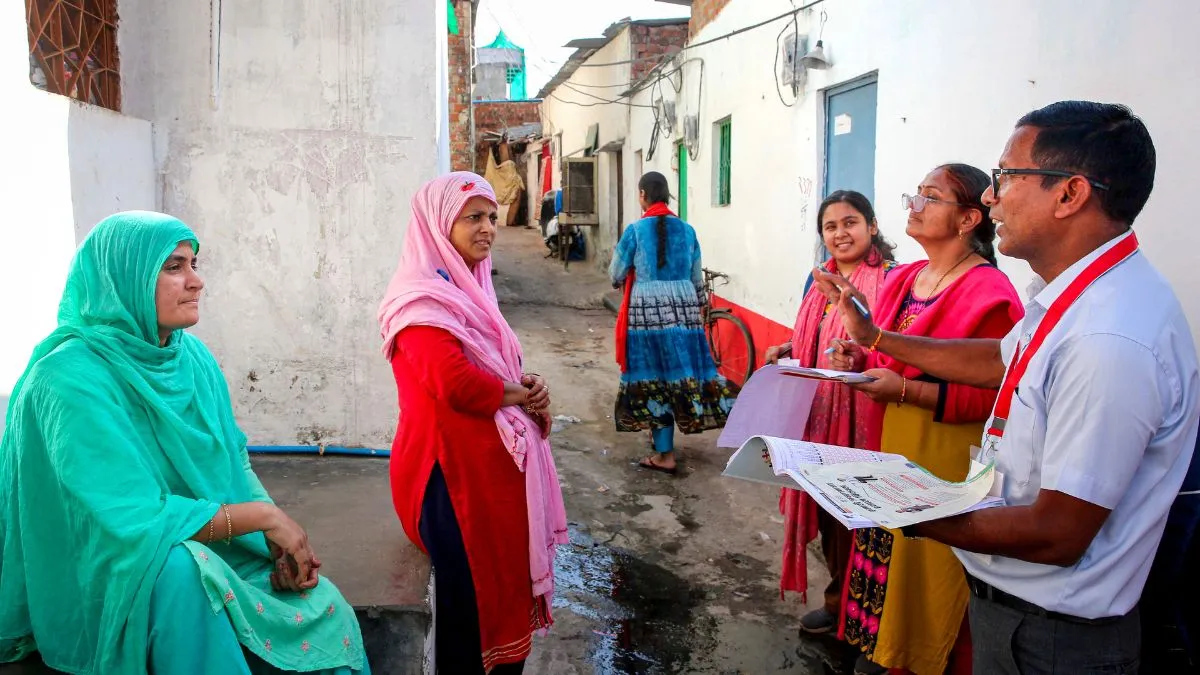
Residents of Gautam Budh Nagar and Ghaziabad districts in Uttar Pradesh will from today be able to submit their household information online as part of the upcoming Census 2027 exercise. Officials have said that this initiative allows people to enter and upload their details directly through an official portal. The aim is to make the process simpler, quicker and more efficient for residents.
The online window for self-enumeration will remain open until May 21. During this period, citizens can complete their submissions before the next phase of the census, which is the house listing exercise scheduled later this month.
People can access the official census self-enumeration portal at Census Self-Enumeration Portal (https://se.census.gov.in) to fill in and submit their details.
Steps to be followed for self-enumeration
- Visit https://se.census.gov.in on your mobile phone or computer and log in.
- Fill in accurate information about yourself and family members in the form.
- Mark your house location correctly using the geo-tagging option provided.
- Carefully check all the entered details and then submit the form.
- After successful submission, you will receive a Self-Enumeration ID (SEID). Make sure to save it safely for future reference.
During the field visit of the enumerator, your information will be verified by showing this SEID.
Census 2027
The Census 2027 is India’s 16th national census, scheduled after a long gap since 2011. It will be conducted in two phases: house listing in 2026 and population enumeration in February 2027.
For the first time, the process is fully digital, using mobile apps and a self-enumeration portal to improve speed, accuracy, and coverage. It collects detailed data on population, housing, education, migration, caste, and economic conditions. The results will guide government planning, welfare schemes, resource allocation, and electoral delimitation. It is one of the world’s largest data exercises, covering over a billion people across diverse regions and conditions.
ALSO READ: Uttar Pradesh gears up for Census 2027 in two-phase, caste count in second phase