Massive Shanghai sinkhole captured on viral CCTV footage: China's 'Tofu-Dreg' infrastructure crisis exposed
A recent Science journal study by South China Normal University's Ao Zurui reveals 45% of China's urban land subsiding over 3 millimeters yearly, with 16% exceeding 10 mm annually.
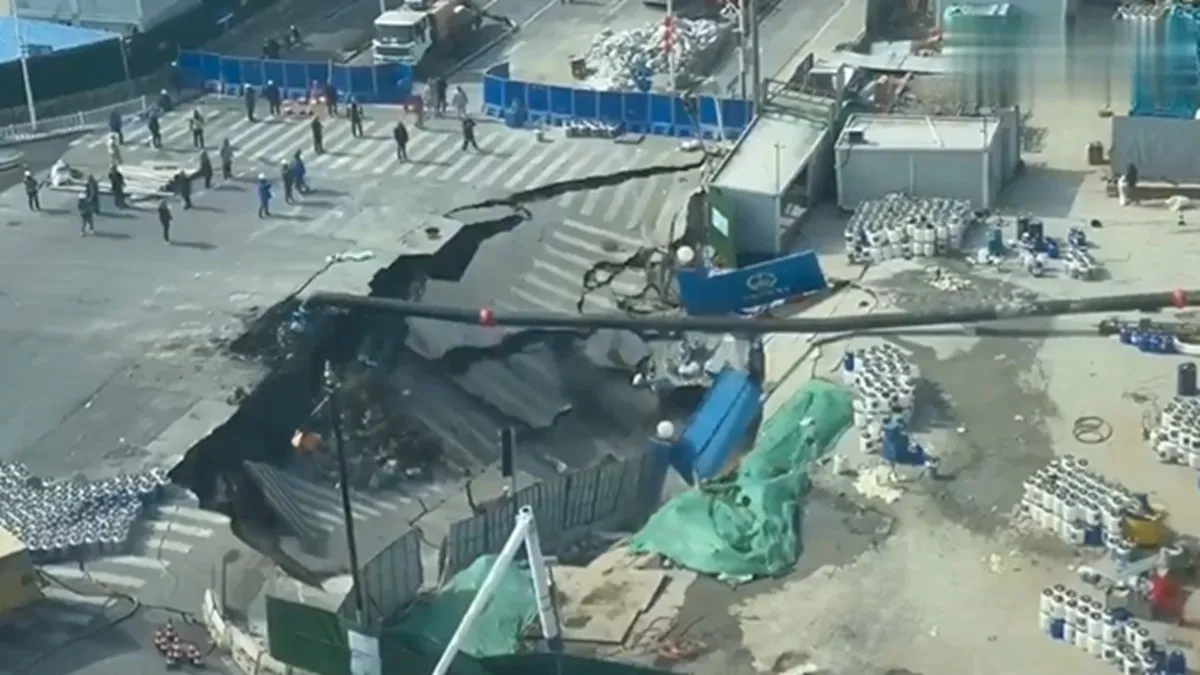
A dramatic CCTV video has gone viral showing a huge sinkhole suddenly engulfing a busy road in Shanghai, China, swallowing vehicles and chunks of pavement in seconds. The footage reveals the road cracking and collapsing into a deep void, with bystanders fleeing as nearby structures and debris tumble in, highlighting ongoing concerns over rapid urban construction quality.
Viral footage reveals sudden collapse
The incident unfolded on a major Shanghai roadway, where the ground gave way abruptly, pulling in a large section of the street. Security cameras captured the terrifying sequence: the surface fissured, sank inward, and formed a massive cavity, forcing people to run for safety. Often dubbed China's "tofu-dreg" projects, built hastily and prone to failure, this event underscores vulnerabilities in the country's infrastructure boom.
Nationwide urban sinking crisis
This Shanghai event aligns with alarming findings from a recent Science journal study led by Ao Zurui of South China Normal University, revealing that 45 per cent of China's urban land is subsiding at over 3 millimeters per year, with 16% sinking faster than 10 mm annually. Driven by groundwater depletion and the weight of skyscrapers on its 900 million-plus urban dwellers, subsidence already inflicts over 7.5 billion yuan ($1.04 billion) in yearly economic damage.
Looming long-term threats
Researchers warn that by century's end, nearly 25 per cent of China's coastal urban areas could sit below sea level, endangering hundreds of millions to flooding amid climate change. Robert Nicholls of the University of East Anglia's Tyndall Centre emphasised this as a "national problem," mirroring global subsidence risks in fast-urbanising regions like Jakarta and Mexico City, where over-extraction and poor planning amplify dangers.