Giant solar explosion headed for Earth today: What you need to know
The flare lasted for three hours, which is longer than usual. While it didn't attain a high intensity, it did eject a significant amount of mass that could cause considerable disruption.
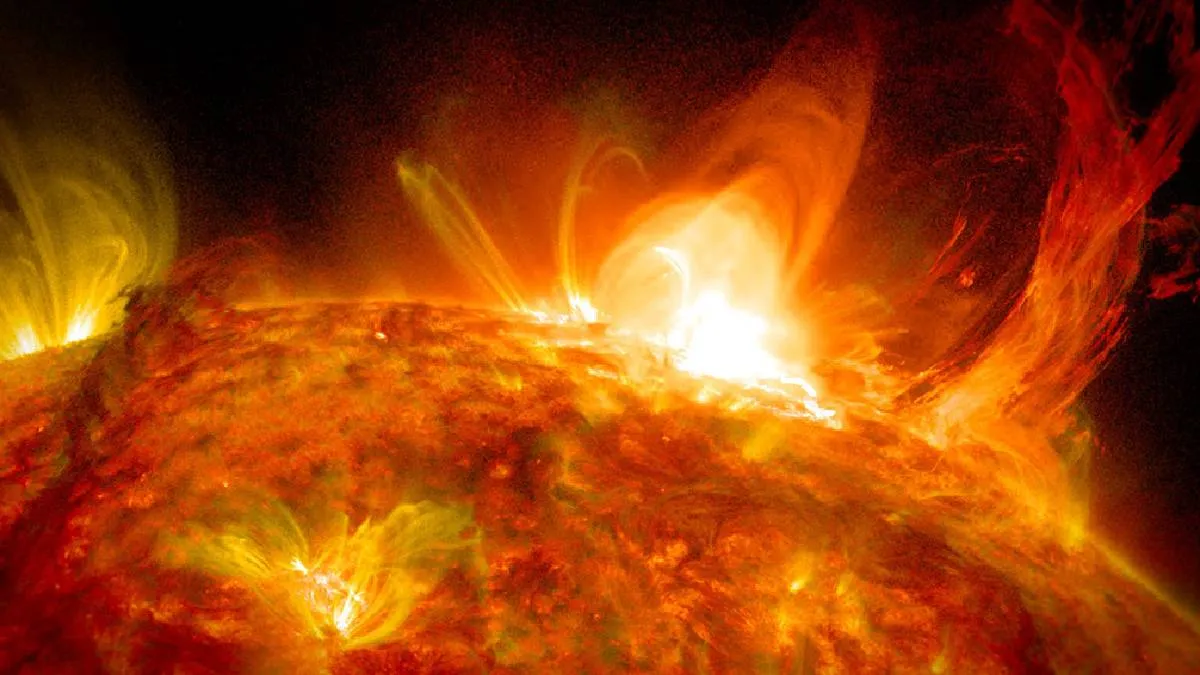
A strong burst of solar energy, known as a coronal mass ejection (CME), is on its way to Earth, and both NASA and NOAA reports agree that it will hit us on June 1. This event could lead to a serious geomagnetic storm, which is expected to create stunning displays of colorful lights in the sky, known as auroras, that may be visible in many parts of Europe and the United States. If the storm is as powerful as predicted, it could be one of the biggest space weather events we've seen during Solar Cycle 25. A powerful solar flare occurred on May 31, originating from a sunspot known as sunspot 4100. This flare, classified as M8.2, lasted for more than three hours, which is quite unusual and indicates a lot of energy was released.
Although it didn't reach the most intense category, it managed to send a huge cloud of solar material, called a coronal mass ejection (CME), hurtling towards Earth. Shortly after the flare, satellites captured images of this bright and fast-moving CME heading straight for us. It’s estimated to be traveling at about 1,938 kilometers per second, making it one of the fastest we’ve seen this solar cycle.
When the storm will hit Earth
The CME is expected to arrive on June 1, likely between midday and early evening, although it’s hard to pinpoint the exact time because solar winds can change unexpectedly.
What will happen due to its impact
Once it reaches Earth, we could experience some exciting effects, including beautiful auroras, or northern lights, visible much farther south than usual due to possible strong geomagnetic storms. These storms can happen when the CME interacts with Earth's magnetic field, and some could even be intense enough to disrupt power lines, satellites, and GPS systems.
While this event might not compare to the major storm predicted for May 2024, it still has the potential to be one of the strongest storms we’ve seen recently. Scientists and space weather forecasters stress that every solar event helps us learn more about the Sun and how to prepare for its unpredictable behavior. So, as we keep an eye on the skies, it’s a great opportunity for skywatchers to witness a rare natural display.
ALSO READ: ISRO performs 122 Collision Avoidance Manoeuvres over past 14 years