Unknown, fascinating facts about Eiffel Tower and other iconic monuments
Published on: April 20, 2025 20:56 IST
-
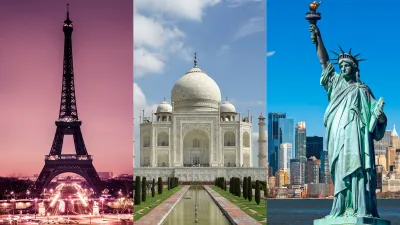
Image Source : Social mediaMonuments around the world are not just feats of architecture; they are rich in stories, surprises, and secrets waiting to be discovered. From the towering Eiffel Tower to the majestic Taj Mahal, here are some intriguing and lesser-known facts about famous landmarks that might just change the way you see them.
-
Image Source : Social media
The Eiffel Tower: The Eiffel Tower, one of the world’s most recognized landmarks, is known for its incredible height, standing at 1,083 feet (330 meters). However, did you know that the tower’s height changes with the seasons? Due to the expansion and contraction of the metal as temperatures fluctuate, the Eiffel Tower can grow by as much as 6 inches (15 centimetres) during the hot summer months. This phenomenon is a result of the iron structure expanding in heat and shrinking when it’s colder. A perfect example of how even iconic monuments are subject to the whims of nature!
-
Image Source : Social media
The Taj Mahal: The Taj Mahal, one of the Seven Wonders of the World, is a stunning white marble mausoleum built by Emperor Shah Jahan in memory of his wife Mumtaz Mahal. But did you know that the Taj Mahal changes colour depending on the time of day? At sunrise, it has a soft pink hue; by midday, the marble appears dazzling white; and at sunset, it takes on a golden or honeyed tone. This colour shift has often been compared to the way a woman’s mood changes, symbolizing the love between Shah Jahan and his wife.
-
Image Source : Social media
The Great Wall of China: The Great Wall of China is one of the most famous man-made structures in the world, often thought of as one continuous wall. However, the reality is much more complex. The Great Wall is made up of multiple walls and fortifications, built by different dynasties over centuries. The total length, including all its branches, extends over 13,000 miles (21,196 kilometres). In fact, much of the wall is in disrepair or has disappeared over time, blending into the landscape, making it less of a "wall" and more of a series of connected defences.
-
Image Source : Social media
The Pyramids of Giza: The Great Pyramid of Giza, one of the last remaining ancient wonders, was once covered in polished white limestone, making it shine brightly in the sun. This smooth, shiny surface reflected the sunlight, causing the pyramid to glow, which would have made it a stunning sight to behold. Over time, much of this outer casing was removed, and now only the rough core remains, giving us the weathered structure we see today. The pyramid’s original gleam, however, can still be imagined through historical records.
-
Image Source : Social media
The Statue of Liberty: The Statue of Liberty, a symbol of freedom and democracy in the United States, was originally intended as a gift for Egypt. French sculptor Frédéric Auguste Bartholdi initially designed the statue to stand at the entrance of the Suez Canal in Egypt to commemorate the opening of the canal. However, due to a lack of funding, the project was abandoned. Instead, Bartholdi's vision was repurposed for the United States, where it was presented as a gift in 1886 to celebrate the centennial of the American Declaration of Independence.
-
Image Source : Social media
The Leaning Tower of Pisa: One of the world’s most famous architectural mistakes, the Leaning Tower of Pisa wasn’t intended to lean. Construction began in the 12th century, but due to unstable foundation soil, the tower started leaning to the south during its construction. Despite efforts to correct the tilt, it was soon accepted as a feature of the tower. Interestingly, the lean of the tower actually helped it survive earthquakes over the centuries, as it caused the structure to shift and distribute the seismic force more evenly.
-
Image Source : Social media
The Colosseum: The Colosseum in Rome, an ancient amphitheater renowned for its gladiatorial games, had a retractable roof known as the velarium. This large cloth covering was used to shield spectators from the harsh Roman sun during the height of summer. It was operated by sailors from the Roman Navy, who were tasked with controlling the vast canopy. The Colosseum’s impressive design didn’t just accommodate crowds of up to 50,000; it also catered to their comfort.